
European Economic
and Social Committee
EU’s new energy labelling must include post-purchase information, says the EESC
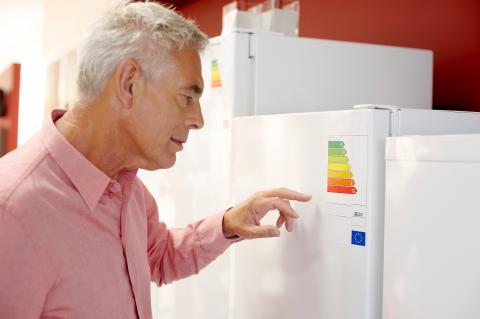
In an opinion adopted at its September plenary, the European Economic and Social Committee (EESC) points out that the new energy labelling system put forward by the Commission must cover the entire product lifecycle – from purchase to repair and resale – and use digital tools to improve transparency and accessibility.
The European Commission’s proposal for a new energy labelling system should extend beyond the pre-contractual data needed for consumers to make a purchasing decision. It should also include post-purchase information, with data from the European Product Registry for Energy Labelling (EPREL) made available throughout the product lifecycle via the future digital product passport.
This is the EESC’s main recommendation in its opinion Omnibus on energy products labelling, drafted by José Angel Hernández Colomer and adopted at its September plenary session.
The EESC believes that the EPREL database structure should be updated to showcase operational data such as that on battery cycles, repairability and water usage, and stresses that relevant information must remain free and accessible without registration for as long as the product is usable, even after the model has been withdrawn or the supplier has ceased its activities, so that consumers, repairers and technicians can still service and repair the product.
‘Product data is crucial not only when making a decision to buy, but also for repairs, maintenance, spare parts sourcing and resale markets. The EPREL database must act as a lifecycle database that provides precise, downloadable and updated information identifying the responsible economic operator,’ said Mr Hernández Colomer. ‘Beyond consumer data, the EPREL database must provide technicians handling installation, maintenance, dismantling and end-of-life processing with comprehensive technical and safety specifications, for example on hazardous components, battery specs, refrigerants and safe disconnection workflows.’
Improving consumer information
In the opinion, the EESC backs the Commission’s proposal to simplify energy product legislation and its regulatory framework, maintain consumer information standards and ensure compliance using digital options. The Committee stresses that these goals must go beyond reducing administrative burdens to improve the transparency, accessibility and the comparability of information, aligning with the Draghi report’s targets for emissions reductions and a circular economy.
Historically, access to energy data has represented an undue burden for consumers, particularly regarding tyre efficiency. Broad digitalisation via QR codes and streamlined access to centralised databases are expected to directly minimise this operational friction.
The Committee also appreciates the economic impact assessment carried out by the Commission and recognises the importance of supporting the competitiveness of European businesses, particularly SMEs. However, it says that the Commission should also assess the environmental and social impacts of the proposed regulation.
Digital tools must improve transparency
According to the EESC, energy labels must be immediately visible in search results, comparison tools and shopping carts, and be supported by intuitive online energy-rating filters. Digital tools such as QR codes or nested views must never obscure essential data and should offer multilingual details and replace traditional barcodes to enhance company and product traceability.
The Committee also flags up the importance of protecting vulnerable groups from digital exclusion. It recommends holding digital literacy campaigns in rural or low-income areas and integrating accessible layouts for people with disabilities, such as easy-to-read text, braille, larger fonts and distinct visual icons, so that digital labels do not become a barrier to information.
Modernising market surveillance
For a well-functioning market, it is key to also modernise its surveillance. On this matter, the EESC proposes providing national authorities with digital control tools, specialised training, shared technologies and tighter integration with product safety reporting, in order to prevent fragmentation of the single market.
In addition, the Committee believes that the Commission’s evaluation reports should be produced every two years rather than every four years and that the July 2032 deadline for the first report should be brought forward, given that a four-year period is much too long to assess a digital-first reform. The EESC also notes that digital infrastructure alone is insufficient and that effective enforcement requires stable funding, technical expertise and an adequate number of trained inspectors.
Background
In June 2026, the European Commission unveiled the Omnibus to simplify energy product legislation amending Regulation (EU) 2017/1369 on energy labelling and Regulation (EU) 2020/740 on tyre labelling. The proposal aims to simplify energy and tyre labelling rules and make them more accessible to European consumers.
The main purpose of the framework does not change. The end goal is to provide consumers with clear and comparable information when they purchase products.
The proposed measures would:
- provide more flexibility in how labels are displayed, for example by allowing digital formats such as QR codes and electronic displays, while making sure that consumers still see the information upon purchase;
- make it easier for suppliers and shopkeepers to update labels when energy ratings are rescaled;
- clarify the responsibilities of representatives of non-EU manufacturers for both energy and tyre labelling;
- remove the requirement for vehicle dealers to display tyre labels when selling a new car, since customers in most cases cannot choose the tyre fitted to the vehicle;
- simplify the legal process for updating tyre labels and offer better support procurement and facilitate market surveillance using the EPREL.
The energy product simplification initiative is the 12th in a series of EU initiatives to reduce red tape and strengthen competitiveness and is expected to save businesses and market surveillance authorities around EUR 125 million per year over the next 10 years.
Work organisation
Recommended for you
The social dimension must be included in new rules on sustainable products
News
In its July plenary the European Economic and Social Committee (EESC) called on the European Commission to strengthen the social aspects of key proposals to align EU rules on sustainable products,…
Omnibus on energy products labelling
News
BackgroundIn June 2026, the European Commission unveiled the Omnibus to simplify energy product legislation amending Regulation (EU) 2017/1369 on energy labelling and Regulation (EU) 2020/740 on…
The new framework for free trade agreements must include civil society organisations
News
With its new trade strategy, the EU will get tougher on its trading partners, giving sustainability centre stage. The EESC also firmly believes that civil society organisations and the social…
Nuclear energy key to decarbonising Europe, says EESC
News
The EESC has adopted an opinion pointing out that nuclear energy is an essential component of the clean energy mix which is needed to phase out fossil fuels. The Committee calls on the European…
Whistleblower protection must work in practice, not only on paper, says EESC
News
During its June plenary session, the European Economic and Social Committee (EESC) adopted an opinion evaluating the implementation of the EU Whistleblower Protection Directive, warning that…