
European Economic
and Social Committee
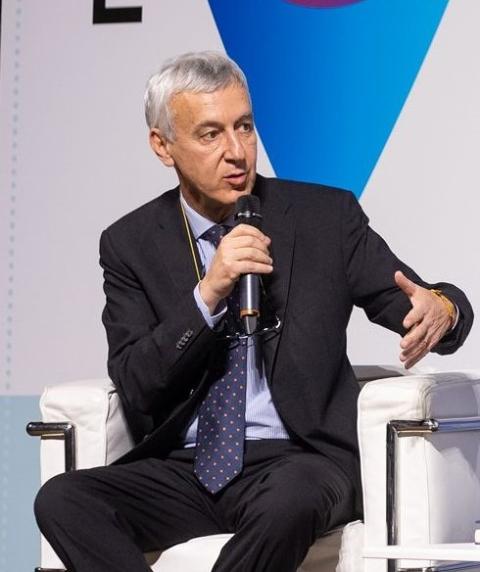
By Marco Zatterin
The countries of Europe have never really been united. They have mingled more than they have come together, talked at length about solidarity and shared goals, and then pursued the best possible outcome for their respective countries while allowing their commitment to collective action to slide. The unease and weakness in which the 27 are currently mired is more the result of choices not made than of strategies that were misguided or ineffective.
These days, the EU looks like a modern-day Saint Sebastian: assailed by French and Spanish youngsters protesting because they have no prospects, and by people – especially on the right – who oppose it by peddling the nonsense that we would be better off without the ‘dictatorship of the euro’.
The European dream is unravelling and failing to represent us as effectively as it could, because national capitals and the politicians crowding them have spent years spitting poison at it. This malicious distortion is the doing of people who prefer excuses to responses – a disease which spreads quickly, threatens our lives and undermines praiseworthy ambitions.
Thinking things through is always worthwhile. The calendar now makes it imperative. 2027 could prove to be a watershed year, twelve months in which democratic elections could reshape our perception of the rights and solidarity which we have long taken for granted.
The war in Ukraine is now in its fifth year. The all-too-familiar turmoil in the Middle East has been exacerbated by Trump’s war, with the high-stakes midterm elections fast approaching.
Energy prices have soared, driving up inflation and interest rates. This combination has cracked the already fragile edifice of continental growth and threatens a heavily indebted system.
Between November and May, elections could shift Spain, Poland and France to the right, while Chancellor Merz’s centrist approach in Germany is struggling and risks becoming irrelevant. Italy, which has never been so divided, will follow suit. Everything could change – and not necessarily for the better.
There is a real possibility that the Paris-Berlin axis – long the driving force behind European decision-making (it wasn’t pretty, but it served its purpose) – could grind to a halt. In the absence of other constructive political forces, the lack of reliable European leadership would play into the hands of sovereigntists and nationalists, for whom gaining power matters more than widespread wellbeing and who will pursue it at any cost, even if it means lying about their opponents and taking Vladimir Putin’s money.
Most European governments, i.e. the majority in the EU Council, are already centrist or centre-right. However, this is a democratic majority which plays by the rules. The rise of more radical positions would weaken the momentum towards closer cooperation, exposing the contradictions of Euroscepticism. It would reward nationalism, which, as Mitterrand said and many have repeated since, is a harbinger of war. In France, Marine Le Pen is promising no mercy for ‘foreigners’, but the country needs workers to counter the demographic crisis and to bring the national football team back to its former glory. She therefore pledges to reduce the deficit by slashing France’s contribution to the European budget, proposes to scrap the mechanism for setting energy prices and calls for stronger national defence capacity, which would hamstring joint European action.
In a world of economic and political polarisation, with China and the US endeavouring to rule the world on a bilateral basis, going it alone in Europe is a recipe for disaster. Even Paris may come to realise this when, for instance, France’s hot-headed and impetuous farmers discover that reducing contributions to the EU budget means less money in their own pockets. Brexit offers a salutary lesson.
Europe is most effective in an emergency, as the oft-cited remark attributed to Jean Monnet suggests (witness COVID and the financial crash). Yet relying on the prospect of disaster cannot be enough. It would be much more useful to pursue economies of scale by working together on energy, growth, the economy, the climate and defence – before the worst comes to pass.
It is important to explore what can be done to achieve this. After all, investing in anti-drone defences or a great technological barrier does not equate to rearming: it means that we are protecting ourselves from the hybrid attacks that various observers and diplomats consider both likely and imminent. This is not about war: it is about deterrence, something we cannot achieve alone.
Rethinking Europe is imperative. 2027 is the turbulent year when democracy may hand the EU over to nationalists and sovereigntists bent on gradually dismantling it. The answer lies in listening and simplifying, respecting our roots and defining common goals (paid for collectively through joint borrowing). The alternative is to surrender to the crisis. And it is curious that this should be happening just when the British, betrayed by mad cow disease and memories of their lost empire, are looking for a way to turn back the clock and return to their old home in order to overcome the deep crisis gripping them across the Channel.
Marco Zatterin is an experienced Italian journalist who served as Brussels correspondent for La Stampa for ten years before becoming deputy editor of the newspaper. He is currently a columnist for the six newspapers of the NEM (Nord Est Multimedia) group and a member of the board of Fondazione CSF (Centro Studi sul Federalismo), a Turin-based research centre focusing on European integration and federalism. In 1995, he also served as spokesperson for Italian European Commissioner Emma Bonino. He is the author of several books, including Trafalgar (Rizzoli, 2005) and Il Gigante del Nilo (Mondadori, 2019). He is also an expert on Sherlock Holmes, to whom he has dedicated several books.