
European Economic
and Social Committee
As the EU prepares for a potentially larger Union, enlargement can no longer be treated separately from Europe’s climate ambitions.
The EESC is calling for enlargement to be fully integrated into the EU’s climate, energy and industrial strategy. Candidate countries, which currently account for around 10-15% of the EU’s greenhouse gas emissions, could pose new challenges but also help accelerate the transition to climate neutrality.
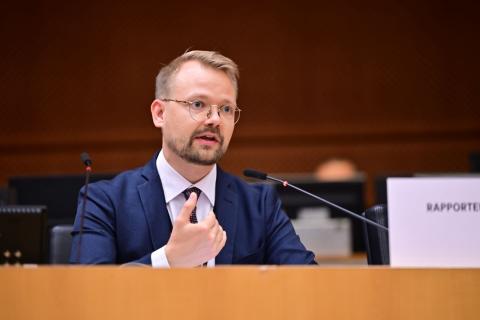
‘Enlargement is a geopolitical imperative, but it is also an opportunity to accelerate Europe’s clean energy transition,’ said Teppo Säkkinen, rapporteur for the opinion. ‘If we start aligning candidate countries with EU climate and energy policies now, we can cut emissions, strengthen energy security and create better conditions for investment and competitiveness across Europe.’
The Committee is also asking the European Commission to clarify how climate targets and emissions baselines would be calculated in an enlarged EU.
Ukraine’s reconstruction offers a major opportunity to rebuild energy, industrial and transport infrastructure according to modern, low-carbon standards.
The EESC also sees investment and innovation as central to preparing candidate countries for membership. It argues that they should be prioritised in future climate partnerships, including when the EU develops its approach to international carbon credits linked to its 2040 target.
Early investment in decarbonisation could lower the eventual cost of accession, speed up industrial modernisation and help deploy clean technologies where emissions reductions can be achieved cost-effectively. (ks)