
European Economic
and Social Committee
The European Union must ensure that today’s political choices do not deepen inequalities or leave future generations carrying an unfair share of the costs. The European Economic and Social Committee (EESC) calls for intergenerational fairness to become a measurable principle embedded across all EU policies.
Europe’s generations face different but connected challenges, from insecure employment and unaffordable housing among young people to poverty, digital exclusion and inadequate access to care among older people. In its opinion on the Strategy on Intergenerational Fairness, the EESC argues that these challenges must be addressed together rather than by prioritising one generation over another.
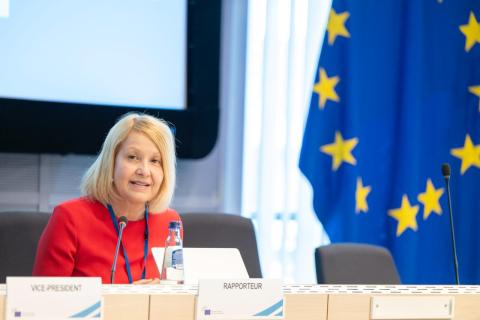
'The central objective for the Intergenerational Fairness Strategy is to reduce social, economic, gender, age and territorial inequalities between generations and to strengthen solidarity and social cohesion across generations to achieve democratic, resilient, inclusive and sustainable societies,’ declared rapporteur María del Carmen Barrera Chamorro.
The EESC calls for long-term objectives, measurable targets and indicators, clear accountability and a transparent dashboard within the European Semester to track issues including child and old-age poverty, youth employment, education, housing, care and mental health support.
It also proposes a European youth empowerment package covering education, quality employment, decent wages, affordable housing, mental health and social protection, together with a stronger Youth Guarantee and an EU instrument for access to housing.
The Committee calls for an intergenerational fairness assessment to complement the Youth Check and proposes intergenerational budgeting for the EU’s multiannual financial framework to assess how resources affect different generations.
Finally, the EESC proposes a European Council for Intergenerational Solidarity bringing together social partners, youth organisations, civil society, independent experts and representatives of EU advisory bodies to oversee implementation and ensure structured participation. For the Committee, intergenerational fairness means ensuring that no generation advances at the expense of another. (lm)