
European Economic
and Social Committee
The 2026 Civil Society Week under the theme ‘People, Democracy, Resilience – Our Future’ was organised by the European Economic and Social Committee (EESC) from 2-5 March. Together with the European Citizens' Initiative, the event fostered citizen participation, underscoring its significance in safeguarding European democracy and civil society. The week concluded with the achievement of an important milestone. The stage is now set for the EESC to take part in the Commission's Civil Society Platform and host its annual summit.
The third edition of the Civil Society Week brought together more than 1 400 participants, including youth organisations, activists, organised civil society representatives from across Europe, journalists and EU policymakers. During Civil Society Week, 36 civil society organisations and more than 90 speakers were present, turning the event into a dynamic forum where participants met to network, reflect and exchange ideas on issues that directly affect people’s everyday lives.
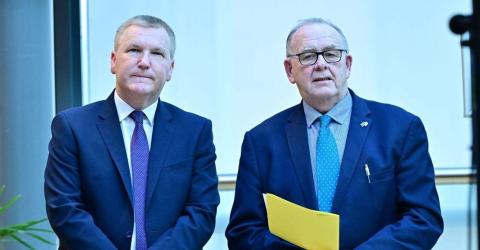
The event was launched on Monday, 2 March with an opening session featuring Séamus Boland, EESC President, and DrKatherine Zappone, former Irish Minister for Children and Youth Affairs. Mr Boland highlighted the importance of the event as a practical demonstration of why EU institutions, social partners and civil society organisations must work together.
Throughout the week, dynamic sessions, packed discussions and strong audience engagement illustrated the growing momentum of organised civil society in Europe. More than a conference, Civil Society Week once again proved to be a living laboratory of democratic participation — a space where cooperation, shared responsibility and collective commitment to Europe’s future were not just discussed but put into practice.
The European Commissioner for Democracy, Justice, the Rule of Law and Consumer Protection, Michael McGrath, commended the EESC on its work as a vital link between EU institutions and civil society, describing civil society organisations as 'the watchdog of our democracy'. He noted that the EESC is already participating in the Civil Society Platform's Steering Group, with the first workshop already having taken place.
He also reiterated the European Commission’s commitment to deepening cooperation with civil society organisations and the EESC by actively involving them in the development of the Civil Society Platform.
The European Citizens' Initiative (ECI) took centre stage on the second day of the Civil Society Week on 3 March. After 14 successful years, the ECI has proven that it is no longer an experiment. With four initiatives surpassing the one-million-signature threshold in 2025, the ECI carries institutional responsibility.
‘What was once an ambitious and novel idea has since evolved into a unique cross-border tool for participatory democracy’, said EESC member Maria del Carmen Barrera Chamorro, Chair of the EESC’s Group on the European Citizens’ Initiative.
Ten ECI initiatives were presented on ECI Day, including ‘Ban on conversion practices in the EU’, ‘Stop Destroying Videogames’, ‘Ethics, transparency and integrity for European political parties’, and ‘My Voice My Choice’.
Maroš Šefčovič, Commissioner for Trade and Economic Security, Interinstitutional Relations and Transparency, underlined the dynamics of the ECI and its momentum. ‘The European Citizens’ Initiative allows people across our Member States to remain actively engaged with EU policies – and its numbers underline the popularity of this agenda-setting tool’, he said
Concluding the Civil Society Week, EESC President, said: 'I am immensely proud of what we have achieved together. We created a living forum – a powerful demonstration of collaboration, commitment and shared responsibility. Europe’s successful democratic future depends on this work, and I look forward to building on these efforts this year, in particular as we join the Civil Society Platform and its Steering Group and host the annual summit.'
The insights and recommendations gathered during the Civil Society Week contributed to the conclusions: Next steps for a democratic and resilient future – delivering together a Union of opportunities, security and resilience, presented at the EESC March plenary session.
The key messages emerging from four days of exchanges centred on the following European Commission’s key priorities:
• Supporting people and strengthening our societies.
• Protecting our democracy and upholding our values;
• Delivering together and preparing our Union for the future.
Those are to be achieved through citizenship education, strengthening social cohesion and affordable housing; building an enabling environment for civil society and democratic resilience, civic engagement through ECIs, completing the European Democracy Shield, building a functioning Civil Society Platform as a key element of the implementation of the ‘EU Strategy for Civil Society' and media and digital resilience for safeguarding democracy. Preparing the EU for the future should include allocation of sufficient funds for civic space, supporting volunteering and investing in social spending and promoting social economy.
The conclusions will feed EESC's debates and opinions and will be presented to EU institutions. (at)