
European Economic
and Social Committee
Europe cannot afford to treat biodiversity as a secondary issue. The Kunming‑Montreal Global Biodiversity Framework set ambitious global targets, but ambition alone will not restore degraded ecosystems or protect collapsing species. Delivery, not declarations, will determine whether 2030 marks a turning point or another missed deadline.
At the centre of the debate is the emerging concept of 'nature credits', market-based tools designed to attract private investment into ecosystem restoration. The EU has committed to halt and reverse nature loss by 2030, but the funding gap for biodiversity remains large, the EESC stressed in an opinion adopted in its February plenary.
Stable and sufficient funding, including from the EU budget, is essential, while harmful subsidies, such as those for fossil fuels, should be phased out. Private finance can help, but it cannot replace public responsibility.
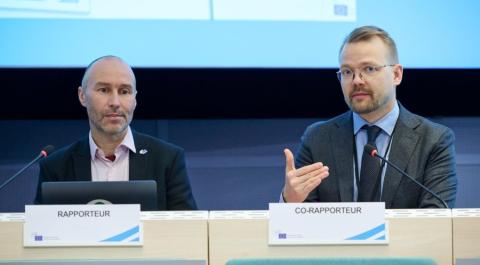
'Nature credits cannot replace stronger ambition', said the opinion’s rapporteur, Arnaud Schwartz.
Nature credits could contribute to closing the funding gap, but only if they are inclusive, science-based and fair, said co-rapporteur Teppo Säkkinen.
Above all, nature must not be commodified. Land grabbing and speculation must be prevented at all costs. Nature credits should prioritise ecological integrity over short-term profit. Benefits must be distributed fairly, helping to reduce rather than deepen inequalities.
The EESC advises against rushing into heavy legislation. Nature credits should remain voluntary and tightly regulated, without undermining ambitious national initiatives. Alignment with other EU policies, from agriculture to the circular economy, must be clarified to avoid unnecessary burdens, especially for small-scale practitioners. Exporting a European-designed system abroad may also prove complex, as governance models developed in Brussels may not easily translate to different contexts. Generating nature-positive impacts in global value chains will require responsibility and sensitivity.
This opinion was among the first examined under the EESC’s EU Youth Test, a mechanism integrating young people directly into EU policymaking. Youth representatives contributed to the drafting process, highlighting concerns about environmental integrity, fairness and long-term impacts for future generations. (ks)