
European Economic
and Social Committee
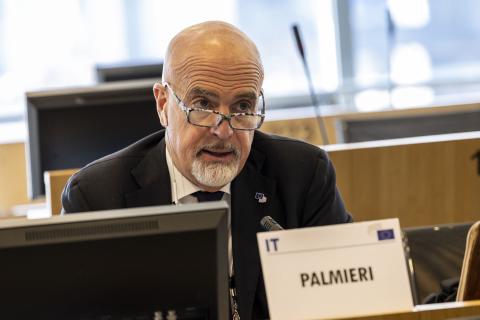
By Stefano Palmieri
EESC Workers’ Group
There is considerable overlap between the Letta and Draghi reports, even though they differ significantly in their analysis and proposed strategies.
Take cohesion policy, for example. In the Letta report, it plays a central role by ensuring that the benefits of the Single Market are shared among all citizens and regions of the Union. It also highlights the link between cohesion policy and services of general interest, which are essential for enabling Europeans to live and work where they choose. In contrast, the Draghi report seems to downplay the importance of cohesion policy and the social and territorial dimensions of competitiveness. It discusses European competitiveness without considering territorial disparities, implying that simply boosting the EU’s overall competitiveness would solve regional issues. It overlooks the fact that, for many regions, low competitiveness and territorial disadvantage are two sides of the same coin.
Both reports recognise that ‘business as usual’ is no longer an option for the Union. The urgency and complexity of today’s crises require a significant shift in European policymaking, possibly even through Treaty changes. Can we really discuss enlargement without addressing the need for deeper political integration? This shift must also involve a change in scale. The current Multiannual Financial Framework (MFF) is insufficient, anchored at just over 1% of the EU’s GNI and constrained by the outdated logic of ‘juste retour’. A new approach is needed, inspired by the Next Generation EU model. Extraordinary challenges must be met with bold solutions, including issuing ‘common safe assets’ as seen during the pandemic.
The upcoming 2028-2034 MFF will test the EU’s true intentions, as it sets priorities for the next seven years. In that context, it is reasonable to expect an open debate on the challenges facing the EU, given the multiple ongoing crises, as well as on its key objectives and the common European goods it aims to deliver to its citizens.
When considering regulatory reform, as recommended in both reports, it’s important to remember that the EU is the world’s most advanced ‘social market economy’. Its high economic, social, and environmental standards are essential to this model’s success, not obstacles to it. Therefore, comparing the EU’s regulations with those of the US or China is fundamentally flawed. Any effort to simplify EU rules must still protect labour conditions, worker safety, consumer rights, social and economic cohesion, and sustainable growth.
Europe has come to understand, albeit belatedly, that being a large market is no longer enough. To move forward, it must strive for greater unity, including deeper political integration and truly unified policies on economy, industry, trade, foreign affairs, and defence. The coming months will be decisive in shaping the future of Europe.