
European Economic
and Social Committee
The proposal for the 2028-2034 EU budget on the negotiation table

What is the MFF and how does it work?
The Multiannual Financial Framework (MFF) is the European Union’s long-term budget plan, usually set for seven years. It is not a single fund, but a structure that sets maximum annual amounts (‘ceilings’) for EU spending in different policy areas, such as agriculture, research, cohesion and security. It does not only include how much money will be available for the different policy areas, but also how the funds are distributed among Member States and regions. The MFF should ensure that the EU’s priorities are matched with stable, predictable funding, and that spending is planned responsibly over several years. Each year, the EU adopts an annual budget within the limits set by the MFF.
Why is the MFF so important?
The MFF is the EU’s main tool for investing in its future. The new MFF comes at a time of unprecedented challenges: geopolitical instability, Russia’s war against Ukraine, climate change, digital transformation and social inequalities, to name a few. Overall, the EU budget has played an important role during recent crises, supporting citizens during the pandemic, helping manage energy and supply chain shocks and enabling EU support for Ukraine. The question is whether EU decision-makers can agree on an ambitious budget for 2028-2034 that will allow the EU to address the most pressing challenges and give it the necessary flexibility to respond to future crisis situations.
Why does the MFF matter to civil society organisations?
The MFF will impact every European, determining support for farmers, businesses, regions and vulnerable groups. It will shape investments in education, research, health and crisis preparedness, as well as funding for civil society organisations and their activities.
According to the Commission proposals, what’s new in the 2028-2034 MFF compared to its predecessor?
- Size and design: The proposed budget is €1.98 trillion (1.26% of EU GNI including the repayment of the debt created by
NextGenerationEU
grants, compared to the initially 1.13% of the EU GNI for the previous MFF[1]), reflecting higher ambition and new challenges. - Simpler, more flexible structure: Fewer, more coherent programmes make it easier to access funds and adapt to crises.
- National and regional partnership plans: For the first time, 14 funds are combined into tailored plans for each country and region, aimed at maximising impact and simplifying rules.
- New European Competitiveness Fund: €409 billion to boost research, innovation and strategic technologies.
- Stronger focus on defence and security: More funding for joint defence projects, military mobility and critical infrastructure.
- Enhanced climate and social goals: At least 14% of partnership plans for social inclusion; continued support for farmers and rural areas.
- Extraordinary Crisis Mechanism: New tools for rapid response to shocks and disasters.
- Modernised EU revenues: New 'own resources' and adjustments to national contributions for stable funding.
How have EU civil society networks reacted to the Commission proposals?
What positions did they announce before the publication of the proposals?
- Joint statement by over 40 civil society organisations: Keep what works: 8 success factors for a future ESF+
- European Youth Forum: Young people take a blow in the European Commission’s proposal for the post-2027 Erasmus budget
- SMEunited: Proposed MFF has potential to respond to current challenges
- European Environmental Bureau: A LIFE-threatening budget: Commission’s MFF proposal risks quiet rollback of EU environmental funding – through budget lines, not headlines
- Copa Cogeca: Presentation of the post 2027 MFF/CAP – The Black Wednesday of European Agriculture
European Disability Forum: EU Budget post-2027: social spending must be reinforced
European Anti-Poverty Network: EU budget 2028-2034: Defence, security and competitiveness at the expense of the most vulnerable
Civil Society Europe: Civil Society Europe's Reaction to the Multiannual Financial Framework 2028-2034: Progress for Some, Setbacks for Others
- COFACE Families Europe: The future EU budget: Why families must remain at the heart
- Joint letter by +330 NGOs: Joint letter: Strengthening and shielding European democracy with the upcoming MFF - European Civic Forum
European Partnership for Democracy and partner organisations: Support for Democracy in the Next MFF is Key for the EU to Achieve its Ambitions
- European Policy Centre (EPC) policy brief by Liza Saris: Securing Europe’s civic space: Investing in democracy in the next MFF
Are there any voices from the EESC?
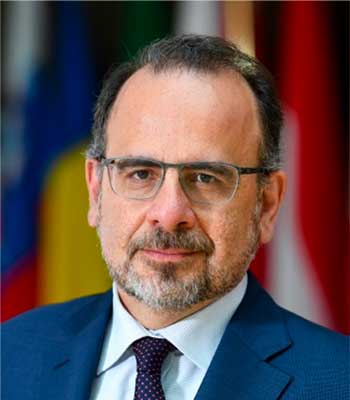 Luca Jahier, rapporteur for the EESC opinion on the Commission proposals from the Civil Society Organisations' Group, stated:
 We have a real problem with this new budget. First, on one hand, we have an increase of only + 0.1% compared to the previous MFF, and on the other hand, we have strong new priorities: defence, competitiveness, etc., that we all welcome, but
de facto
there is no ambition to have a higher and stronger budget to cope with everything. Second, there are no new debt instruments to finance large-scale strategic investments, like NextGenerationEU. Another serious problem is the reduction of the common agricultural policy (CAP) and the cohesion funds. Finally, new own resources are a positive step, but again it is not enough…
What's next?
The decision on the future long-term EU budget and revenue system will be discussed by Member States in the Council, acting by unanimity, with the consent of the European Parliament for the MFF, and, where relevant, ratification by national parliaments for the revenue.
The EESC is currently working on its position on the proposals. The opinion ECO/682 (Multiannual financial framework 2028-2034) will be presented in January 2026 at the EESC plenary session.
Key sources and further reading:
- European Commission: Multiannual Financial Framework
- European Parliament: Understanding the EU Budget
- Council of the EU: EU long-term budget
- Previous EESC opinions in preparation for the MFF 2028-2034:
[1] European Parliament Research Service, MFF_treemaps_COMPARAISON overall | Epthinktank | European Parliament