
European Economic
and Social Committee
EU Bioeconomy Strategy: Towards a circular, regenerative and competitive bioeconomy

What is the EU Bioeconomy Strategy about?
The EU Bioeconomy Strategy sets out a vision for a sustainable and circular bioeconomy that reduces dependence on fossil resources, mitigates climate change, and fosters innovation and competitiveness. It focuses on three main pillars:
- Developing new value chains;
- Strengthening ecosystems;
- Promoting a just transition.
The strategy also emphasises the need for cross-sectoral cooperation, involving agriculture, forestry, fisheries, food, bio-based industries, and waste management.
The European Economic and Social Committee’s opinion (EESC opinion) on the subject, for which I am the rapporteur, will assess whether the strategy’s objectives are ambitious enough, how it can be implemented effectively, and what role civil society should play in shaping and monitoring its progress.
According to the European Commission proposals, what’s new in this Bioeconomy Strategy compared to previous EU policies related to the bioeconomy?
The European Commission’s updated EU Bioeconomy Strategy introduces several new elements compared to the previous versions (2012 and 2018):
Industrial uptake and market expansion
While previous strategies focused on research and innovation, the updated framework prioritises scaling up bio-based innovations, developing lead markets for bio-based materials and technologies, and ensuring a sustainable supply of biomass. The goal is to accelerate the industrial uptake of bio-based solutions and reduce Europe’s dependence on fossil resources.
Competitiveness and resilience
The new strategy places greater emphasis on strengthening Europe’s competitiveness in the global bioeconomy market, which is projected to grow rapidly. It includes measures to support European industries in leading the transition, such as the proposed Bio-based Europe Alliance and increased investment in biotech and biomanufacturing.
Innovation and investment scaling
The Commission plans to generate greater demand for bio-based content in products, including by setting targets in relevant EU legislation. This represents a shift from research-focused support to market-driven implementation.
Why is the strategy important and what are the main challenges in drafting the EESC opinion?
Balancing the economy with nature
The bioeconomy must deliver on both economic and environmental goals. While the strategy aims to create jobs and boost innovation, there are concerns about the potential over-exploitation of biological resources. The EESC must ensure that the strategy promotes regenerative practices and does not compromise biodiversity, ecosystems and people’s health.
Ensuring inclusivity and social fairness
The transition to a bio-based economy should not leave anyone behind. The EESC opinion must address how to support workers, farmers, and local communities, ensuring that the benefits of the bioeconomy are widely shared.
Enhancing coherence with other EU policies
The Bioeconomy Strategy must align with other policies such as the European Green Deal, the Circular Economy Action Plan, and the Common Agricultural Policy. The EESC is examining how to avoid conflicts and create synergies between these policies.
How have EU civil society networks reacted to the Commission proposals?
- Joint civil society position – CSOs call for a future‑proof EU Bioeconomy Strategy:
A coalition of around 60 European NGOs (including Oxfam, Fern, Ecodes, European Environmental Bureau members and others) has warned that the bioeconomy risks exceeding ecological limits if it focuses mainly on substitution and growth. They are calling for strict respect of planetary boundaries, reduced overall biomass demand, and strong social and environmental safeguards. - European Environmental Bureau: Commission’s Bioeconomy Strategy falls short of curbing Europe’s resource crisis
- Further reactions can be found at: EU Bioeconomy strategy - Towards a circular, regenerative and competitive bioeconomy - Related links
What is my initial assessment of the strategy?
We have a real problem with this new strategy.
First, the Bioeconomy Strategy does not acknowledge the need to drastically reduce pressure on ecosystems, phase out the fossil-based economy and make the bioeconomy really circular. This is a crucial omission, given that the EU’s unsustainable production and consumption are already massively overshooting ecological boundaries and putting people, nature and businesses at risk.
Second, the strategy falls short of setting standards and methodologies for responsible use and non-use, and fails to set out what uses of biomass are genuinely most valuable to society. For instance, it fails to prioritise the material uses of biomass – which are more sustainable and resource efficient – over its use for energy.
If we want a resilient society, aligning with natural cycles is crucial, so let’s not forget that the EU’s bioeconomy must be a model of global responsibility, not just of regional competitiveness.
What’s next?
- European Commission: Timeline Bioeconomy Strategy
- Council of the EU: Bioeconomy - Council backs moving bio-based innovations from lab to production
- The EESC’s opinion on the new Bioeconomy Strategy is expected to be adopted during its April plenary session. It will provide a comprehensive assessment of the strategy, highlighting both its potential and the areas where it needs improvement. The opinion will also emphasise the importance of multi-stakeholder dialogue and robust monitoring to ensure that the strategy remains relevant and effective in the face of evolving challenges and planetary boundaries.
Key sources and further reading on the new Bioeconomy Strategy
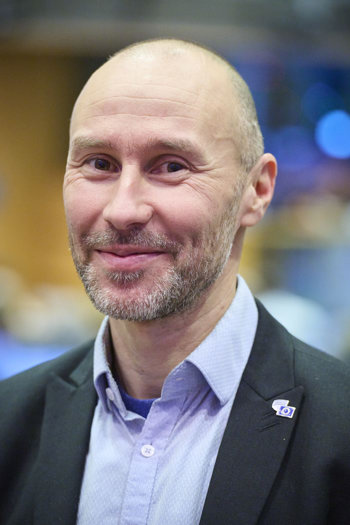
Arnaud SCHWARTZ (France)
EESC rapporteur, NAT/974 EU Bioeconomy Strategy
Member, EESC Civil Society Organisations' Group
Vice-President, France Nature Environnement (FNE)
Board member, European Environmental Bureau (EEB)
© EU/EESC