
European Economic
and Social Committee
CURRENT AFFAIRS: EU-US trade deal

In early April this year, the US administration adopted international trade measures imposing tariffs on individual states in the global economy. The global trade war that ensued, and is still ongoing, is having a detrimental effect on the stable, sustainable and inclusive growth of the EU Member States’ economies.
In July, representatives of the European Commission and the US administration agreed to sign a framework agreement based on reciprocal, fair and balanced trade relations. The introduction of a single, all-inclusive US tariff ceiling of 15% for EU goods, as agreed in this EU-US trade deal, is part of a new protectionist dimension to international trade. For comparison, according to an analysis carried out by Bruegel, the average US tariff rate on imports from the EU was 1.47% in 2023. The EU, for its part, intends to eliminate tariffs on all US industrial goods, although its economy will face higher tariffs on average. For EU countries, this will have an impact on the labour market in the automotive and pharmaceutical industries, as well as in the areas of energy, agriculture, etc. It is still too soon to assess the impact of this agreement, but, in any case, it will have negative consequences for the economies of the EU Member States.
Before the United States introduced its tariffs, the euro area Member States were expected to record slightly higher economic growth. According to the latest World Economic Outlook presented by the International Monetary Fund in October 2025, the growth projection for euro area countries is 1.2% in 2025, 1.1% in 2026 and 1.1% in 2027.
In order to eliminate as far as possible the negative consequences of the tariffs introduced by the US administration, the Commission needs to take a comprehensive set of measures, including the conclusion of bilateral trade agreements with the EU’s largest trading partners. Furthermore, the EU needs to ratify the trade agreement with the Mercosur countries, deepen trade relations with the United Kingdom, continue to deepen trade cooperation with the European Free Trade Association (EFTA) states — particularly Switzerland — start negotiations with the United Arab Emirates and other Gulf states, and continue concluding trade agreements with the ASEAN countries.
The current international trading system is less functional than it ever has been since 1947. The Commission, in cooperation with the largest trading partners, should therefore seek to restart the effective functioning of the World Trade Organization as one of the cornerstones that can ensure the sustainable, resilient and inclusive economic growth of the EU Member States.
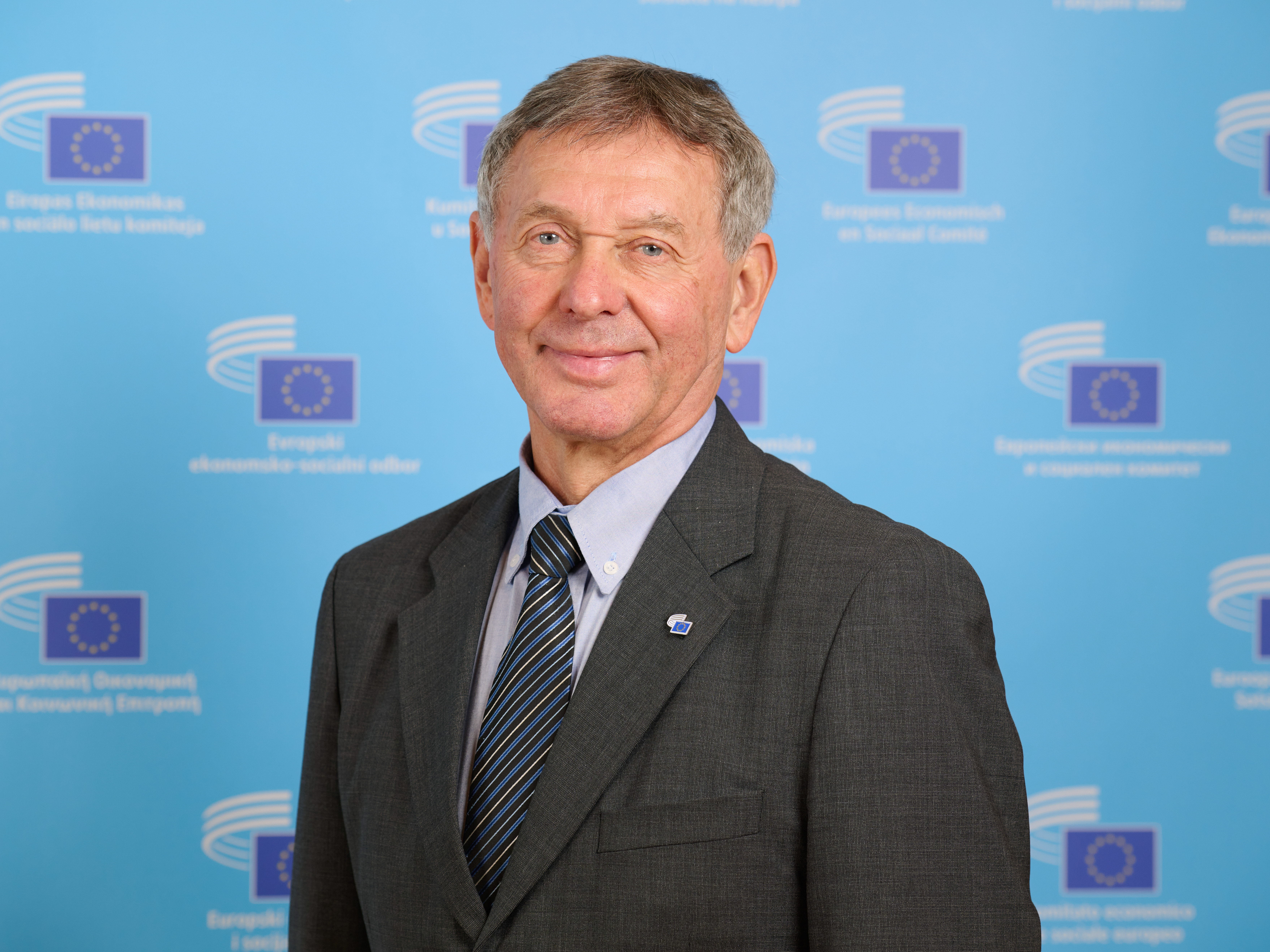
Juraj SIPKO (Slovakia)
Members, EESC Civil Society Organisations' Group
Director, Institute of Economic Research, Slovak Academy of Sciences
© EU/EESC