
European Economic
and Social Committee
CURRENT AFFAIRS: Child safety online

Political courage to regulate social media: what we really need to keep younger generations safe online
Lately, politicians have been leaning into simplistic solutions to protect younger generations from the threats of social media: banning young people from platforms rather than making the online world safe for all.
In France for instance, the government tried to adopt a social media ban for those under 16 – without anyone really knowing how to implement these measures, just like in Australia, where a similar measure is in place and yet 70% of under-16s still use social media (1).
Moving away from its original bold announcements, the European Commission took the time to listen to all involved, including youth organisations. Through a special panel of experts reflecting the opinions and lived realities of key players, this participation exercise made it possible for President Ursula von der Leyen to announce in her State of the Union speech a solution that was co-constructed with those most impacted (and thus, a quite frankly better proposal). The final proposal follows the panel’s recommendation to shift the restriction in access from 16 to 13, which, legally, is already supposed to be the norm (though enforcement still proves weak). But will a ban efficiently solve all of the current problems?
While no one is trying to underestimate how dangerous social media is, it must be highlighted that it is hypocritical to think of it only as a ‘youth’ problem. Older generations – less digitally literate – are just as often victims of scams or algorithmic manipulation online. Reducing this issue to a ‘youth’ matter minimises the problem and ignores the reality: that it is about platform regulation and the political courage it takes to protect all of us from the harms of algorithmic addictions and manipulation.
It is also concerning to see Member States adopting national legislation on these questions on their own: in doing so, they undermine the EU’s global influence. Without proper EU regulation that forces the rest of the world to act, we remain vulnerable to the interests of platforms. Particularly when it comes to protecting groups from specific areas of the internet, be it social media or pornographic websites, without a proper EU solution developed with youth organisations and civil society organisations, all it would take is one new technology to prevent our public debate from having any real-life consequences.
- eSafetyCommissioner, Social Media Minimum Age: Compliance update, https://www.esafety.gov.au/sites/default/files/2026-03/SocialMediaMinimumAgeComplianceUpdateMarch2026.pdf?v=1779925103131
This article was updated on 17/09/2026.
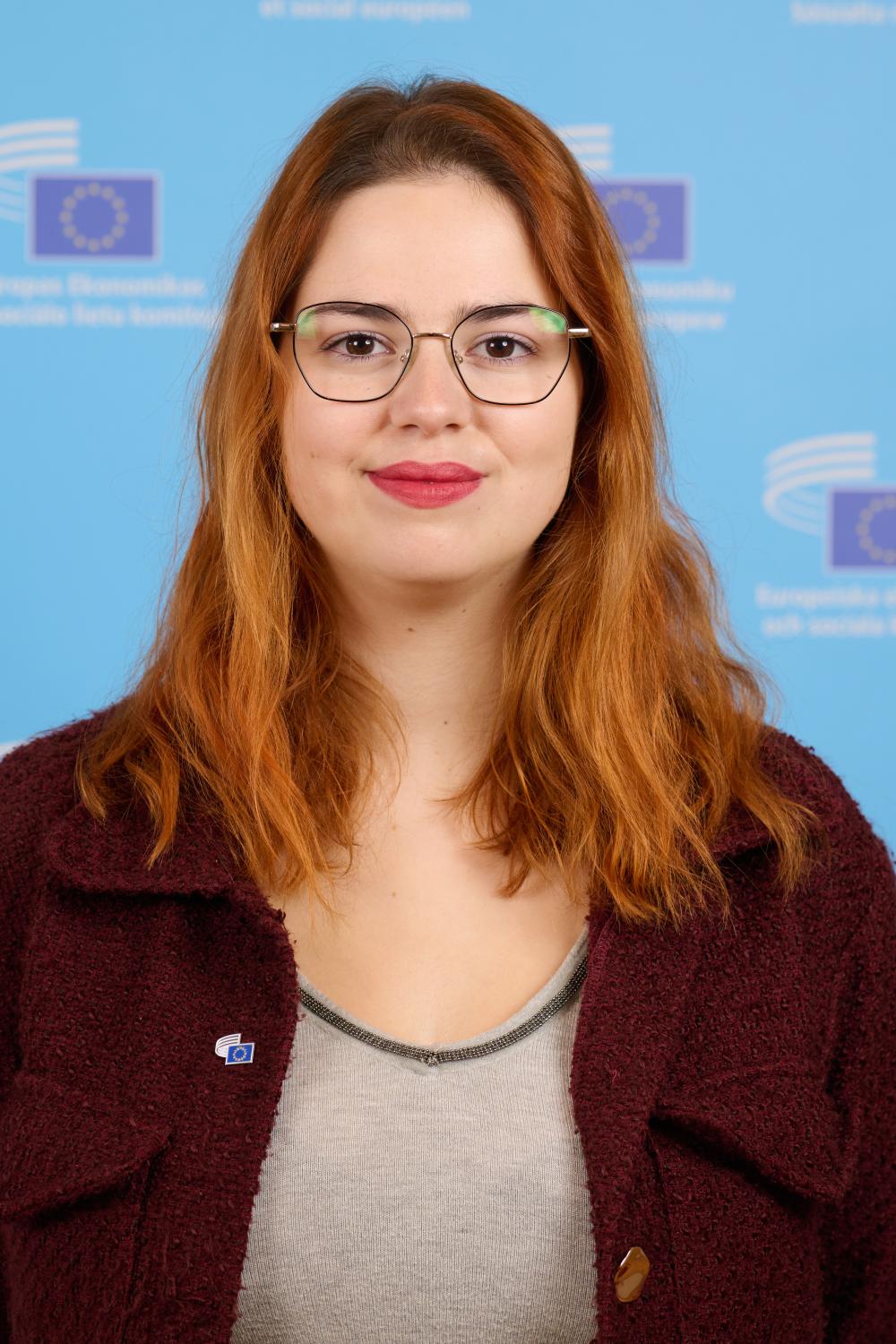
Laure NICLOT (France)
Member, EESC Civil Society Organisations’ Group and EESC Youth Group
European and International Vice-President, Committee for National and International Relations for Youth and Non-Formal Education Organisations (CNAJEP, French Youth Council)
Vice-President, Mouvement Européen France
© EU/EESC