
European Economic
and Social Committee
CURRENT AFFAIRS: ECESP Annual Conference 2026
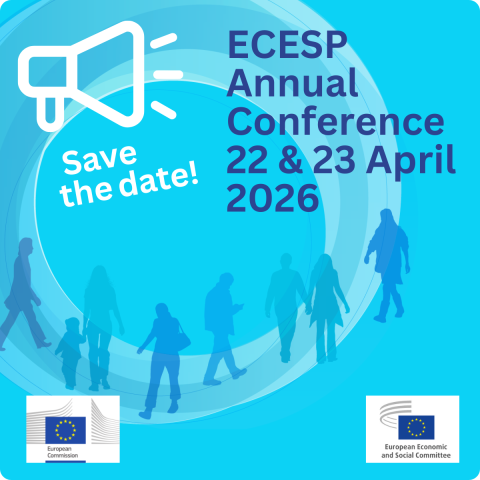
From ambition to implementation - Shaping a competitive and fair circular Europe
The 2026 annual conference of the European Circular Economy Stakeholder Platform (ECESP), entitled 'A competitive and fair circular Europe: the ambition at the heart of the single market' and scheduled for 22-23 April 2026 in Brussels, comes at a pivotal moment for Europe’s circular transition. While the rates of separate collection are improving across the Member States, structural challenges persist: viable business models remain limited, and markets for secondary raw materials are still underdeveloped. In response, the European Commission’s upcoming Circular Economy Act (CEA) signals a shift from policy vision to systemic implementation.
The ECESP is playing a central role in this transition. Established in 2017 as a joint initiative of the European Economic and Social Committee (EESC) and the European Commission, it has evolved into a key multi-stakeholder hub connecting policy-makers, businesses, civil society and practitioners. Its work rests on three pillars: stakeholder coordination through a 24-member Coordination Group, structured policy dialogue (including the annual conference), and communication and knowledge-sharing.
The 2026 conference will reflect this architecture. Day one will focus on high-level debates around the objectives of the CEA and the role it is expected to play in strengthening the single market, particularly by addressing fragmentation and enabling scale for circular solutions. Day two, led by ECESP stakeholders, will translate these ambitions into practice through thematic sessions and workshops on financing, public procurement, the social economy, value chains and critical raw materials.
More broadly, these priorities tie in with a wider EU policy agenda that we often discuss at the EESC – closely linked to the European Green Deal and the Bioeconomy Strategy – highlighting how the circular economy connects with efforts to reduce resource dependency, strengthen resilience, and support a fair and just transition.
Against that backdrop, the conference is not just a forum for discussion, but a testing ground for solutions capable of bridging the gap between growing circular ambitions and still-fragile economic realities.
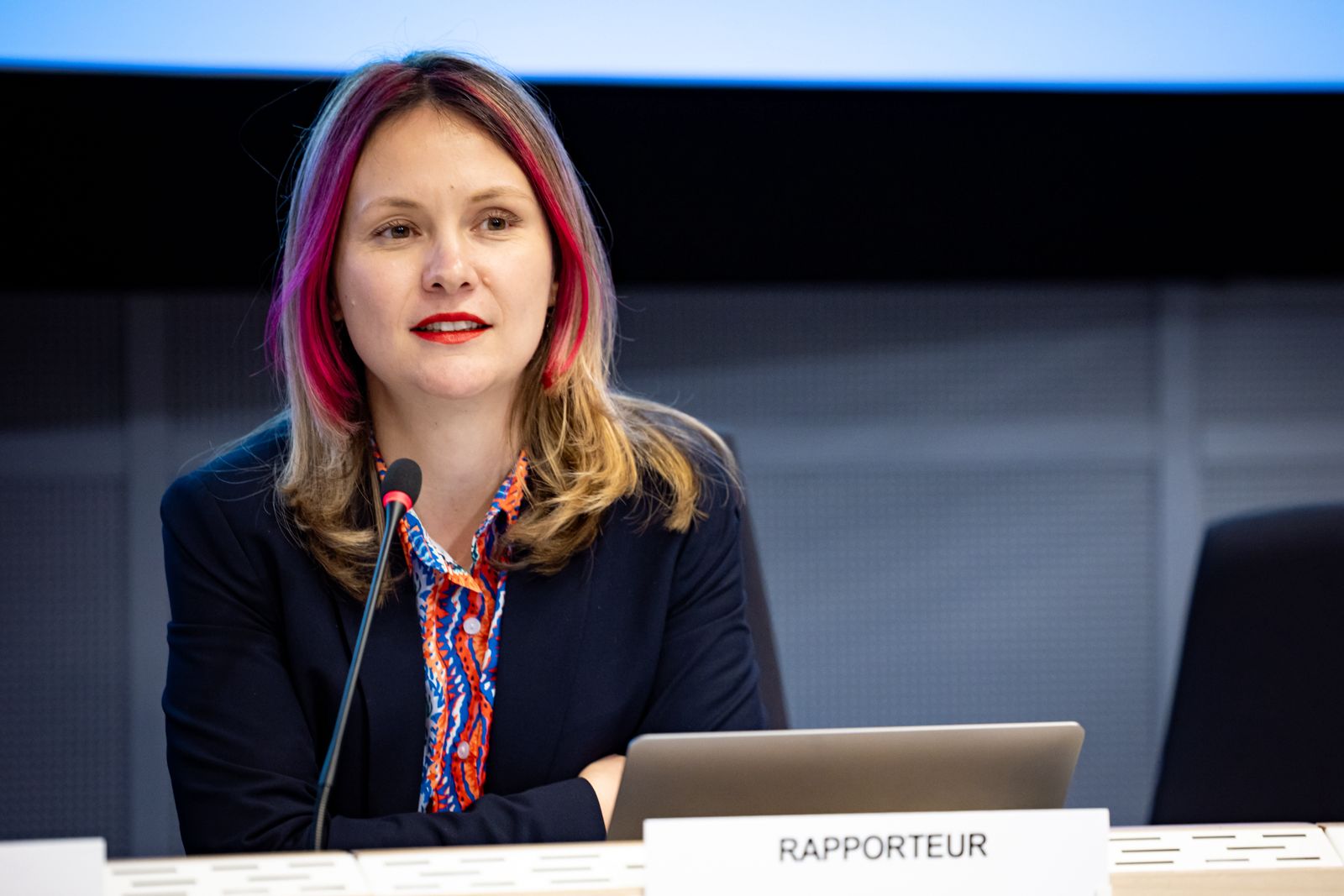
Corina MURAFA (Romania)
EESC member, Coordination Group, European Circular Economy Stakeholder Platform (Term 2025-2028)
Member, EESC Civil Society Organisations' Group
Co-founder, Romanian Energy Poverty Observatory (ORSE) of the Centre for the Study of Democracy (CSD)
© EU/EESC