
European Economic
and Social Committee
CURRENT AFFAIRS: 2026 Hungarian parliamentary election
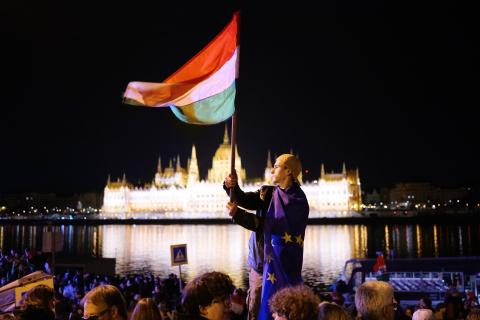
Spring in Budapest – and what comes next
It was an evening that gave rise to hope. When Péter Magyar was speaking to celebrating crowds in Budapest and the projections were confirming his victory over Viktor Orbán, half of Europe was glued to their screens ... breathing a sigh of relief. Finally! After 15 years of erosion, press freedom on paper only, democracy in form only, and formal demands from Brussels going unheeded ... at last a result that counted.
And yes, I am delighted! Genuinely so!
But after the relief, there is a serious question that needs to be addressed: who is Péter Magyar, actually? A man who only two years ago was part of the ‘system’. He has been catapulted into politics as a result of a divorce drama, not decades of quiet persuasion. He has no established party structure, no experienced administrative ranks behind him, no clear European policy agenda – beyond being the antidote to Orbán.
Europe and his voters have high expectations of him. Restoring the rule of law, guaranteeing media freedom, unlocking frozen EU funds, bringing civil society out of the defensive: all that is a lot for a beginner.
Civil society in particular has shown during all these years in Hungary what is possible when people stand together under pressure. It has survived – painstakingly, with support from European friends, and with one eye on the authorities and the other on the exit. Now it needs more than just a friendlier tone from the occupant of the government palace. It needs genuine legal protection, financial independence and the political will to recognise its function as a corrective to the state and not as a troublesome critic.
The first hundred days will show if Magyar has the will to deliver this. Europe should be kindly disposed towards him during this time – providing him with support, although also setting out clear expectations. And civil society, which has managed to withstand that long winter, will be reminding him of those expectations whenever he hesitates.
The fact that Magyar has already reached an agreement with Commission President von der Leyen on releasing the frozen EU funds is a first concrete sign pointing in the right direction.
Spring really has arrived in Budapest. And sometimes a new beginning is all that is needed!

Rudolf KOLBE (Austria)
Vice-President, EESC Civil Society Organisations' Group
Member of the Executive Board, Austrian Federal Conference of the Liberal Professions (BUKO)
Member of the Executive Board, Austrian Federal Chamber of Architects and Chartered Engineering Consultants
© EU/EESC