
European Economic
and Social Committee
CIVINET Slovenia-Croatia-SEE: Twelve years of moving cities forward
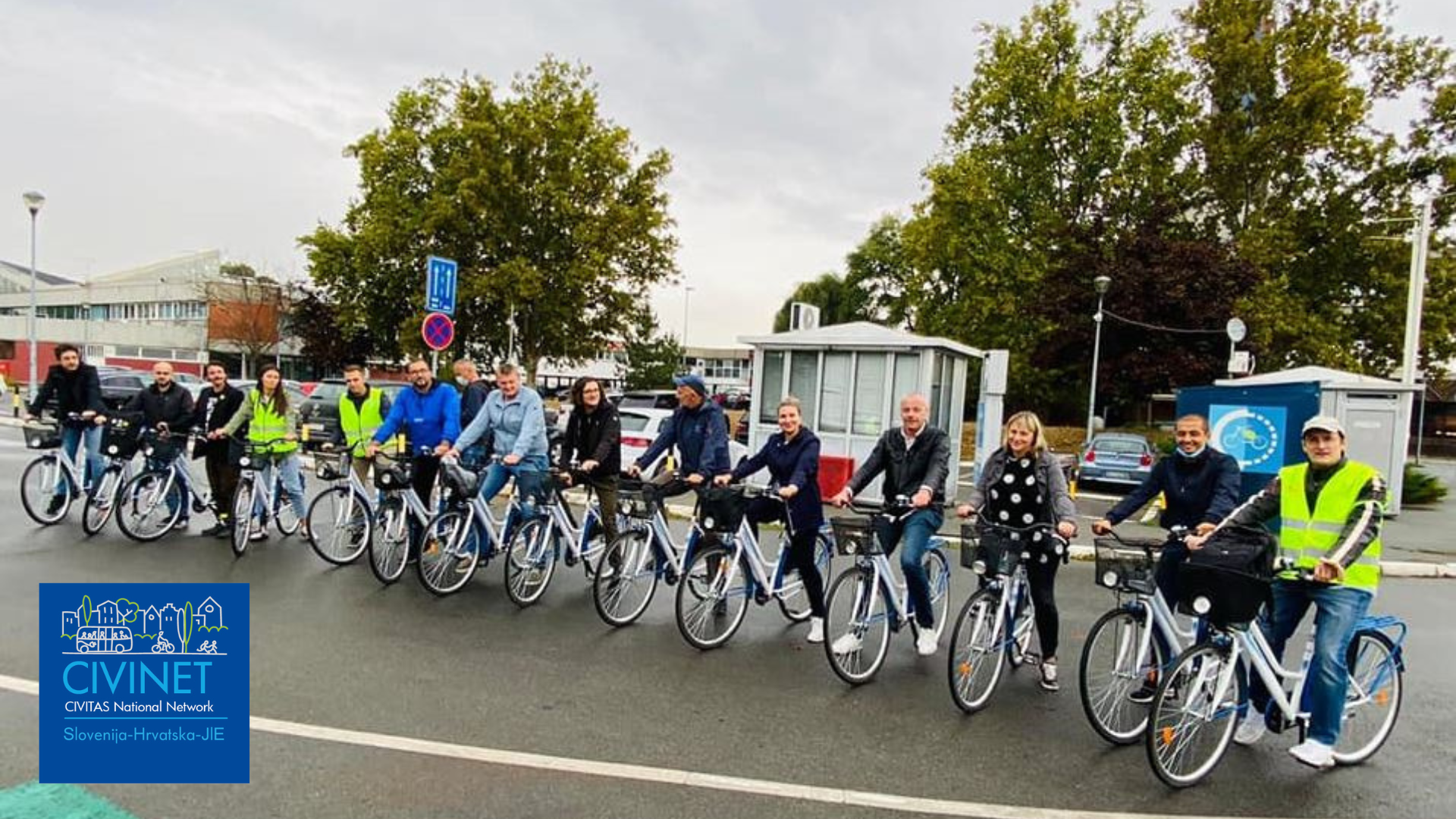
For more than twelve years, CIVINET Slovenia-Croatia-Southeast Europe has been helping cities rethink how people move
Every day, millions of people in our region spend too much time stuck in traffic, breathing polluted air or navigating streets designed for cars rather than people. When the network was launched in 2013 in Ljubljana, it grew out of a simple conviction: cities facing similar mobility challenges make faster, smarter progress when they learn from one another instead of working in isolation.
This belief has since grown into a regional community of more than 240 members across Slovenia, Croatia, Bosnia and Herzegovina, Montenegro, North Macedonia and Serbia. Local governments, public institutions, universities, civil society organisations, the private sector and mobility experts all work together towards one goal: cleaner, safer and more people‑centred mobility. Today, ours is the largest and most active CIVINET in Europe.
One of its greatest strengths is the ability to translate European mobility policies – especially those developed through the CIVITAS initiative – into practical, realistic steps that cities can implement. Much of this work focuses on sustainable urban mobility plans (SUMPs), which help cities improve quality of life through integrated planning and meaningful citizen engagement.
Why this matters now
Cities across the region face the same pressures: congestion, polluted air, climate impacts and the need to reclaim public space for people. CIVINET provides a trusted space where practitioners can exchange knowledge, test new ideas and collaborate on EU‑funded projects. Members learn from each other’s successes – and challenges – across all aspects of mobility, from cycling infrastructure and public transport upgrades to mobility management and urban‑rural connectivity.
What CIVINET offers
- Capacity‑building through training, workshops, webinars and study visits
- Regular updates on mobility trends and EU policy developments
- Connections with other CIVINETs across Europe
- Guidance on EU funding, planning requirements and policy alignment
- Support for SUMP development and peer‑to‑peer learning
- Partnership building for programmes such as Horizon
- Annual forums and assemblies for decisionmakers and practitioners.
The network is guided by political, management and academic committees, ensuring that both expertise and leadership shape its direction. My organisation, ODRAZ – Sustainable Community Development, is proud to be a founding member and to serve as its secretariat.
Why is CIVINET essential today?
Mobility challenges don’t stop at borders – and neither should solutions. CIVINET strengthens regional capacity, opens pathways to EU funding and fosters a culture of cooperation on which cities increasingly rely.
After twelve years, the network remains a catalyst for change – proof that when cities learn together, they move forward together.
We invite all cities and organisations in the region that are committed to sustainable mobility to join us in shaping the next decade of change.

Lidija PAVIĆ-ROGOŠIĆ (Croatia)
Member, Civil Society Organisations’ Group
Member of the Board, ODRAZ – Sustainable Community Development
© EU/EESC