
European Economic
and Social Committee
Young People Discuss Democracy and Civic Engagement in Žilina
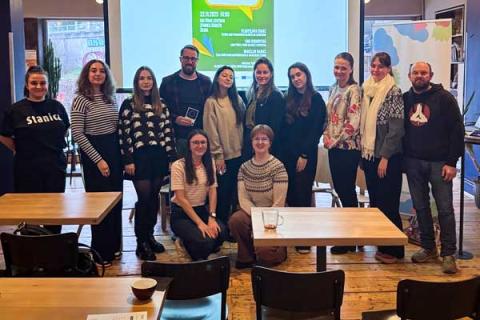
Democracy, youth participation, and the strength of civil society were at the heart of a public discussion organised by the Slovak Youth Council this weekend at the Stanica Záriečie Cultural Centre in Slovakia. The event, held on Saturday afternoon, brought together young people and representatives of civic organisations for an open exchange on what it means to be an active citizen in Slovakia today.
Participants explored the meaning of active citizenship in a modern democracy, emphasising that engagement goes far beyond election cycles. The conversation highlighted the importance of volunteering, community initiatives, and the ability to express opinions publicly.
Ema Brunovská, Analyst at the Youth Council of Slovakia, underlined the importance of involving young people directly in democratic processes, she said: “Our data show a clear pattern that young people are willing to engage, but only when the process feels meaningful and transparent. Almost every second young person tells us they do not believe their participation would change anything and that is the barrier we must address. If institutions create simple and concrete ways for youth to contribute, their willingness to take part rises significantly. ”
Speakers discussed how young people can communicate their goals effectively, how they can organise within communities, and how civic society organisations help amplify their voices.
A strong moment of the event came from Vladyslava Chaus, Member of the Council of Ukrainian Youth in Slovakia, who spoke about her personal experience with civic activism and living through conflict.
Chaus shared reflections on what democracy and active citizenship mean in the context of war and displacement, offering insights into how young Ukrainians continue to participate in public life despite uncertainty. “Living through constant crises and war, we have realized that democracy is not a guarantee, but something that requires struggle and immense responsibility. This realization compels us to value all its manifestations and to actively participate in civic life, regardless of our location. ” said Chau.
Miroslav Hajnoš, Member of the European Economic and Social Committee (EESC), explained how the workers and trade unions act as the institutional bridge between citizens and EU decision-making.
Hajnoš highlighted that through the EESC, trade unions, civil society has a formal seat at the table in shaping European policies: “Trade unions give people confidence and collective strength. They show that you don’t have to face workplace challenges alone — and that defending your rights is not an act of conflict, but an act of citizenship.”
According to Hajnoš, this model strengthens democracy by ensuring that policies reflect real social and economic experiences rather than just political negotiations.
Moderated by EU Youth Dialogue delegate, Veronica Lacová, the event adopted an open format, encouraging participants to ask questions, share experiences, and challenge ideas. Organisers said that events like these are vital for keeping democracy participatory and resilient, especially for young people who are only starting to engage with public life.