
European Economic
and Social Committee
Harvesting hope: The realities of seasonal and migrant workers in agri-food value chain
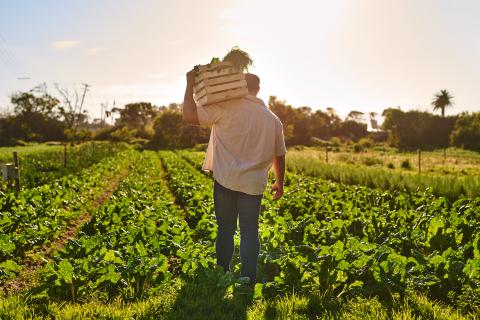
Employment in agriculture has been steadily declining over the last 15 years. The agri-food industry relies heavily on the contributions of seasonal and migrant workers to meet the demands of planting, harvesting, and processing crops. The current situation, best practices, opportunities, and the state of play of European policies on seasonal and migrant workers were discussed at a seminar organised by SafeHabitus and hosted by the European Economic and Social Committee (EESC).
EU Member States manage their own seasonal worker schemes depending on the needs of the domestic labour market, their ties with third countries and their broader immigration system. The reality of seasonal agricultural work is a harsh one, with generally poor working and living conditions. Undocumented migrants, but also legal ones, can fall victim to illegal gang-master practices or even modern forms of slavery. Exploitation of women occurs in certain regions.
''The decline of employment in European agriculture underscores the crucial need for both EU and non-EU seasonal workers during peak planting and harvesting seasons, highlighting the challenges in ensuring decent working and living conditions for these workers''
A recent study by the EESC where Ms Merlo worked on, estimates the presence across the EU Member States of almost 2 million EU (domestic and intra-EU) seasonal workers and more than 0.4 million non-EU seasonal workers in the agriculture sector. One of the most important pieces of evidence deriving from this sizing exercise is that, in 2021, an estimated 71% of these non-EU seasonal workers in agriculture were not employed under the aegis of the Seasonal Workers Directive and, accordingly, were not subject to its provisions in term of rights and social protection.
Seasonal and migrant workers often lack access to essential social protections, including healthcare, unemployment benefits, and retirement pensions. Their temporary or migrant status may exclude them from eligibility for these benefits, leaving them vulnerable to financial insecurity and social exclusion, particularly during periods of unemployment or illness.
Peter Schmidt, president of the Agriculture, Rural Development and the Environment ( NAT) section said: Seasonal and migrant workers are often overlooked in agri-food chains. Advancing sustainable food systems means ensuring fair prices for everyone involved. This seminar is a crucial step towards meaningful policy proposals.
Member States may adopt stricter provisions than those set in EU legislation and are responsible for defining and applying social and labour legislation according to national rules. This national ‘flexibility’ implies the existence across the EU of heterogeneous approaches to guarantee social protection. In addition, the European Commission (EC) receives little and fragmented information on the way labour rules are enforced at the country level.
The EU must be guided by the principle of being considered a community of common destiny'. The EESC calls for action to: tackle job insecurity and its consequences, not least the reduction or suspension of remittances intended for workers' families in their countries of origin; formalise the status of migrants employed in personal care or the agricultural sector; and design and develop realistic, legal, safe and feasible pathways for labour migration to the EU. (ks)
Work organisation
Recommended for you
Decision repealing Directive 89/629/EEC
Opinion
PUNTOS CLAVE El CESE: Considerando que el contenido de la propuesta es satisfactorio y no es objeto de ninguna observación por su parte, decidió emitir un dictamen favorable sobre la propuesta.
La UE necesita más inversión pública en infraestructuras energéticas para luchar contra el cambio climático
News
En un Dictamen aprobado en el pleno de septiembre, el Comité Económico y Social Europeo (CESE) afirma que se necesita una inversión pública masiva para lograr la transición energética y cumplir los…
Energía: el CESE advierte contra la creación de nuevas dependencias
News
El Comité Económico y Social Europeo (CESE) se pronuncia con firmeza sobre la energía en un Dictamen aprobado en su pleno de septiembre: la propuesta de la Comisión es un paso en la dirección…
La transición digital debe ser justa: los derechos humanos y el control humano deben seguir teniendo una importancia fundamental
News
El Comité Económico y Social Europeo (CESE) señala las oportunidades que presenta la revolución digital, pero también advierte de sus peligros: si se implantan con demasiada rapidez, las soluciones…
La UE necesita ya un plan de acción para ofrecer una vivienda asequible y digna
News
En la conferencia de alto nivel que el Comité Económico y Social Europeo (CESE) celebró en Riga los participantes dieron la voz de alarma por la crisis de la vivienda asequible y advirtieron que ya…