The European Economic and Social Committee (EESC) recognises the need to adapt the excise duty framework for tobacco products in line with market developments. However, it urges caution regarding excessive increases in excise duties, as these could lead to an increase in illicit trade.

The European Economic and Social Committee (EESC) recognises the need to adapt the excise duty framework for tobacco products in line with market developments. However, it urges caution regarding excessive increases in excise duties, as these could lead to an increase in illicit trade.

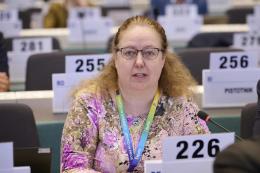
Any increase in tobacco excise duties must be proportionate, economically viable and beneficial to businesses, workers and society as a whole, said EESC member Mariya Mincheva, standing in for Matteo Carlo Borsani, rapporteur for the EESC opinion on the revision of the Tobacco Taxation Directive. Speaking at the EESC plenary session in February, Ms Mincheva warned against sharp increases in excise duties, which could have adverse effects, such as fuelling illicit trade, undermining tax revenues and weakening public health outcomes. 

For this reason, the EESC recommended gradual adjustments to excise duties, accompanied by strengthened enforcement, customs cooperation and cross-border anti-smuggling measures. Policy-makers should involve the social partners, through sharing of clear and transparent information on any policy measures and draft legislation and consultation before proposing any future policies or legislation.

The EESC called for sufficient flexibility for the Member States in their excise structures, including the option to apply unit-based or weight-based taxation for heated tobacco products. This would allow national market conditions to be taken into account while respecting EU minimum rates. In line with subsidiarity and the Member States’ fiscal sovereignty, the Commission’s use of delegated acts should be limited to technical adjustments linked to inflation.

While supporting efforts to reduce tobacco consumption, the EESC noted that taxation alone cannot achieve this objective. It called for risk-proportionate taxation so that non-combustible and reduced-risk products are not taxed at the same rate as combustible tobacco, in line with the 'less harm, less tax' principle and the goals of Europe’s Beating Cancer Plan. 

Proposed by the European Commission in 2025, the revised directive aims to reflect developments in the tobacco market by extending its scope to products such as e-cigarettes, heated tobacco and nicotine pouches. These would be subject to new minimum taxes adjusted to Member States’ economic conditions. The proposal also seeks stronger controls on raw tobacco to prevent diversion into the illicit supply chain. Under the special legislative procedure, the Council must adopt the proposal unanimously after consulting the European Parliament. (mp/ll)

The EESC:

  • calls for proper funding for companies of all sizes and the involvement of a range of actors in collaborative and cross-border research and innovation partnerships, thereby enhancing the competitiveness of European industrial ecosystems and the EU’s economic security;

By Philip von Brockdorff

The European Economic and Social Committee (EESC) welcomes the 2025 Strategic Foresight Report: Resilience 2.0, but we believe that future foresight reports would be more relevant if they also addressed external radical disruptions, the EU’s innovation gaps, internal institutional challenges and the costs of delaying EU enlargement.

By Philip von Brockdorff

The European Economic and Social Committee (EESC) welcomes the 2025 Strategic Foresight Report: Resilience 2.0, but we believe that future foresight reports would be more relevant if they also addressed external radical disruptions, the EU’s innovation gaps, internal institutional challenges and the costs of delaying EU enlargement.

The EESC is uniquely positioned to detect weak signals and underlying trends in strategic foresight. Through a permanent and structured mechanism, the EESC could contribute to the Commission’s strategic foresight cycle at all stages, rather than only at the end. To strengthen the strategic foresight process, the EESC also advocates the systematic use of multiple, divergent scenarios to stress-test existing or proposed strategies. 

Strategic foresight should primarily support sustainable and inclusive well-being as part of the European social model, with a focus on the European Pillar of Social Rights and intergenerational fairness. At the same time, it should take into account the current fragmentation of European capital markets, which severely constrains the efficient flow of capital to firms of all sizes, limiting innovation for SMEs and microenterprises. The EESC considers the completion of the Savings and Investments Union to be a central pillar of the EU’s resilience strategy, and this should feature prominently in the process. Equally, greater recognition of the role of entrepreneurship, SMEs and microenterprises is essential.

Future strategic foresight reports should also examine whether certain regulatory approaches unintentionally undermine the competitiveness of European companies and innovators compared with third-country operators, or whether they incentivise the relocation of innovation outside Europe. In this context, we must explicitly acknowledge that the EU is falling behind global competitors in certain areas of technological innovation, with all the consequences this entails. Similarly, we need to adequately address the risks for the EU if it fails to develop and scale these technologies.

A more thorough reflection on labour migration driven by demographic change would also be relevant, particularly in light of the projected decline in the EU's working-age population by 2040. 

With regard to environmental considerations, the EESC calls for strategic foresight to integrate a specific analysis of the triple planetary crisis into the report, by developing dedicated chapters on climate, biodiversity and pollution, across short-, medium- and long-term scenarios.

Finally, the EU could benefit from a joint foresight exercise aimed at developing strategic visions for future reports that are embraced by all EU institutions. Such an approach would help align strategic priorities and commit EU institutions to a shared long-term vision, rather than allowing parallel or competing strategic narratives to emerge.

EU Strategic Foresight is a policy tool used by the European Commission to think ahead about major global economic, technological, social, environmental and geopolitical changes and help shape policies for the future. Philip von Brockdorff, rapporteur of the EESC opinion on the Strategic Foresight Report 2025, explains what Europe needs to consider to stay prepared in today’s turbulent geopolitical and economic context.

EU Strategic Foresight is a policy tool used by the European Commission to think ahead about major global economic, technological, social, environmental and geopolitical changes and help shape policies for the future. Philip von Brockdorff, rapporteur of the EESC opinion on the Strategic Foresight Report 2025, explains what Europe needs to consider to stay prepared in today’s turbulent geopolitical and economic context.

The EESC:

  • recommends that the Regulation maintains a clear signal for zero and low-emissions vehicles. Low-emission vehicles act as a short and mid-term enabler of alternative fuel infrastructure and support industrial adaptation, when used primarily in an electric mode;

Social media may have democratised political engagement, but it has also weaponised misogyny. Women entering public life face online attacks that differ sharply from those directed at men, targeting their appearance, private lives and family roles rather than their ideas. Such abuse undermines women’s very presence in politics and discourages many from entering or staying in public life, writes our surprise guest Barbara Helfferich, political scientist, gender equality expert and co-founder of a Brussels-based feminist think tank.

Social media may have democratised political engagement, but it has also weaponised misogyny. Women entering public life face online attacks that differ sharply from those directed at men, targeting their appearance, private lives and family roles rather than their ideas. Such abuse undermines women’s very presence in politics and discourages many from entering or staying in public life, writes our surprise guest Barbara Helfferich, political scientist, gender equality expert and co-founder of a Brussels-based feminist think tank.

The European Economic and Social Committee (EESC) deems sodium batteries a strategically important technology for Europe at its plenary debate on the potential of these batteries and in its latest opinion.

The European Economic and Social Committee (EESC) deems sodium batteries a strategically important technology for Europe at its plenary debate on the potential of these batteries and in its latest opinion.

EESC President Séamus Boland announced that the Committee was placing sodium batteries firmly at the centre of its work on the EU industrial and energy agenda. ‘Sodium batteries, and batteries more broadly, are key for the EU’s competitive edge, and it is urgent that the next Multiannual Financial Framework recognises this by providing the necessary funds for the sector,’ he said.

The EU has already launched large-scale gigafactory projects to produce batteries at high volumes in order to reindustrialise Europe and strengthen its strategic autonomy. However, these projects focus mainly on lithium batteries and largely neglect the emerging technology of their sodium equivalents. 

Unlike lithium, sodium does not expose the EU to the same geopolitical dependencies or supply chain vulnerabilities. Produced from abundant and widely available raw materials in Europe, sodium batteries can reduce dependence on critical imports, support EU climate and industrial objectives and create jobs through the development of gigafactories across the value chain.

The debate also highlighted the strong links between sodium batteries and both the EU’s Green Deal and the EESC’s EU Blue Deal initiative. ‘The EESC put water on the agenda because, in emergency preparedness, water, energy and food are the real raw material emergencies. The vast majority of the Earth’s water is salt water. By using the sodium from desalination processes, we can turn a largely untapped resource into a sustainable, circular industrial solution,’ said Paul Rübig, EESC rapporteur for the opinion on Enhancing EU strategic autonomy and developing a greener and bluer economy: the potential of the sodium battery manufacturing sector.

Europe must act quickly to avoid falling behind its global competitors, which are already advancing on sodium battery technology.  ‘Either we remain mere consumers, or we propose an ambitious plan for the next ten years and become one of the largest suppliers of sodium-based batteries. All European countries can participate in the construction process and benefit from a technology that promotes our independence while creating jobs in all regions,’ said Hervé Jeannin, co-rapporteur for the opinion. 

The EESC opinion on sodium batteries presents an overview of the current situation and the development potential of this emerging industry, it showcases the potential applications of such batteries in different sectors (e.g. by industry, local and regional authorities and private households) and sets out the way forward for the industry. (gb)

© Shutterstock

By the EESC Workers’ Group

Our world stands on the edge, trapped and sandwiched between old oligarchs and autocrats desperate to leave their mark on history before they disappear. Women’s rights, won with great hardship in many places, and still missing in many others, are under threat. These rights, from reproductive to political, are a good indicator of the state of human rights as a whole: those who take away the former will sooner or later abolish the latter as well.

By the EESC Workers’ Group

Our world stands on the edge, trapped and sandwiched between old oligarchs and autocrats desperate to leave their mark on history before they disappear. Women’s rights, won with great hardship in many places, and still missing in many others, are under threat. These rights, from reproductive to political, are a good indicator of the state of human rights as a whole: those who take away the former will sooner or later abolish the latter as well.

While defending women’s rights, and human rights more broadly, is everyone’s duty, female representation is fundamental. The global stage increasingly resembles a playground full of insecure teenagers armed with nuclear weapons, while the technologies that increasingly shape how we think and interact are being designed within a troubling ‘techbro’ culture. 

AI-generated imagery and deepfakes are now widely used to create non-consensual content and enable harassment campaigns targeting women and girls online. These tools amplify forms of abuse that women have long faced on the internet, making such attacks easier and faster to produce, while proper moderation remains largely inadequate and access to justice often very limited.

This is why having women in positions of power is not just a matter of fairness (after all, women make up half the population), but also a better approach to governance and society. In an ideal world, this difference might not exist. In the real world, however, so many vital social functions, such as care, reproduction, feeding and other essential roles, have long been undervalued or ignored by a male-dominated society. So many of the key components that keep the world running are barely recognised, or are even openly treated as a burden, even in today’s society. The very fact that giving birth still disproportionately affects women’s careers and lives, and that the labour market continues to discourage it, despite its fundamental importance for society’s survival, is just one example. 

Building a better society must therefore be a collective effort – created with everyone and for everyone. This is one of our key priorities in the Workers’ Group, both within and beyond labour matters. It is also why we practice what we preach: we have Lucie Studničná as our President and we elected Marija Hanževački as EESC Vice-President, and we have finally achieved gender balance in our membership. We need every perspective in order to build a credible alternative to the outdated world of chest-thumping and muscle-flexing that is threatening to return. 

© UNV/IVY 2026

By Pavel Trantina, member of the EESC Civil Society Organisations’ Group

‘Every Contribution Matters’ is the guiding theme of the International Year of Volunteers for Sustainable Development 2026 (IVY 2026), officially launched by the United Nations on 5 December 2025. This powerful message reflects a global reality: more than 2.1 billion volunteers worldwide give their time, skills and energy to foster solidarity, strengthen humanity and drive positive change. Their contributions are indispensable to achieving the 2030 Agenda for Sustainable Development, responding effectively to humanitarian crises and building resilient, inclusive communities.

By Pavel Trantina, member of the EESC Civil Society Organisations’ Group

‘Every Contribution Matters’ is the guiding theme of the International Year of Volunteers for Sustainable Development 2026 (IVY 2026), officially launched by the United Nations on 5 December 2025. This powerful message reflects a global reality: more than 2.1 billion volunteers worldwide give their time, skills and energy to foster solidarity, strengthen humanity and drive positive change. Their contributions are indispensable to achieving the 2030 Agenda for Sustainable Development, responding effectively to humanitarian crises and building resilient, inclusive communities.

IVY 2026 is both a celebration and a call to action. It invites governments, United Nations entities, civil society organisations, academia and the private sector to deepen their understanding of volunteering, strengthen knowledge-sharing and better integrate volunteering into national and international development strategies. By doing so, volunteering can be fully recognised as a strategic force for sustainable development rather than a complementary activity.

Women play a particularly important role in volunteering worldwide. They represent a large share of volunteers and are often at the forefront of community initiatives, social services and humanitarian responses. At the same time, volunteering has been a powerful driver of progress for women’s rights and gender equality. Many volunteers devote their efforts to supporting women’s empowerment, combating gender-based violence, promoting equal opportunities and strengthening the voices of women in civic and public life.

For the European Economic and Social Committee, and particularly for the Civil Society Organisations’ Group, volunteering is not a new topic. We played an active role during the European Year of Volunteering 2011 and its follow-up initiatives. We have supported the proper measurement of volunteering in line with the International Labour Organization methodology, contributed significantly to shaping the European Solidarity Corps programme, initiated several EESC opinions, commissioned a study on emerging trends in volunteering and organised multiple conferences on the topic. Throughout these efforts, we have consistently advocated stronger enabling environments for volunteers and their organisations.

IVY 2026 offers a new opportunity to build on this legacy. Our objectives are clear: to highlight the transformative power of volunteering, encourage sustained investment, create supportive policy frameworks and secure firm commitments from all stakeholders to strengthen volunteering ecosystems that enable community action to thrive.

Will you join us in making IVY 2026 a meaningful and lasting success?

© Shutterstock_La Famiglia

By Christa Schweng, EESC Employers’ Group member, former EESC president

At a time of demographic decline, skills shortages and rapid economic transformation, Europe cannot afford to underuse its human capital. Women’s full participation in the economy and in the labour market contributes significantly to productivity, innovation and long‑term growth. This is why promoting gender equality is not a social add‑on, but a core economic concern.

By Christa Schweng, EESC Employers’ Group member, former EESC president

At a time of demographic decline, skills shortages and rapid economic transformation, Europe cannot afford to underuse its human capital. Women’s full participation in the economy and in the labour market contributes significantly to productivity, innovation and long‑term growth. This is why promoting gender equality is not a social add‑on, but a core economic concern.

Europe has made progress on gender equality, but the picture remains uneven. Economic participation still lags behind educational parity, and women remain under‑represented as entrepreneurs, investors and business leaders. Women account for only a minority of self‑employed people and an even smaller share of company founders and top decision‑makers. 

This represents a missed economic opportunity as many obstacles remain, one of which is access to finance: too many viable women‑led projects still struggle to obtain credit or investment, despite their economic potential. We need practical solutions to improve women’s access to financing, foster entrepreneurship and strengthen women’s role across the business ecosystem – as founders, managers and investors. Another obstacle is care for children or older family members, which is still mainly seen as a woman’s duty. Sharing care work more equally between women and men and providing public care-facilities will support women’s economic participation. 

Education, skills and career choices also matter. Gender gaps often emerge early, driven by stereotypes and lower numbers of women in technical and future‑oriented sectors. Encouraging girls and women to pursue diverse educational and professional paths, and supporting lifelong learning and access to training, is essential both to close these gaps and to meet labour market needs. At the same time, gender equality policies must be compatible with business reality. Measures should be effective, proportionate and workable for companies of all sizes, especially SMEs. 

By combining economic ambition with practical solutions, we will continue to support women’s empowerment as a strategic investment in Europe’s competitiveness, prosperity and resilience.