Proposal for a REGULATION OF THE EUROPEAN PARLIAMENT AND OF THE COUNCIL establishing a framework of measures for strengthening Europe’s cloud and AI ecosystem (Cloud and AI Development Act)
The agenda and all information regarding this plenary session will be available 8 days prior to the event. You will be able to follow the debates by web streaming. Web streaming
In 2023 the EU launched its European Economic Security Strategy, committing to performing a thorough review of the possibilities for strengthening its economic security, driven by the wide-scaled geopolitical and geo-economical changes. Building and deepening political and economic alliances with like-minded states and regions, sharing similar European values, seems to be the only viable strategy. In today’s growingly connected, digital, AI-governed world, the mutual interdependencies neither can be ignored, nor can they be framed within protectionist policies and measures. Therefore, the recent trade agreements with Mercosur, India, Canada, Australia and African Union states are right enough and must be further developed.
The EESC Opinion on the Circular Economy Act lands at a defining moment. As Europe confronts fragility in supply chains, intensifying competition for raw materials and the hard lessons of geopolitical dependency, circularity has become an industrial strategy. The legislation that should be out before the end of this year is expected to deliver on competitiveness, resilience and environmental goals at the same time.
The data gathered in our evaluation clearly shows that direct payments and the redistributive measures of the CAP act as an essential safety net to reduce farmers’ income instability. For this reason, the EESC position is firm: in the long term, it is essential to maintain a CAP with a clearly differentiated two-pillar structure. The first pillar must continue to protect direct income support and market stability, while the second pillar must focus on integrated rural development.
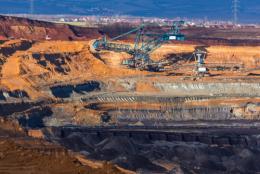
With geopolitical tensions rising and global supply chains under strain, RESourceEU has become a geopolitical necessity. The plan commits €3 billion in funding over the next 12 months, mobilised from EU budgets, the European Investment Bank (EIB), and programs like the Innovation Fund, Battery Booster, and Horizon Europe. Its ambition? To halve the EU’s dependence on single external suppliers by 2029 while boosting domestic recycling, mining, and strategic partnerships.