As global tensions rise, the EESC is urging governments to focus on biodiversity as a key solution to the triple planetary crisis (climate change, biodiversity loss and desertification). COP16 will be a pivotal moment to accelerate the global effort to safeguard our planet's ecosystems, the EESC stressed in its opinion which was adopted in September.
'Without biodiversity, ecosystems and economies will collapse, as over half of global GDP and 40% of jobs depend directly on nature,' said Arnaud Schwartz, rapporteur for the opinion.
The EESC points out that biodiversity, the foundation of ecosystems, human well-being and economies, must be mainstreamed across multiple policy sectors such as climate, agriculture and trade, and not treated in isolation. For instance, trade agreements should promote sustainability by ensuring that goods and technologies do not contribute to deforestation and habitat destruction.
It also urgent to secure financial support for biodiversity preservation. Public funding alone is insufficient, so a blend of public, private and innovative financial mechanisms are needed.
The EESC urges the EU to support countries in the Global South as they protect biodiversity, and advocates for the phasing out of subsidies harmful to biodiversity, particularly those promoting fossil fuels. Redirecting these subsidies towards ecosystem restoration could address both climate change and biodiversity loss through nature-based solutions like reforestation, sustainable agriculture and wetland restoration.
Furthermore, the EESC highlighted the importance of the 'One Health' approach, which links human, animal and environmental health. Healthy ecosystems provide critical services, such as pollination, carbon sequestration and water filtration, all of which contribute to human well-being. The decline in biodiversity undermines ecosystems' resilience, increasing the risk of zoonotic diseases such as COVID-19.
The EESC has also called for young people to be more involved in decision making. It proposed creating the position of European Commission executive vice-president for future generations, ensuring that long-term sustainability and well-being are prioritised over short-term gains. (ks)
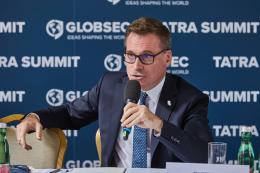
The European Economic and Social Committee (EESC) played a key role at the GLOBSEC Tatra Summit 2024, held in the High Tatras, Slovakia. The Summit, which brought together influential leaders, policy-makers, and experts from across Europe and beyond, focused on the future of European competitiveness, with discussions around emerging technologies and AI, industry and digitalisation.
Oliver Röpke, President of the European Economic and Social Committee
Organisation
European Economic and Social Committee (EESC)
Today marks the solemn anniversary of the tragic events that occurred on October 7, 2023, when Hamas launched brutal terrorist attacks against Israel, resulting in the loss of innocent lives. I condemn once again, in the strongest possible terms, these unjustified acts of deliberate violence. As we reflect on that dark day, our thoughts remain with the victims, their families, and the hostages taken by Hamas.
The resilience and strength of the families affected, whom I had the honour to meet last November, continue to inspire us. As we call for the unconditional release of all hostages, we also reiterate the need for an immediate ceasefire in Gaza, a significant increase in humanitarian aid, and an end to the ongoing conflict.
On this day, we urge all parties to prioritize the protection of civilians and commit to a future where peace prevails and such violence is never repeated. The path to lasting peace lies in dialogue, respect for human rights and civil society, and the full implementation of international law.
Fostering sustainable and resilient food systems at times of growing crises
As the President of the European Economic and Social Committee, I am deeply concerned by the escalation of violence in the Middle East. The EESC expresses its deepest solidarity with the affected populations and urges all actors involved to prioritise the protection of civilians and civilian critical infrastructure in line with international humanitarian law.