Artificial intelligence (AI) is no longer a vision of the future, it is already reshaping how European businesses operate and compete. Opening the Employers’ Group’s annual exchange with the leaders of Europe’s main business organisations, President Sandra Parthie highlighted the scale and urgency of the challenge: “AI is already transforming enterprises today, from resilient supply chains that withstand global disruptions to personalised services that build customer loyalty. The impact is real and measurable.”
The island dimensionis a geographic feature that has lasting effects on the functioning of the Single Market, social cohesion, and the ability of local businesses to compete on equal terms. Territorial discontinuity, distance from service and supply hubs, and the higher costs of transport and energy shape an environment in which the same rules produce different outcomes. The pressure is particularly acute on small islands.
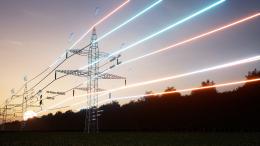
When European employers look at their balance sheets today, electricity is no longer a background cost item: it is a strategic variable that can decide whether investments stay in Europe or move elsewhere.
regrets that the Commission has once again refrained from presenting the Annual Sustainable Growth Survey (ASGS) and stresses that sustainable economic growth is a necessary condition for Europe to meet its multiple commitments, welcomes the European Macroeconomic Report, which provides a deep dive into the underlying structural challenges facing the EU and the new recommendation on human capital, which is a crucial element in filling the EU technological gap, also taking into account the EU demographic challenge;
Nature is under pressure. Restoring ecosystems, protecting biodiversity and managing land sustainably all require long-term effort and funding, which can not only rely on public funds. Nature credits are a new, voluntary, market-based tool being tested in several Member States and explored in the Roadmap towards Nature Credits launched by the EU Commission.
Sodium batteries are emerging as an alternative to traditional lithium-ion systems for different strategic sectors. This is why in our opinion we highlight their importance in contributing to EU energy independence and competitiveness in the global market.
As Europe enters 2026, its economic strategy faces a decisive moment. The European Commission’s 2026 European Semester comes against a backdrop of geopolitical uncertainty, accelerating green and digital transitions, and intensifying demographic pressures. However, the Semester is an opportunity to rebalance EU economic governance by better aligning competitiveness, fiscal sustainability and social cohesion in support of long-term growth.
On 18 February, the European Economic and Social Committee held a plenary side event marking four years since the beginning of Russia’s full-scale invasion and war of aggression against Ukraine.
On 18 February, the European Economic and Social Committee held a plenary side event marking four years since the beginning of Russia’s full-scale invasion and war of aggression against Ukraine.
The programme included two screenings that painted a powerful portrait of the lived realities of war and Europe’s unwavering solidarity with Ukraine.
Hey Czechs!, a lyrical documentary by Czech director David Van, was filmed during two humanitarian missions organised by the Czech initiative Memory of Nations, which brought medical supplies and vehicles to Ukraine. The author, who tells the story through the eyes of someone encountering the war for the first time, offers a glimpse of humanitarian workers in action and life in war-torn areas. Through frontline encounters with locals and soldiers, he captures moments of life under constant air strikes, the horrors left behind by Russian occupiers but also the humanity and humour that endure despite the devastation.
The event also featured a short Polish reportage produced by Deutsche Welle, Grupa Valentyna, which portrays a group of volunteers from Gdańsk supporting Ukrainian children affected by the war.
EESC President Séamus Boland and the Ambassador of Ukraine to the EU, Vsevolod Chentsov opened the event. The screenings were followed by a discussion moderated by EESC Vice-President for Communication Marija Hanževački, with contributions from the film’s director David Van, Head of Ukraine Support at Memory of Nations Martin Ocknecht and Head of Deutsche Welle Poland Bartosz Dudek. (ab)
The Workers’ Group fully supports the Argentinian workers and trade unions in their fight against the far- right government’s proposed labour reform that introduces new restrictions to the right to strike, hold assemblies and engage in collective bargaining, violating several ILO standards ratified by Argentina. Moreover, the proposed reform brings deregulation on working hours and paid leave, easier dismissals, and defunds the social security system, leaving unemployed workers and pensioners even more vulnerable. The fact that, under the new law, injured or sick workers outside their workplace (even by accident) will lose part of their salaries on sick leave is equally worrying.