recommends two conceptual adjustments to this impressive financial support package: a) increasing the share of grants from the current proportion of 16% to 35% and b) increasing the minimum share of the total loan amount to be allocated to investments from 25% to 35%;
suggests that the Plan should allocate enough investment in research and development (R&D) in order to support the transition to the new model of economic growth based on higher value added and productivity;
draws attention to the importance of calibrating the Plan to Moldova's local and regional development needs as an indispensable condition for balanced and sustainable development across the country;
considers that proper funding should be provided for creating and ensuring the proper functioning of the economic and social committee in the Republic of Moldova, in line with the formal request from the National Trade Union Confederation of Moldova, the Confederation of Employers and Civil Society Organisations.
Oliver Röpke, President of the European Economic and Social Committee
Organisation
European Economic and Social Committee
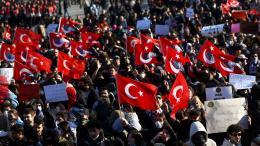
The European Economic and Social Committee expresses deep concern over the recent imprisonment of opposition leader Ekrem İmamoğlu. This development raises serious questions about the state of democratic governance, the rule of law, and respect for fundamental freedoms in Türkiye.
The current developments in Turkey are unacceptable in a democratic society. The longstanding authoritarian derive of Erdoğan, in power already for more than two decades, seems to have taken an even more dramatic turn, after the arrest of his most likely electoral challenger, Istambul Mayor's Ekrem İmamoğlu, for the 2028 elections. Following his detention, the Turkish president has demonised the protestors, considering them 'evil' and linking them to terrorism, arresting more than 1100 people, including several journalists covering the protests, and blocking social media accounts covering the protest.
Turkey's population are fed up with a disastrous economic policy, growing inequalities, a deteriorating democracy, corruption and autocratic rules. Now they face the use of the judiciary to neutralize political opponents, and the open demonisation of other political parties, as Erdoğan's intent on undermining the Turkish republic continue.
We stand side by side with our comrades in the Turkish trade unions, and with the people in the streets and with those who have been arrested for standing up for democracy, for social justice and for freedom.
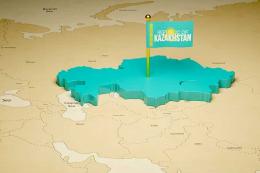
FIrmly believes that relations between organised civil society in the EU and Kazakhstan can develop in a structured way on the basis of an Action Plan, with several priorities and in line with the objectives of the New EU Strategy for Central Asia;
Supports the development of civic and social dialogue in Central Asia and advocates for it to be formalised, along the lines of the good practices in relations with organised civil society of other regions, like the Western Balkans.
Shaping Europe's future: the European Commission in the driving seat
In this issue:
Members comment on the European Commission 2025 Work Programme
Guest articles by Juan Antonio PEDREÑO (Social Economy Europe and Spanish Confederation of Social Economy Enterprises), Hans DE VRIES (EU Agency for Cybersecurity) and Vincent DAVID (Max Havelaar France)
Interview with Cillian LOHAN, designated candidate for the 2025-2028 Presidency of the Civil Society Organisations’ Group
Interview with rapporteur Ariane RODERT on civil preparedness (EESC opinion SOC/812)