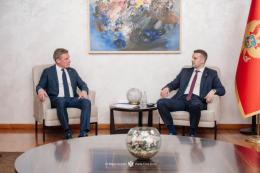
EESC President Oliver Röpke opened his mission to Montenegro by encouraging the country’s ambition to join the EU by 2028 and close all negotiation chapters by 2026. In a meeting with Montenegrin Prime Minister Milojko Spajić and other high-level officials in Podgorica, the President reinforced the EESC’s strong support for Montenegro’s frontrunner role in the enlargement process and its efforts to strengthen democratic dialogue and reform.
EESC, Rue Van Maerlant/Van Maerlantstraat 2, 1040 Brussels
Brussels and online
Belgium
The EU Charter of Fundamental Rights, proclaimed 25 years ago in December 2000, plays a crucial role in upholding fundamental rights, democracy, and the rule of law across the Member States. To facilitate the effective implementation and application of the Charter, in 2020, the European Commission presented its “Strategy to strengthen the application of the Charter of Fundamental Rights in the EU”. This year, the Commission is undertaking a mid-term review of its strategy to strengthen the application of the Charter.