As the voice of organised civil society, the European Economic and Social Committee (EESC) plays a crucial role in shaping policies that impact social and economic aspects within the European Union. The EESC's Section for Employment, Social Affairs and Citizenship (SOC) is preparing two key opinions: one will tackle the fight against poverty head-on, while the other looks at revising the European Pillar of Social Rights (EPSR) Action Plan.
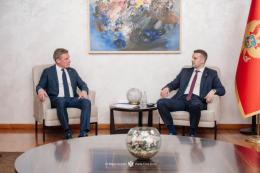
EESC President Oliver Röpke opened his mission to Montenegro by encouraging the country’s ambition to join the EU by 2028 and close all negotiation chapters by 2026. In a meeting with Montenegrin Prime Minister Milojko Spajić and other high-level officials in Podgorica, the President reinforced the EESC’s strong support for Montenegro’s frontrunner role in the enlargement process and its efforts to strengthen democratic dialogue and reform.