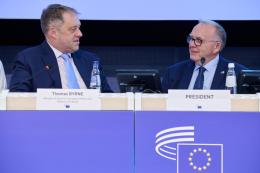
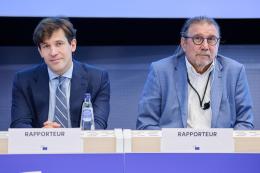
The debate with EESC members held at the July plenary session left no doubt that the programme of the current EU Presidency strongly resonates with the concerns and expectations of Europe’s organised civil society.
The European Economic and Social Committee (EESC) held a plenary debate with European Commission Executive Vice-President, Roxana Mînzatu, on how better protection for workers can strengthen Europe’s competitiveness. The debate focused on quality jobs and fair labour mobility, and was followed by the adoption of two related EESC opinions.
The Consultative Commission on Industrial Change (CCMI) of the European Economic and Social Committee will convene an expert hearing to advance policy discussions on fostering innovation and digitalisation in the construction sector.
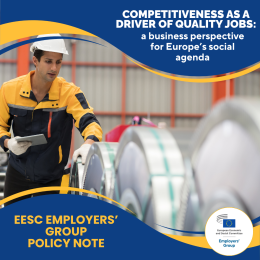
Europe’s social model depends on a strong and competitive economy. Quality jobs are created and sustained by economically successful enterprises operating in a favourable business environment — and European businesses are committed to delivering exactly that when the conditions allow for it. However, companies cannot offer quality employment if they are over-regulated, under-capitalised and unable to grow. Competitiveness, productivity growth, innovation and skills are therefore not separate from the social agenda: they are the foundation of Europe’s resilience, prosperity and social model.