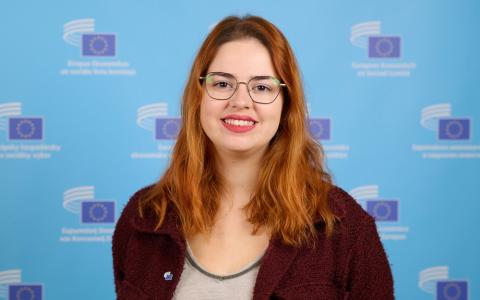
How do we move away from ‘youth-washing’, where youth participation primarily produces a photo-op, rather than dialogue in which young people contribute effectively? The youngest EESC member, Laure Niclot, set out the prerequisites for the meaningful engagement of all young people, and not just the privileged few.
How do we move away from ‘youth-washing’, where youth participation primarily produces a photo-op, rather than dialogue in which young people contribute effectively? The youngest EESC member, Laure Niclot, set out the prerequisites for the meaningful engagement of all young people, and not just the privileged few.
By Laure Niclot
Opportunities for youth participation at EU level are multiplying: youth dialogues with Commissioners; an EU youth dialogue soon entering its 12th cycle, which makes it the widest youth participation mechanism on the planet; participatory initiatives organised by different institutions (such as the EESC’s Your Europe Your Say); and even a direct advisory board to Ursula von der Leyen made up of young people.
Youth participation, in its institutional form, is there for youth organisations ready to make their voices heard. But once we have put in the work, time, and energy to contribute, what happens next? How are young people actually taken into account?
Too many youth participation experiences simply result in nice photos of young people next to politicians, along with empty promises. While any exercise in participation is valuable ─ because it allows young people who never thought they would set foot in an institution to experience what policy-making is and realise that they have every right to contribute ─ we have to underline how dangerous it might be to let ourselves slide towards ‘youth-washing’. If we let the initial experience of policy participation be more of a communication exercise than one of dialogue, how are we going to continue to ask young people to contribute to the institutional game, or simply to vote?
And let’s be honest: youth organisations, like all NGOs, are underfunded and understaffed. We do it because we believe in the value of defending youth rights, of defending our right to live in a world that’s worth hoping for, and of defending our liberties and freedoms in the face of authoritarianism. As those who will enjoy (or suffer) the consequences of the decisions we make today, I’d say we have earned our seat at the table.
So how do we step away from youth-washing and create the conditions for meaningful engagement?
I would say three ingredients are key here, including structural follow-up (which requires the necessary means) and actual representation.
Structural follow-up means organising forms of youth participation not as one-off events but as tools that are there to support meaningful, long-lasting contributions. In that regard, the EESC’s youth test is one of the best examples in the EU. And of course, to support that, we need to ensure that young people are supported, both technically and financially.
Because youth participation that only allows the representation of socio-economically privileged young people is definitely not satisfactory: there is no such thing as ‘youth’, but rather ‘individual young people’. Young people come from rural and urban areas; they are pupils, students, young workers, or somewhere in between; they come from different socio-economic backgrounds and have different migration- and gender-related experiences; their voices echo the diversity of our societies. We need to make room for all young people, and that means not just having one token young person in the room.
Youth participation is one of the ways we can open the door for the next generation of decision-makers. Let’s be careful to keep these doors actually open for all, and not feed the idea that contributing is meaningless unless you’re already in a position of power.
Cybersecurity is becoming a cornerstone of the European Union’s digital market. Recent data show that more than one fifth of EU businesses have already suffered cybersecurity incidents with tangible consequences, including data loss and service disruption. At the same time, the wider adoption of cybersecurity measures points to growing awareness of systemic risks in the digital environment.
Cybersecurity is becoming a cornerstone of the European Union’s digital market. Recent data show that more than one fifth of EU businesses have already suffered cybersecurity incidents with tangible consequences, including data loss and service disruption. At the same time, the wider adoption of cybersecurity measures points to growing awareness of systemic risks in the digital environment.
This development reflects a broader transformation. Cybersecurity can no longer be understood merely as a technical or regulatory matter. As emphasised by the European Economic and Social Committee (EESC), it must be regarded as a key component of economic security and geopolitical resilience in the European Union. The smooth functioning of the digital market increasingly depends on trust, and that trust is directly linked to the ability to protect data, systems, and supply chains.
In the digital marketplace, users often lack the ability to judge how secure products and services really are. This information asymmetry makes cybersecurity not a background function, but a central mechanism for trust-building. In this context, the European cybersecurity certification framework plays a crucial role. Its purpose is to ensure that digital products and services meet harmonised security standards across Member States, strengthening confidence in the single market.
The EESC underlines that certification must be practical, transparent, and usable under real business conditions, particularly for cross-border operators. The principle of ‘one certification valid everywhere’ should become the norm, reducing market fragmentation and supporting the competitiveness of European companies.
Another critical issue is the security of supply chains. Cyber risks increasingly originate not within a single organisation, but across interconnected networks of suppliers and partners. Cybersecurity must therefore be addressed as an ecosystem challenge. At the same time, regulatory measures must remain proportionate, predictable, and sensitive to the capacities of small and medium-sized enterprises, which form the backbone of the European economy.
Human capital also plays a decisive role. The EESC highlights that cybersecurity resilience depends on skills, training, and organisational culture. Strengthening digital literacy and raising public awareness are therefore essential components of the overall framework. A well-informed society is more resilient by default and better able to reduce systemic vulnerabilities.
In this regard, civil society organisations play a unique and indispensable role. Working at the intersection of institutions, markets, and citizens, they translate complex policy frameworks into practical realities. In cybersecurity, their role goes beyond awareness-raising: they help ensure that policies reflect the lived experiences of businesses and individuals, improving both legitimacy and effectiveness.
For businesses, cybersecurity is increasingly becoming a matter of competitiveness. Companies that can ensure data protection and communicate their security practices clearly are better positioned to build customer trust and strengthen their market position. By contrast, cybersecurity incidents lead not only to financial losses, but also to serious reputational damage.
The future of the digital market will therefore not be shaped solely by technological innovation, but also by the ability to build and sustain trust. Cybersecurity is evolving into a comprehensive framework that connects regulation, economic performance, and communication. In the digital economy, one principle remains fundamental: without trust, there is no functioning market.
Cyberattacks are no longer rare: one fifth of EU businesses report incidents with serious consequences, including data loss and service disruption. We asked Miroslav Hajnoš, rapporteur of the EESC opinion on Cybersecurity Act, why cybersecurity must be treated not only as a technical or regulatory issue but also as a foundation for trust in the digital economy.
Cyberattacks are no longer rare: one fifth of EU businesses report incidents with serious consequences, including data loss and service disruption. We asked Miroslav Hajnoš, rapporteur of the EESC opinion on Cybersecurity Act, why cybersecurity must be treated not only as a technical or regulatory issue but also as a foundation for trust in the digital economy.
There are conferences you attend once, maybe twice, and then forget. And then there is Your Europe, Your Say!—which, at least for me, has become something closer to a ritual. Ten years of returning to Brussels each spring changes your perspective. You stop seeing it as just another event and start recognising it as a living story - one that grows with every new generation of young Europeans stepping into the room.
'You are never too young to lead, and never too old to learn.' — Kofi Annan
There are conferences you attend once, maybe twice, and then forget. And then there is Your Europe, Your Say!—which, at least for me, has become something closer to a ritual. Ten years of returning to Brussels each spring changes your perspective. You stop seeing it as just another event and start recognising it as a living story—one that grows with every new generation of young Europeans stepping into the room. It is also a reunion with an exceptional organising team, many of whom have, over the years, become friends.
When I first attended YEYS almost a decade ago, the atmosphere felt slightly experimental. The idea that teenagers could sit in the same space as policymakers and meaningfully contribute to discussions seemed ambitious, if not a bit idealistic. Not that I hadn’t been to similar conferences before—but too often, those ended with young people presenting great ideas, policymakers nodding politely, and little real follow-up. YEYS, however, felt different. It was energetic, a bit chaotic, but undeniably sincere.
Over the years, I have watched the conference mature—much like its participants. Workshops became more focused, and the outcomes more concrete. It was no longer just about giving young people a voice; it was about making that voice count.
At one point, the conversations shifted noticeably. Sustainability and global responsibility moved to the forefront. Climate change was no longer just one topic among many—it became central. The tone changed as well. Participants grew more assertive, more urgent. They were no longer asking for a seat at the table; they were demanding action. They saw their future quite literally under threat—from heatwaves, pollution, and rising emissions.
One moment, however, has stayed with me more than most. I remember speaking with participants from the United Kingdom not long after the Brexit referendum 2016. They were discussing the future of the European Union—yet many of them had been too young to vote in the referendum that would shape that very future. 51.9% of voters had made a decision that would define their path, largely without them. At the time, it felt like just another interview. Only years later did I fully grasp the weight of that moment.
Then came the COVID-19 pandemic, which forced YEYS, like so many events, into a virtual format. I was skeptical. Could the same intensity survive through screens? Surprisingly, it did—just in a different way. The discussions became more introspective, focusing on resilience, mental health, and the fragility of systems we once took for granted. It marked a turning point, not only for YEYS, but for how young people perceived their place in Europe.
What strikes me most after all these years is not how much YEYS has changed, but how consistently it delivers something rare: authenticity. Every year, a new group of students walks into the room—slightly unsure, often nervous—and within hours, they are debating, disagreeing, collaborating. By the end, they are no longer just participants—they are contributors, colleagues, even friends.
Perhaps the most important milestone is also the least visible: the quiet realisation, repeated year after year, that young people are not the future of Europe—they are already part of its present.
As a journalist, I have covered events across the world, in places where young people rarely have the luxury of being asked about their future. That is why I hope every 'YEYS-er' understands how rare this opportunity is. Not because the conference is perfect—it isn’t—but because it evolves. It listens. And, most importantly, it reminds us why participation matters.
Ten years in, I no longer attend YEYS just to report on it. I return because it continues to surprise me. And in a world where cynicism comes far too easily, that might be its greatest achievement.
Seku M. Condé has been a journalist, reporter, editor and TV presenter for RTV Slovenia, Slovenian public broadcaster since 2007. He mostly covers themes related to Global South, human rights, discrimination, sustainability. He was the only Slovenian reporter and one of the few worldwide reporting from West Africa during the Ebola outbreak in 2013–2016 epidemic.
In the past 10 years, Seku M. Condé, journalist, editor and presenter at the Slovenian public broadcaster RTV Slovenia, has never missed a single edition of the EESC youth event Your Europe, Your Say! (YEYS). As our surprise guest, he writes about how YEYS has changed over the years, which moments have stayed with him and why he keeps coming back to the event which he says feels different and undeniably sincere, offering a rare opportunity for its young participants to be truly heard.
In the past 10 years, Seku M. Condé, journalist, editor and presenter at the Slovenian public broadcaster RTV Slovenia, has never missed a single edition of the EESC youth event Your Europe, Your Say! (YEYS). As our surprise guest, he writes about how YEYS has changed over the years, which moments have stayed with him and why he keeps coming back to the event which he says feels different and undeniably sincere, offering a rare opportunity for its young participants to be truly heard.
In the last 15 years, average house prices in the EU have more than doubled, while incomes have not kept pace. The housing crisis has hit young adults in cities hardest: in some countries, they have to spend 80% of their median wage just to rent a two-bedroom apartment. This has forced many into living arrangements they would not otherwise choose, writes Marie Hyland, research officer at Eurofound and co-author of Eurofound's report on the housing struggles of Europe's youth.
In the last 15 years, average house prices in the EU have more than doubled, while incomes have not kept pace. The housing crisis has hit young adults in cities hardest: in some countries, they have to spend 80% of their median wage just to rent a two-bedroom apartment. This has forced many into living arrangements they would not otherwise choose, writes Marie Hyland, research officer at Eurofound and co-author of Eurofound's report on the housing struggles of Europe's youth.
By Marie Hyland
As highlighted by Eurofound’s recent report, Europe is facing an unprecedented housing affordability crisis, one that disproportionately impacts young people. As housing costs continue to outpace income growth, the dream of independent living is slipping further out of reach for many young people who are, as a result, living for longer in the parental home. The consequences are far-reaching, affecting opportunities for education, employment; decisions around fertility and relationships; as well mental health and well-being. Addressing this crisis is not just about bricks and mortar; it is about securing the future of Europe’s youth and, by extension, the continent’s social and economic stability.
The Scale of the Crisis
Since 2010, average house prices in the EU have surged by 55.4%, while rents have risen by 26.7%. These increases have far outpaced income growth for many groups, creating a gap that is particularly acute for young people. In some EU member states, house prices have more than tripled. Urban centres, where employment opportunities are concentrated, have seen the most dramatic increases in housing costs. For young people, this means that living independently is increasingly unaffordable—even for those in employment.
The situation is further exacerbated by the shift in housing from a basic need to an investment vehicle. Investors and corporations play a dominate role in many urban housing markets, leaving individuals and families competing for a limited supply of affordable homes. The European Commission has recognised the urgency of the issue, creating a dedicated portfolio for housing under Commissioner Dan Jørgensen, establishing the Housing Taskforce and launching the European Affordable Housing Plan. These developments signal a growing political will to address the crisis, but the road ahead remains challenging.
Who Is Most Affected?
Across a range of metrics, young adults are hit hardest by the housing crisis. They are more likely to experience housing insecurity, to be overburdened with housing costs and to live in poorer-quality or overcrowded dwellings compared to older cohorts.
The housing crisis in Europe is also unevenly distributed across geographic areas—it is most acute in urban centres and tourist hotspots, where demand outstrips supply and prices are driven up by limited space and high demand. Indeed, cities are at the epicentre of the affordability crisis, and, across the EU, young adults are more likely to live in cities due to the concentration of job and education opportunities. In many member states, a young person on a median wage would struggle to find a property to rent or buy in urban areas. For example, in Bulgaria, Ireland, Poland, Portugal, and Spain, over 80% of a young person’s median wage would be required just to rent a standard two-room apartment in an urban centre. Moreover, the price per square metre is significantly higher for smaller properties, making downsizing an ineffective solution to the lack of affordably supply.
Evidence also shows that the crisis is reshaping household formation. Many young adults are staying in the parental home longer than they would prefer, delaying relationships, careers, and family formation. Survey data from Czechia, the Netherlands, Spain, and Sweden reveal a stark mismatch between young people’s preferred and actual living arrangements. Far more are living with friends, relatives, or parents than would choose to do so, while far fewer are living with partners or alone than wish to be. This mismatch is not just a personal inconvenience—it is linked to negative outcomes such as mental health struggles, career limitations, and delayed parenthood.
Policy Responses and Recommendations
A multifaceted approach is needed to tackle the housing crisis. Key recommendations include:
Increasing Affordable Housing Supply: In tight housing markets, supply-side solutions—such as building more affordable starter homes—are more effective than demand-side measures such as supports for first-time property buyers. The existing stock of vacant and underused buildings offers considerable untapped potential to increase supply, albeit often requiring significant renovations.
Regulating Rents and Tenure Security: Rent regulation and policies to increase tenure security must balance the needs of incumbent tenants with those of newcomers, particularly young people.
Tenure Neutrality in Fiscal Policy: Governments should treat renting and owning equally in fiscal policies to avoid distorting the housing market.
Youth Participation in Policymaking: Young people should be actively involved in shaping housing policies, including innovative concepts like collaborative housing.
Finally, it is important to avoid creating a fragmented policy landscape, where piecemeal measures conflict or overlap. Instead, a cohesive, long-term strategy is needed to address both the immediate and structural challenges of the housing crisis.
The housing crisis facing Europe’s youth is not insurmountable, but it requires urgent and coordinated action. Policymakers, civil society organisations, and the private sector must work together to increase the supply of affordable, quality housing.
Marie Hylandjoined Eurofound as a research officer in the Social Policies unit in 2023. Her research focuses on issues related to housing, the social implications of the green transition and the socioeconomic situations of vulnerable groups. Prior to joining Eurofound, Marie spent several years as an economist at the World Bank, where her research covered women’s employment and economic empowerment, private sector development and the economics of climate change. Marie holds a PhD in Economics from Trinity College Dublin. During her PhD studies, she was a visiting Fulbright scholar at the University of Maryland.
Although research on the gender gap in young people's political preferences is still limited, recent studies suggest that far-right parties in Europe attract substantially more support from young men than from young women, with noticeable differences among countries. In a pessimistic scenario, a deepening divide in political values could affect everyday social relations ─ shaping how people form and maintain relationships, potentially increasing loneliness and making it harder for some to find a partner. EESC Info discussed this trend with Đorđe Milosav, postdoctoral researcher at the University of Bergen, whose work focuses on gendered patterns in politics.
Although research on the gender gap in young people's political preferences is still limited, recent studies suggest that far-right parties in Europe attract substantially more support from young men than from young women, with noticeable differences among countries. In a pessimistic scenario, a deepening divide in political values could affect everyday social relations ─ shaping how people form and maintain relationships, potentially increasing loneliness and making it harder for some to find a partner. EESC Info discussed this trend with Đorđe Milosav, postdoctoral researcher at the University of Bergen, whose work focuses on gendered patterns in politics.
Your recent article highlights a significant divergence in far-right support between young men and women. Could you briefly outline the core findings of your research and how this gender gap compares to historical trends in youth political engagement?
In our recent article, we find that far-right parties in Europe are attracting noticeably more support from young men than from young women. In 2024, support among young men in Europe reached just over 21%, compared to about 14% among women of the same age group.
It’s important to note, however, that this gender gap isn’t the same everywhere. When we looked at countries individually, the pattern varied: the gap appears quite large in Spain and Poland for example, more moderate in Germany and Italy, and seems to be nonexistent in Sweden and the Netherlands.
This is an area of very active research, and there’s still a lot to understand. For example, in ongoing work with co-authors, I am exploring whether economic shocks affect young and older men (and women) support for far-right parties differently, and whether the importance young people place on their gender identity in this context plays a role in shaping their political choices.
Beyond just voting numbers, are there specific ideological shifts that you have observed in how young men versus young women interpret far-right narratives? Are there particular issues where this generational and gender divide is most pronounced?
It’s still difficult to draw firm conclusions, as research in this area, specifically focusing on the younger cohorts, is still relatively limited. What we do know for instance is that sexist attitudes are an important factor in explaining support for far-right parties in Spain (see paper here). As men are more likely to have sexist attitudes, they might find far-right parties promoting such stances more appealing. We also know that young women, on average, tend to hold more progressive or liberal views, which may make them less receptive to far-right narratives. A recent study for example points that the gender gap among Generation Z is particularly pronounced on affirmative action issues and anti-discrimination policies such as gender quotas in politics and school reforms for less gender-stereotypical teaching (see paper here).
If this trend persists, what are the long-term consequences that you see, in particular when regarding democratic stability and social cohesion in Europe?
If we take a more pessimistic view, growing differences in attitudes between young men and women could lead to wider social effects. For example, stronger polarisation might make it harder for people to form and maintain relationships, potentially affecting family formation, increasing loneliness, and lowering the overall quality of personal relationships.
Over time, these shifts could also influence broader demographic patterns, such as birth and divorce rates. If these trends become widespread, they could weaken social cohesion which in turn may pose challenges for the long-term health and stability of democratic systems. As research is still developing, much of this remains uncertain.
As academics and members of civil society, we need to approach these issues with care and avoid scapegoating any group in the process.
In your working paper with Hanna Bäck and Emma Renström, you explore the role of male influencers in combating misogyny and reducing intergroup threat. Could male influencers serve as a bridge in digital spaces that currently amplify polarising narratives?
Our initial hunch is that the answer to this question is yes, but our results paint a bit of a bleaker picture. In our working paper, we conducted a survey experiment where participants were shown the same message (an Instagram post) from a hypothetical male influencer, but we varied how his political background was described. What we found is that this background mattered: people were more likely to say they would like or share the post when the influencer was presented as being politically aligned with them. So, left-leaning respondents responded more positively when the influencer was described as left-leaning, and the same pattern held for right-leaning respondents when the influencer was described as right-leaning.
What’s striking is that this happened even though the message itself was identical in all cases. In other words, who delivers the message matters much more than what is being said.
At the same time, we didn’t find evidence that these messages changed people’s underlying misogynistic attitudes. Taken together, I think this hints at a broader point: gender issues are highly politicised today, and messages about them can act as signals of political identity, rather than simply being evaluated on their own terms.
Đorđe Milosav is currently a postdoctoral researcher at the SUCCESS project at the University of Bergen. Previously, he held a postdoctoral position in Political Behaviour at Humboldt University of Berlin and received his PhD in Political Science from Trinity College Dublin. His current work is looking at gendered patterns of political attitudes and behaviour among both voters and politicians in Europe.
From 26 to 29 March, the EESC took part in the World Trade Organisation’s 14th Ministerial Conference in Yaoundé, Cameroon. Mira‑Maria Danisman, Chair of the EESC International Trade Follow‑up Committee, reports on a conference that delivered few concrete results.
From 26 to 29 March, the EESC took part in the World Trade Organisation’s 14th Ministerial Conference in Yaoundé, Cameroon. Mira‑Maria Danisman, Chair of the EESC International Trade Follow‑up Committee, reports on a conference that delivered few concrete results.
By Mira‑Maria Danisman
The 14th WTO Ministerial Conference in Yaoundé, Cameroon, brought together WTO members and stakeholders at a time of rising geopolitical tensions and increasing fragmentation in global trade. The objective was clear: to take stock of the multilateral trading system and push forward long-overdue reforms. Yet despite modest expectations, the meeting delivered few concrete outcomes ─ highlighting once again how difficult it has become to move the WTO forward.
At the centre of the discussions was the WTO reform process, which many had hoped would be politically endorsed and launched at ministerial level. The reform agenda aims to tackle fundamental challenges ─ from decision-making and dispute settlement to the scope of WTO rules. While there was broad agreement on the importance of a predictable, rules-based system, members failed to converge on the way forward. As a result, the file returns to Geneva, with no clear timeline for progress. Disagreements on the e-commerce moratorium ─ particularly on the length of its extension ─ further complicated the negotiations and contributed to the stalemate.
Where multilateral efforts stalled, plurilateral initiatives continued to move ahead. Progress was made on e-commerce, investment facilitation, and domestic regulation in services, reflecting a growing shift towards 'coalitions of the willing.' At the same time, the interim dispute settlement mechanism (MPIA) expanded its membership, now covering around 60% of global trade and helping to keep dispute resolution functioning despite the paralysis of the Appellate Body.
Discussions also touched on topics such as agriculture and systemic imbalances, but ─ as in previous ministerials ─ these issues remain politically sensitive and largely unresolved.
The European Economic and Social Committee (EESC) delegation was actively engaged in Yaoundé, exchanging with a broad range of stakeholders. It stressed the need to preserve a strong multilateral trading system while ensuring that trade policy supports sustainability, social standards, and economic resilience. The delegation also highlighted the key role of civil society in fostering transparency and trust, both of which are currently in short supply.
Looking ahead, the path to the next ministerial remains uncertain. Advancing WTO reform will be critical, but equally challenging. In the meantime, plurilateral initiatives are likely to continue shaping the agenda. Rebuilding trust among members will be essential if the WTO is to regain momentum.
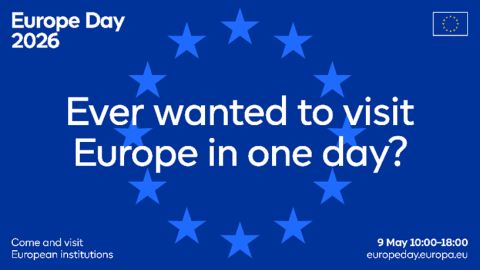
On 9 May, the Committee will once again mark Europe Day alongside other institutions across the European Union, celebrating the anniversary of the Schuman Declaration, a historic milestone that laid the foundations of European integration.
On 9 May, the Committee will once again mark Europe Day alongside other institutions across the European Union, celebrating the anniversary of the Schuman Declaration, a historic milestone that laid the foundations of European integration.
On this occasion, the EESC is opening its doors to the public! We invite you to visit the EESC's Jacques Delors building in Brussels on 9 May from 10 a.m. to 6 p.m., and discover the Committee’s work and its unique role in representing organised civil society within the European Union.
We have prepared a rich programme. Across the building, thematic stands will present the EESC’s priorities and its 2026 opinions. A puzzle-based discovery activity will allow you to explore them by collecting stickers and completing a visual puzzle, giving you a chance to get to know the EESC's work first-hand! Our members will be there to share their expertise on a wide range of EU-related topics.
Your presence will help bring Europe closer to its citizens and make this day a truly engaging and memorable experience for all!
By Jean-Michel Pottier, EESC Employers' Group member
Almost 40% of young Europeans dream of becoming entrepreneurs. This ambition represents a major opportunity for Europe’s competitiveness, innovation and social cohesion.
By Jean-Michel Pottier, EESC Employers' Group member
Almost 40% of young Europeans dream of becoming entrepreneurs. This ambition represents a major opportunity for Europe’s competitiveness, innovation and social cohesion.
At EU level, financial support, mentoring, high‑quality incubation and training programmes can provide a solid foundation for young entrepreneurs, but these efforts must be supported by a stable and predictable regulatory framework.
Entrepreneurship must also be nurtured through education and vocational training. Entrepreneurial thinking should be embedded across learning pathways, from schools to lifelong learning, and applied not only to business creation but also to social, cultural and sports initiatives. In this context, dual education and apprenticeships play a key role by combining theory with practical experience. Many successful craftspeople and SME owners in Europe started their careers this way.
Access to finance remains one of the main barriers for young entrepreneurs. Tailored grants, micro‑finance and capitalisation instruments are crucial, but funding alone is not enough. Strategic guidance and sound project evaluation are essential to strengthen business viability and reduce risk. While most Member States already offer personalised support schemes, these measures should be scaled up and more widely adopted at EU level.
Targeted strategies to promote self‑employment and female entrepreneurship show strong potential for job creation. Inclusive support must reach all young people who wish to start or take over a business, helping to reinforce equal opportunities and social cohesion.
In addition, closing the digital divide, improving access to technology and developing AI‑related skills are vital for innovation and competitiveness. Supporting SME internationalisation through mobility, networking and expanded programmes such as Erasmus for Young Entrepreneurs, will also help young business leaders access new markets.
By creating the right conditions today, Europe can empower young people to turn entrepreneurial ambition into sustainable business and therefore a prosperous economy.