If you are a woman living in Europe, you are 40% less likely to start or own a new business than if you were a man. Closing this gap could dramatically boost productivity by up to 5.5% in 13 countries by 2040. To compare, Europe’s average annual productivity growth has stood at anaemic 0.1% over the past 15 years. Sarah Snelson from Frontier Economics, one of Europe’s largest economic consultancies, shares with us the findings of their recent study on the potential of female entrepreneurship.
If you are a woman living in Europe, you are 40% less likely to start or own a new business than if you were a man. Closing this gap could dramatically boost productivity by up to 5.5% in 13 countries by 2040. To compare, Europe’s average annual productivity growth has stood at anaemic 0.1% over the past 15 years. Sarah Snelson from Frontier Economics, one of Europe’s largest economic consultancies, shares with us the findings of their recent study on the potential of female entrepreneurship.
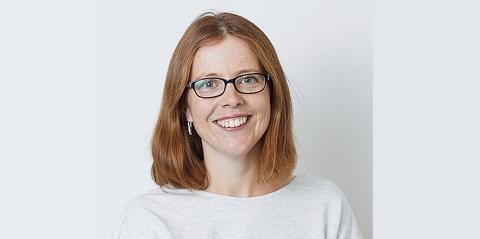
By Sarah Snelson
More than a year after Mario Draghi urged for a step change in European competitiveness, and with productivity and jobs remaining firmly on the agenda across the continent, a EUR 250 billion blind spot has been hiding in plain sight. Gender parity in entrepreneurship – capable of generating this additional annual value across 13 European countries by 2040 – represents a major source of untapped economic potential. This would represent around 2% of current gross value added across these economies.
On 19 and 20 March, the European Council will meet to discuss ‘concrete commitments and timelines in priority areas to push forward EU competitiveness’. Coupled with the European Innovation Act’s goal of creating an innovation-friendly envrionment, this represents a critical and timely opportunity to address the female entrepreneur gap. By improving access to markets, finance and infrastructure for female innovators, Europe will take a huge stride towards enhancing its global competitiveness.
We recently carried out some research, commissioned by Amazon, which puts a spotlight on this important issue and highlights the need for action. Across Europe, women are on average 40% less likely than men to start or own a new business. This gap rises to 88% in Denmark, while Austria and Ireland show smaller but still significant gaps of 21%. The consequences are more than symbolic. Closing this gap could boost productivity by up to 5.5% in 13 countries by 2040 – a dramatic improvement when compared with Europe’s anaemic 0.1% average annual productivity growth seen over the past 15 years. If women started firms at the same rate as men, Europe could close the productivity gap with the US by up to a third.
However, hurdles remain. Nearly 40% of female founders cite both limited access to capital and regulatory complexity as significant barriers. Female entrepreneurs are 25% more likely than their male counterparts to report challenges with digital confidence. Care responsibilities present an even larger disparity, with female founders 36% more likely to cite this as a significant barrier.
If we support female entrepreneurs, will others fall behind? On the contrary, establishing measures to support female entrepreneurs would be beneficial to other SMEs. Unlocking this potential requires immediate, targeted action on five fronts: ensuring that national competitiveness strategies (including the European Innovation Act) support SMEs and female entrepreneurs; enabling access to funding for female founders; simplifying regulatory processes via the EU’s single market strategy; accelerating digital skills initiatives through Digital Europe programmes; and addressing structural barriers such as caregiving responsibilities and discrimination.
As a female leader with three children, I have seen how often we underestimate the latent capacity of entrepreneurs who don’t fit the dominant mould. The case for change has been made on fairness alone. Now our analysis shows the scale of the economic opportunity it presents – and it’s huge. Closing the female entrepreneurship gap is not just about equality, but about unlocking a powerful, untapped lever to boost Europe’s productivity and competitiveness.
Source: ‘Female Entrepreneurs: Europe’s Untapped Competitive Edge’, Frontier Economics, October 2025. The report studied 13 European countries: Austria, Belgium, Denmark, Finland, France, Germany, Ireland, Italy, the Netherlands, Poland, Spain, Sweden and the UK.
Sarah Snelson is an Executive Director at Frontier Economics, advising governments, regulators, and businesses on digital and data policy, AI, education and skills, labour markets, justice and regional economic growth. Frontier Economics is one of the largest economic consultancies in Europe.
Our new column, The Public Square, gives the floor to voices from across public life ─ civil society, journalists, NGOs, and institutions ─ to share the causes they champion and the issues they believe deserve attention. Our first guest is UNHCR Representative to the EU Jean-Nicolas Beuze, writing about his recent mission to Mauritania, which hosts tens of thousands of Malian refugees and is investing in their self-reliance and dignity alongside local communities. For European policymakers, this shows that such investments are not charity but one of the most effective ways to reduce long-term humanitarian costs and reduce the pressures that push people to move on.
Our new column, The Public Square, gives the floor to voices from across public life ─ civil society, journalists, NGOs, and institutions ─ to share the causes they champion and the issues they believe deserve attention. Our first guest is UNHCR Representative to the EU Jean-Nicolas Beuze, writing about his recent mission to Mauritania, which hosts tens of thousands of Malian refugees and is investing in their self-reliance and dignity alongside local communities. For European policymakers, this shows that such investments are not charity but one of the most effective ways to reduce long-term humanitarian costs and reduce the pressures that push people to move on.
By Jean-Nicolas Beuze, UNHCR Representative to the EU
The new UN High Commissioner for Refugees Barham Salih recently set an ambitious objective: a 50% reduction in the number of refugees living in protracted displacement and dependent on humanitarian assistance by 2035.
After 30 years in the field, my recent mission to Mauritania reminded me that this goal is not wishful thinking. It is a necessity.
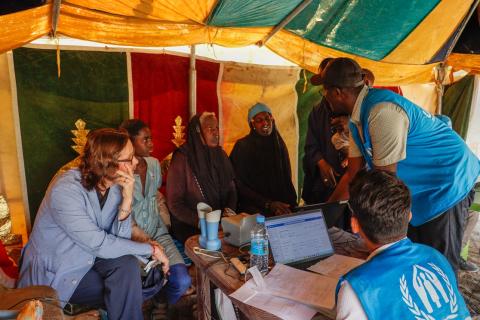
In the Hodh Chargui region in eastern Mauritania, at Mbera refugee camp and in surrounding host communities, tens of thousands of Malian refugees live alongside Mauritanian families in an area already facing drought, economic hardship and limited infrastructure. If this population formed a single city, it would be among the largest in the country. Yet this is a remote rural region with scarce public resources, where every additional pressure is felt acutely.
And still, Mauritania has chosen to keep its doors open and to work with us on solutions that restore the dignity of both refugees and local communities by enabling them to become self-reliant. At a time of sharp reductions in humanitarian and development aid from Western donors, this is not only the right path – it is the only viable one.
What struck me most was the commitment of the authorities, both national and local. Ultimately, they are the ones who can deliver lasting solutions. Our discussions focused on practical steps: registering refugees quickly so their children can attend school, ensuring access to social protection systems, and allowing qualified refugees to work – including in public hospitals or schools.
Mauritania is not a wealthy country, and it operates in a fragile regional environment. Stepping back would be politically and financially easier. Maintaining a functioning asylum system and integration services requires real political courage. Mauritanian leaders and communities deserve continued international support.
Equally striking were my conversations with Malian refugees and Mauritanian residents. In the vibrant markets of the region, I heard the same message repeatedly: people do not want to depend on aid. They want the opportunity to work, support their families and contribute economically and socially.
This is where partnership becomes critical.
Despite the challenges, the Mbera region is full of opportunity. Underground water is easily accessible – which is why we are installing solar-powered boreholes. Livestock and agricultural potential are significant – which is why we support value-chain businesses that benefit both refugees and host communities.
Encouragingly, some European companies are ready to invest in these efforts. The European Commission’s Global Gateway initiative is designed precisely to support such partnerships.
Together, we can turn displacement from a permanent humanitarian burden into an opportunity for economic inclusion and local development. Not because we feel sorry for refugees or impoverished communities, but because this is a model that works for everyone.
For European policymakers, the implication is clear: investing in refugee self-reliance in host countries is not charity – it is one of the most effective ways to reduce long-term humanitarian costs, strengthen fragile regions and address the drivers of onward displacement and insecurity.
If we scale such approaches, the High Commissioner’s objective will not remain an aspiration. It will become proof that, with the right partnerships and political will, refugees can move from dependency to autonomy – and contribute to the societies that host them.
Jean-Nicolas Beuze is the UNHCR country representative to the EU, Belgium, Ireland, Luxembourg, the Netherlands and Portugal, having previously served as country representative in Iraq, Yemen and Canada. He has over 27 years of experience working for the UN in the field and at the headquarters in the areas of human rights, peacekeeping and child protection.
Display date
3 weeks 3 days ago
Calculation of heavy-duty vehicles emission credits 2025-2029