The development of new technologies has led to numerous changes in all areas of our society. In the realm of modern democracy, the influence of technology on electoral processes has become both a powerful ally and a significant challenge. There is an urgent need for additional action to ensure the integrity and security of elections in order to preserve the democratic process.
Welcome to Slovakia! Welcome to the land of European records.
No, I am not talking about an exceptional number of castles, exclusive spas or beautiful mountains. I mean the political records of Slovakia. And well, unfortunately, we are bottom of the class.
Slovaks voted for the first time in the European Parliament elections in 2004. Since then, my country has always had the lowest turnout. Always.
Welcome to Slovakia! Welcome to the land of European records.
No, I am not talking about an exceptional number of castles, exclusive spas or beautiful mountains. I mean the political records of Slovakia. And well, unfortunately, we are bottom of the class.
Slovaks voted for the first time in the European Parliament elections in 2004. Since then, my country has always had the lowest turnout. Always.
In 2014, it was only 13.05%. At the time, I was so convinced that the turnout would be below 15% that I almost considered taking out a bank loan and forming a party. Even in retrospect, I think that I had a chance of becoming an MEP.
However, on a more serious note: how do Slovaks perceive the European Union nowadays? As a piggy bank from which they can withdraw money? Certainly, but the problem is that Slovakia cannot even use EU funds effectively. We are among the worst in this area too.
The narrative that Brussels dictates everything is widespread. No doubt, it can be found everywhere. However, Slovak politicians have got it off to perfection. If anything good happens they take the credit. If anything bad happens it's "Brussels' fails again", and very few politicians resist this narrative.
However, the media can be also considered a problem. Their coverage of EU topics is often completely shallow. Journalists avoid EU affairs because they say they are boring, with the result that when they do cover them they focus primarily on problematic issues, whether real or invented.
Let me say a few words about the business sector. Entrepreneurs rarely talk publicly about the advantages of the EU. They also prefer to complain about orders and regulations from Brussels.
All these factors taken together have meant that, according to surveys, Slovaks are increasingly eurosceptic. If we add all the disinformation, including from Russia, which the current ruling politicians like to use for their purposes, we end up with an explosive cocktail of disinterest and anger.
No, Slovakxit is not on the agenda yet. But we may start to hear more about it when Slovakia eventually becomes a country that is no longer entitled to EU funds.
If we want to avoid a dark scenario, political leaders in Slovakia must finally embrace the EU as a space that is essential for the functioning of the country and behave accordingly. Unfortunately, it is already clear that a considerable part of the current Slovak political representation would rather start a fight with the EU to protect their interests no matter what.
This means that all voters who care about the EU must talk about its importance to their relatives, friends and even strangers. This may be a lot to ask and what it will lead to is unclear. However, every alternative is worse.
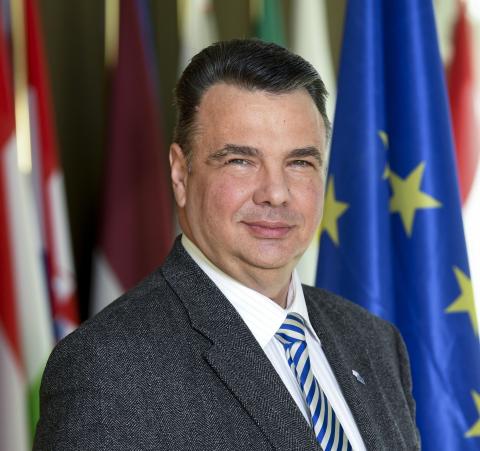
In our new column I am voting. Are you?, which will run until June 2024, we present the views of our guest speakers on how and why to participate in the European elections. This time, our guest is Andrej Matišák, deputy head of the foreign affairs desk at Slovakia's biggest daily newspaper, Pravda.
In our new column "I am voting. Are you?" which will run until June 2024, we present the views of our guest speakers on how and why to participate in the European elections. This time, our guest is Andrej Matišák, deputy head of the foreign affairs desk at Slovakia's biggest daily newspaper, Pravda.
The upcoming European elections are crucial for the EU as it fights Eurosceptic and far-right alarmism. They will shape the EU's political landscape and define an active and inclusive role for citizens and civil society organisations.
The upcoming European elections are crucial for the EU as it fights Eurosceptic and far-right alarmism. They will shape the EU's political landscape and define an active and inclusive role for citizens and civil society organisations.
Against this backdrop, the EESC, the home of organised civil society, is holding its first Civil Society Week: Rise Up for Democracy! on 4-7 March 2024.
This event will bring together people of all ages and backgrounds, including young people, journalists from all EU Member States, representatives from civil society organisations, stakeholders and EU institutions, who will engage in lively discussions, highlighting civil society's contribution to the social, political and economic issues that affect our everyday lives.
As democracy starts with participation, this new EESC flagship event will combine five major initiatives:
Civil Society Days, where people will voice their expectations on crucial issues for our democracies;
European Citizens' Initiative (ECI), the annual high-level "rendezvous" for future ECI organisers, setting their next legislative target;
Your Europe, Your Say! (YEYS!), a unique youth event bringing the EU closer to young people from across EU Member States and beyond, including young representatives from the EU candidate countries and the UK;
Civil Society Prize, which this year rewards creative and innovative non-profit projects for their support to people with mental health conditions;
and, last but not least, the Journalists' seminar, with journalists from all EU Member States, who will experience the Committee in action first-hand and report back to their countries.
Our Civil Society Week will be a timely platform for organised civil society and citizens to express their views on key issues for Europe's new legislative term. Most importantly, it will encourage voter participation and a pro-European attitude.
The input generated by the Civil Society Week and its participants will feed into a resolution setting out civil society's main messages for a more democratic Europe with a view to the European elections.
I invite you to join forces with us in this important endeavour: please contribute to our discussions and encourage citizens and associations to take part in the European elections. Don't miss this opportunity! The EU needs its citizens to speak up and be present.
Room VMA 22 EESC building and Interactio, Rue Van Marlant 2, 1040
Brussels
Belgium
The EESC's Permanent Group on disability Rights is organising a hybrid public hearing on " Potential and challenges of Assistive Technology and Artificial Intelligence on the life of PWD " on 14 March 2024 from 9:30 am to 1 pm.
When implemented effectively, assistive technology (AT) can improve accessibility and quality of life. Artificial intelligence (AI) can enhance the effectiveness of AT in a number of fields, but it is important that it is developed safely with accessibility and inclusion in mind.
During the hearing, we will discuss with stakeholders the potential but also challenges associated with the use of AT and AI on the life of PWDs.
Improving benchmarks and reporting requirements in financial services and investment support