The EU Horizon two-year project FLOW, Future Lives with Ocean and Waterstackled the problem of the emotional disconnect between people and waters, which was highlighted by the European Commission's Mission Restore our Ocean and Waters. FLOW specifically focussed on connectedness of young generations and it did so through co‑creation: it was not about them, but with them. FLOW's coordinator Riyan van den Born spoke to us about the project on behalf of all FLOW partners.
The EU Horizon two-year project FLOW, Future Lives with Ocean and Waterstackled the problem of the emotional disconnect between people and waters, which was highlighted by the European Commission's Mission Restore our Ocean and Waters. FLOW specifically focussed on connectedness of young generations and it did so through co‑creation: it was not about them, but with them. FLOW's coordinator Riyan van den Born spoke to us about the project on behalf of all FLOW partners.
The FLOW project reveals surprising emotional and cultural ties that young Europeans have with water. What key insights stood out and how should these shape EU water policies going forward? And what is the most effective way to genuinely engage young people in shaping Europe’s water future?
Emotions we encountered when talking with young people about problems related to oceans, water, nature and climate varied from joy, hope, love and care to anger, frustration and sadness, with some people expressing feelings of depression, despondency and helplessness.
Many young adults who participated in FLOW have a hard time dealing with these emotions.
Some develop coping mechanisms, such as avoiding news. However, many of the young adults involved in the water initiatives studied still have hope that things can change for the better.
Peers and collective action play an important role in inspiring hope. Many young adults realise that individual strategies alone do not solve complex problems, and that collective action is needed to make a real impact.
Those young people who connected with peers and worked together with them in (mostly local) projects, found a sense of purpose in their actions and believed that collective efforts can make a real difference. Moreover, many young people said that intergenerational solidarity inspired them to take action for water.
Our research shows that connectedness with water is rooted in childhood experiences. Different approaches based on different dimensions of connectedness (Ives at al., 2018) speak to different people, for instance focusing on experiences or on intellectual interests.
Drawing from these key insights, we recommend bringing young adults closer to EU water policies by:
creating and facilitating opportunities for building different forms of connectedness with nature and water, from childhood onwards;
promoting a broad variety of frameworks and approaches in European initiatives to motivate young people to take action for water;
encouraging policies that facilitate youth participation in conservation efforts. This includes hands-on initiatives such as citizen science projects and volunteering where young people actively engage with conservation projects;
creating conditions for finding likeminded peers, as working together builds trust in others and hope for the future of oceans and waters.
What have you learned about how water is portrayed in the media and culture, and how do these portrayals affect young people’s views on water and its protection? How can this inform how the EU talks about water issues?
FLOW’s foresight study, analysing fringe and popular cultural sources from different media (such as movies, podcasts, books, games), revealed signs of potential change in human‑water relations. Water is often depicted as both a resource to be exploited and a powerful force worthy of respect and protection. Some cultural expressions focus on the beauty and fragility of oceans, emphasising their vulnerability to human actions, while others highlight the ocean’s role as a threat—a force that must be managed or controlled. In this regard, young people’s views are often a continuation of ‘older’ ways of knowing and relating to oceans and waters.
An interesting sign of potential change that emerged from the analysis of cultural sources was a shifting away from a human-centred worldview. Both the cultural sources and the initiatives studied showed a growing interest in ‘more-than-human’ perspectives, revealing the interconnectedness of humans and nature, fostering a sense of connectedness that is vital for environmental conservation.
Themes of stewardship, blue innovation and rights-based approaches — such as granting legal rights to water bodies— emerged as significant sources of optimism. These hopeful signs reflect a growing belief in humanity’s capacity to not only restore and protect aquatic ecosystems but also to partner with water to solve challenges (what we call nature-based solutions).
Moreover, the analysis revealed a deep sense of urgency among young generations regarding the precarious future of aquatic ecosystems. Climate change, pollution and the collapse of marine biodiversity are perceived as existential threats, with many cultural indicators expressing a fear of ‘losing nature’.
These findings suggest that Mission Ocean should:
engage young generations in initiatives that emphasise the interconnectedness of humans and aquatic environments. Strengthen stewardship visions, fostering responsibility for protecting ecosystems;
link to youth culture and use media that resonate with young generations to promote positive human-water relations;
find innovative ways to include more-than-human perspectives instead of only a human-centred worldview.
If you had to pick a bold, youth-led innovation from FLOW that could transform EU water policy, what would it be? In what ways should young people be included in the EU's work on oceans and waters?
Inspiring examples are Embassy of the North Sea (Netherlands) and Parlement de Loire (France).
Include young people in transforming EU water policy. Build on their sense of urgency, engagement and connectedness with water to co‑create EU water policy. That way, their trust in other people and institutions will be increased, generating hope for the future of our oceans and waters. It is important that these initiatives combine different routes for strengthening connectedness: for instance, experiential, affective and reflexive in different forms based on heritage, philosophy and art.
Riyan van den Born is the coordinator of the FLOW project. Max Priebe, Zoheb Mashiur, Bernadette van Heel and Melania Borit also contributed to the interview.
FLOW brought together engaged young adults from many European countries with five pioneering water initiatives, three research organisations, Radboud university (The Netherlands), Fraunhofer ISI (Germany), UiT The Arctic University of Norway and the civil society network Volonteurope (Belgium). FLOW has received funding from the European Union’s Horizon Europe research and innovation programme.
There is a strong business case for investment in water. A water-resilient Europe will be a competitive Europe, driven by sustainable innovation, technology development and job creation. With decades of proven expertise, European industry can play a leading role in supporting this transition, writes Harriet Cullum, Global Head of Water, Agriculture and Nature at Diageo, one of the world's top producers of alcoholic beverages.
Water is in every product we make. For Diageo, managing our impact on water – and being good stewards of this precious shared resource – is integral to achieving our performance ambition, to maintaining our licence to operate and to our response to the climate risk. We report fully and transparently on our water risks and performance – including in our Annual Report and accompanying ESG (Environmental, Social and Governance) Reporting Index – and are consistently rated high performers in external indices and rankings.
Diageo therefore warmly welcomes the EU Water Resilience Strategy: together we can accelerate adaptation and lead the transition towards sustainable water management.
However, we might be the most water-efficient distillery or brewery, but it would unfortunately not be enough. The climate crisis is a water crisis, and it is disproportionately impacting the most vulnerable in society. The only way to tackle it is to adopt a holistic, whole-of-society approach. Collaboration and collective action are essential for building broader supply chain resilience. Companies, governments, civil society, communities and scientific experts need to work together at global, country and local levels to advocate a fair and inclusive response to the crisis. Together we can share knowledge, exchange good practices and technological expertise in water management, and pool resources to identify and implement concrete solutions for addressing our shared water challenge.
Synergies could be created with the Water Action Hub, a global online collaboration and knowledge-sharing platform developed by the UN's CEO Water Mandate to help companies and other organisations address water risk, advance sustainable water management and build collective action from an economic and shared water risk perspective.
A water-resilient Europe is a climate-resilient Europe, with a thriving, innovative agricultural sector which relies on efficient water use and water-efficient ingredients. If we want to address the water crisis effectively, these pillars cannot be mutually exclusive. Water, carbon, soil health and biodiversity are all inter-connected. As a result, the key to achieving better outcomes for water is to consider the broader landscape, the players operating within it, and their co-dependencies.
We believe that regenerative agriculture and landscape management have the potential to generate combined benefits, such as reducing and storing carbon emissions, optimising fertiliser use and addressing water quality challenges and nature loss over the longer term. To get there, digitalisation – coupled with education and upskilling – will be pivotal. We look forward to partnering with the EU to ensure that our supply chains take account of the transition towards sustainable agriculture and efficient water use.
Finally, innovation and new technologies are critical for improving water-use efficiency and building climate resilience. For example, we are continuously improving our operational excellence through investment in less water-intensive processes and technologies (such as water-less cooling towers and optimised water use associated with clean-in-place systems through sensor technology), as well as in water reuse and water recycling projects.
We are doing our part: for more than twenty years, Diageo has been investing in water, our most precious resource, adopting a holistic strategy which incorporates the interdependencies between water security, climate change risk, access to drinking water, gender equality, nature and regenerative agriculture in order to help unlock the investment needed to address the water crisis.
A key pillar to our approach to water is that it should remain people-centric. We strive to provide access to clean water, sanitation and hygiene (WASH) in water-stressed communities near our sites and in water-stressed areas that supply our raw materials. Since 2020 we have implemented 35 WASH projects, benefiting nearly 200 000 people, mostly in rural communities.
While we are well positioned to meet our water efficiency targets for our direct operations, addressing water recycling and upcycling beyond the four walls of our sites presents untapped potential for securing water resilience in Europe. Together we can promote, incentivise and reward water reuse and recycling. There is therefore a strong business case for investment in water, not only to accelerate and scale up the combined impact we can have together, but also to help build resilient, inclusive communities. As a result, we see the EU Water Strategy as a key enabler for European industry to partner with the EU so as to accelerate the transition towards sustainable water management.
To conclude, awater-resilient Europe will be a competitive Europe,as it will be driven by sustainable innovation, technology development and job creation. European industry has accumulated decades-long expertise and can play a leading role in supporting this transition. We are excited to be part of this project and to contribute to this journey.
Harriet Cullum is a sustainability leader and Global Head of Water, Agriculture and Nature at Diageo, a global leader in premium drinks, across spirits and beer. She previously served as Global Head of ESG (Environmental, Social and Governance) Insights and was in charge of ESG reporting.
Diageo is Europe’s leading global premium drinks producer that owns and produces over 200 brands (including internationally renowned names such as Baileys, Guinness, Tanqueray and Johnnie Walker) and operates across more than 180 countries.
Protecting consumers in the water sector goes beyond economics – it’s about public health, environmental sustainability and human rights. Any EU strategy on water resilience must put people first, with binding national commitments and a clear framework for water justice, writes Paulo Fonseca, advisor on strategy and public affairs at the Portuguese Association for Consumer Protection, DECO.
Protecting consumers in the water sector goes beyond economics – it’s about public health, environmental sustainability and human rights. Any EU strategy on water resilience must put people first, with binding national commitments and a clear framework for water justice, writes Paulo Fonseca, advisor on strategy and public affairs at the Portuguese Association for Consumer Protection, DECO.
Water is a human right, as formally recognised by the United Nations since 2010. Beyond that, it is a fundamental resource for human life and our ecosystems.
However, this vital resource is increasingly coming under pressure, both globally and in certain European countries. Persistent droughts and extreme weather events, over-exploitation, pollution and weaknesses in management and distribution systems are today a tangible reality for millions of people. The recent EU Blue Deal, presented by the European Economic and Social Committee (EESC) in 2023, marks a decisive step towards placing the water sector at the centre of EU policymaking. Nevertheless, for this or any other initiative to be truly effective, it is essential that the rights and needs of consumers are placed at the heart of all related decisions.
First and foremost, as with energy poverty, it is crucial to tackle water poverty. This concept must be fully integrated into EU policies on cohesion, social justice and consumer protection, as many citizens still lack access to water in sufficient quantity and quality to ensure a dignified life. Others, due to economic vulnerability or exposure to climate change, face the real risk of losing that access altogether. This implies that both physical access and economic affordability must be treated as core principles, particularly to ensure that water tariffs reflect not only the cost-of-service provision but also the principles of social justice and consumer protection.
Similarly, the increasing risk of droughts calls for a joint and preventive European response. The climate crisis is making drought episodes more frequent, prolonged and severe. Water scarcity cannot be managed solely through restrictions on domestic consumption. Instead, it requires comprehensive action involving all sectors – from agriculture and industry to tourism. Efficient water use must become a strategic priority, but this also calls for clear commitments and safeguards from policymakers.
Safe water constitutes another critical dimension. The Water Framework Directive and the recent recast of the Directiveon the quality of water intended for human consumption represent significant legislative progress, but their implementation remains uneven across the Member States. Pollution and the effects of climate change pose serious threats that must be urgently mitigated. In addition, access to information, transparency in monitoring and the right of consumers to be informed about the quality of the water on their bills must be strengthened at the European level.
It is also important to point out that water is delivered through a complex system, characterised by different governance and management models across Europe. For this reason, it is vital to apply the ‘quality by design and by default’ principle by developing a concrete consumer framework regarding contracts, billing, complaints handling and dispute resolution schemes, especially when the service is provided under natural monopoly conditions. A robust model must be put in place at European level to hold providers accountable, ensure transparency, prevent water losses and ensure compensation for consumers when obligations are not met.
The EU Blue Deal calls for an integrated approach, linking water policy with the green, energy and digital transitions. We strongly support this comprehensive perspective, but it is imperative that consumer rights are not diluted in the process. On the contrary, multiple opportunities exist to make the sector more resilient. One such opportunity lies in digitalising the water sector, including the use of artificial intelligence to reduce water losses, rolling out smart meters to help consumers monitor and manage their water consumption more effectively, and developing different tariffs adapted to individual consumption profiles.
The Portuguese Association for Consumer Protection, DECO, plays a pivotal role in safeguarding consumer rights in the water sector. Through awareness campaigns, tariff monitoring, consumer engagement and close cooperation with companies and regulators, we have consistently advocated for fair tariffs that are aligned with household income and the real cost of the service, for the provision of safe services with positive impacts on efficiency and for the active involvement of consumers in water governance mechanisms.
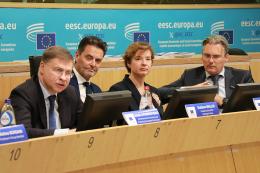
In December 2024, DECO participated in the EESC's European Consumer Day themed Water challenges: Exploring consumer perspective - Moving ahead on EU Blue Deal. The event shed new light on protecting consumer water rights and promoting water-efficient consumption by encouraging changes in consumer habits, supported by innovative tools and technologies to make water use more sustainable.
Protecting consumers in this sector goes beyond any economic or social goal. It is also a matter of public health, territorial cohesion, environmental sustainability and respect for human rights. For this reason, any EU water resilience strategy must place consumers at the heart of every decision. It is urgently necessary to ensure binding commitments from Member States, ambitious national policy measures and a framework of water justice for all.
Paulo Fonseca is advisor on strategy and public affairs at DECO, the Portuguese Association for Consumer Protection, DECO, is the country’s largest independent non-profit organisation dedicated to defending consumer rights through legal support, education, advocacy and nationwide services.
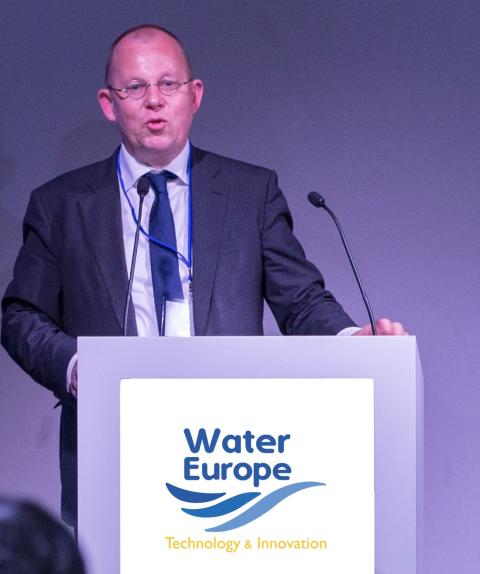
For Water Europe – the EU’s leading platform promoting innovation and cooperation in the European water sector – the European Commission’s newly unveiled Water Resilience Strategy is not just another policy document: it represents a pivotal acknowledgment that water is becoming a central pillar of Europe’s future, writes Water Europe’s Executive Director Durk Krol.
For Water Europe – the EU’s leading platform promoting innovation and cooperation in the European water sector – the European Commission’s newly unveiled Water Resilience Strategy is not just another policy document: it represents a pivotal acknowledgment that water is becoming a central pillar of Europe’s future, writes Water Europe’s Executive Director Durk Krol.
The new Water Resilience Strategy is built in part on the Water Europe community’s longstanding and persistent commitment and mobilisation. Through continuous advocacy, co-creation – anchored in our network of water-oriented living labs and aligned with European initiatives such as the Water4All Partnership – and sustained efforts to build political momentum, we have helped make this vision a reality. Since launching our position on the EU Blue Deal and publishing our manifesto for the 2024 EU elections, we have consistently called for a European Water Strategy, a dedicated Commissioner for Water, and a dedicated Water Fund in the next Multiannual Financial Framework (MFF). We have actively contributed to the positions of the European Economic and Social Committee, collaborated closely with Members of the European Parliament, and formed a coalition of over 30 organisations to urge the Commission to maintain its commitment to water resilience.
Today, this strategy sends a clear and urgent signal: Europe’s water resilience is non-negotiable. As droughts intensify, pollutants accumulate and competition for water grows, particularly in industry and agriculture, it is no longer possible to treat water as a passive resource. The strategy’s ambitions to guarantee clean, affordable water for all, accelerate investment in infrastructure and integrate water into the Green and Digital transitions reflect a shift in mindset that is both necessary and overdue.
One of the most transformative aspects of the strategy is its embrace of the water-smart economy, a concept that Water Europe has long championed. The economic sectors with the highest water abstraction levels also have the potential to save the most water (EEA, 2025), with several benefits for their activities:
Critical industries – hydrogen, batteries, semiconductors and data centres – are projected to triple their water consumption by 2030, growing from €192 billion today to nearly €1 trillion (Water Europe, 2024).
With 29% of the EU’s territory already experiencing water scarcity, this poses a serious threat to our competitiveness and strategic autonomy (EEA, 2019).
Europe’s water infrastructure is also under pressure. Meeting existing EU water legislation alone requires at least €255 billion in investment to ensure water and sanitation for our society (Water Europe, 2024).
A water-smart economy should be understood as the economic dimension of a water-smart society. It implements the societal vision by embedding the value of water into how we grow, produce, invest and innovate. Together, a water-smart economy and society represent a holistic model where social equity, environmental integrity and economic vitality are interdependent drivers of water resilience.
Although the strategy signals an important transition, this transformation won’t happen without dedicated financial instruments. Our new white paper on water financing shows that a water-smart economy is not a concept, it’s a financial imperative. By recognising water’s value across key sectors, Europe can unlock nearly €1 trillion in added value by 2030. At the same time, investment in water will help utilities close the €255 billion funding gap needed to comply with EU standards.
Water resilience must not be seen as a niche concern but as the linchpin for Europe’s energy transition, food security and industrial leadership.
The strategy takes an important step forward by recognising the transformative potential of digitalisation, water efficiency, reuse, public procurement and research & innovation. We particularly welcome the announcement of a Water Resilience R&I strategy to address the fragmentation of EU R&I initiatives, as well as the Digitalisation Action Plan, aimed at ensuring data transparency, interoperability and harmonised methodologies across Europe.
Water Europe reaffirms its readiness to support the Commission, Member States and local actors in translating the Water Resilience Strategy into tangible progress for citizens, ecosystems and economic actors. We stand ready to help turn this strategy into action. In doing so, we support the regional deployment of innovative solutions and help close the gap between EU ambitions and local realities.
Durk Krol is Executive Director at Water Europe, a Brussels-based non-profit organisation that acts as the pan-European voice and promoter of water-related innovation, research and technology development. Water Europe focuses on the entire water value chain and advocates creating a water-secure, sustainable and resilient water-smart society in Europe and beyond. Water Europe took part in the EESC Consumer Day dedicated to water, held in December 2024.
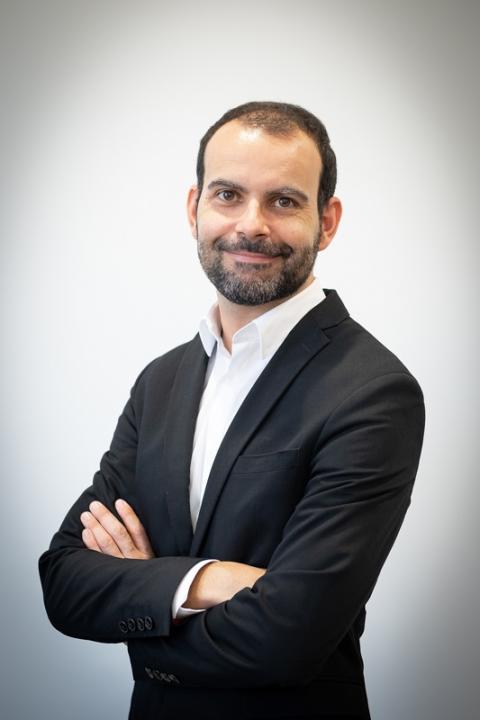
EurEau, the European Federation of National Associations of Water Services, advocates for a ban on the use of PFAS, widely used manmade chemicals that are also found in water. PFAS are known for being extremely persistent in the environment and for having potentially harmful effects on human health. We talked to EurEau’s Oliver Loebel and Sébastien Mouret about why ‘clean-up’ measures proposed in the new Water Resilience Strategy may not be enough to eliminate PFAS and about what they expect from the Strategy in general.
EurEau, the European Federation of National Associations of Water Services, advocates for a ban on the use of PFAS, widely used manmade chemicals that are also found in water. PFAS are known for being extremely persistent in the environment and for having potentially harmful effects on human health. We talked to EurEau’s Oliver Loebel and Sébastien Mouret about why ‘clean-up’ measures proposed in the new Water Resilience Strategy may not be enough to eliminate PFAS and about what they expect from the Strategy in general.
How do you assess the Water Resilience Strategy (WRS) and what are your expectations? What are your main objections?
It is very positive to see a truly holistic approach to water resilience in this Strategy. In the water sector, water resilience is our full-time job, but we cannot achieve it all on our own – households and services only account for 13% of water consumption, for example. The other 87% go to agriculture, industry and power generation. This is why we were expecting the Commission to respond to the need to mainstream water protection into all policy areas, not just water-focused legislation, and this is what we are seeing with the WRS.
The objective to improve water efficiency by 10% by 2030 is a step in the right direction, but it is regrettable that it wasn’t accompanied by a target to reduce overall freshwater use. Water efficiency should not be a goal in itself but a tool for reducing pressure on Europe’s increasingly stressed water resources.
The WRS also rightly emphasises the link between water quantity and water quality, recognising that we cannot solve water scarcity without addressing water pollution at the same time – but it outlines very few actions to follow up on this assessment. Most pollution-control policies listed in the Strategy are already in place, and on PFAS no control-at-source measures are mentioned at all. We fully support the Commission’s call for better implementing existing legislation, but more is needed.
Finally, it is good to see the water sector’s important investment needs recognised in the Strategy. The renewed emphasis on directing available EU funds towards water infrastructure is welcome, and raises our expectations for the place given to water in the next Multiannual Financial Framework.
In light of that, it is essential to ensure that the Extended Producer Responsibility (EPR) scheme under the revised Urban Wastewater Treatment Directive is fully established and delivered on schedule. Wastewater treatment operators need to plan investments well in advance and rely on both regulatory and financial certainty. Therefore, the newly announced assessment of EPR-related costs in the Water Resilience Strategy must not delay the scheme’s implementation. EPR is crucial for enabling the additional treatment required under the new directive. Polluters must pay for the pollution they cause. Otherwise, the Water Resilience Strategy will fail to support the needs of water services.
EurEau advocates for a prompt and far-reaching PFAS ban instead of ‘clean-up’ measures, such as those outlined by the WRS. Could you explain the importance of this ban for public health and the potential consequences of not implementing it?
PFAS are ‘forever pollutants’, most of which do not break down naturally. If we keep using them, the levels of contamination in the environment will keep increasing. What is problematic about the approach outlined in the WRS is that it strongly focuses on clean-up measures. It is unrealistic to think that we can decontaminate thousands of square kilometres of farmland to keep PFAS out of our food products. And it is virtually impossible to decontaminate our aquifers. It may take decades until a polluted groundwater body recovers from PFAS pollution.
Clean-up measures will not solve the PFAS problem and will expose our children and grandchildren to unacceptable pollution levels. The health risks related to this exposure are well documented and range from impacts on the immune system to cancer.
At least in theory, we have the technologies to remove all PFAS from raw drinking water, although this entails massive economic and environmental impacts. But how will we remove PFAS from our food? After all, the vast majority of human PFAS intake comes from sources other than drinking water – between 73% and 94%, according to figures from the Netherlands.
It may sound dystopic but due to PFAS pollution, certain health authorities advise against the consumption of eggs from chickens living in private backyards. They also advise parents not to let their children play with sea foam. This can’t be the future we all want.
While water operators will take all measures to protect public health and the environment, the only sustainable way to address the PFAS crisis is to stop using these substances. We are disappointed that the WRS does not mention the tremendous work of the European Chemicals Agency ECHA in the context of the Universal PFAS restriction proposal. Moreover, the WRS falls short of announcing a ban of all non-essential PFAS uses as stated in the Chemicals Strategy for Sustainability
On the other hand, PFAS are used because they offer specific properties. Replacing them can be challenging. Innovative European companies work on PFAS-free alternatives, and it is encouraging to see that many less hazardous substitutes have already been identified. A clear phase-out pathway will help these companies to bring their solutions to the European and to international markets.
We should also recognise that alternatives may not be available today for certain uses which are critical for society. In such cases, time-limited derogations could be envisaged, accompanied by strict risk management measures.
This exercise is currently underway at ECHA. We therefore hope the European Commission will restrict PFAS uses based on the ECHA recommendations.
The Forever Pollution project estimates that decontaminating Europe could cost up to €100 billion per year if PFAS are not banned. How does EurEau assess the economic impact of focusing on remediation instead of control-at-source measures?
These figures represent a worst-case scenario. However, such a scenario can no longer be excluded given the rapidly increasing TFA concentrations in soil and water, and the continued resistance against a rapid PFAS phase out.
The overwhelming part of this amount would fall upon the shoulders of water operators and the municipalities who own the infrastructure. Ultimately, these costs would need to be passed on to the water consumers, thus jeopardising the affordability of water services. With a view to avoiding such a situation, we call on decision makers to implement the polluter-pays principle for all continued PFAS emissions.
We are convinced that a PFAS phase-out is cheaper overall than trying to fix the problem ‘at the end of pipe’.
The strategy seems to overlook wide-spread soil pollution. What steps should be taken to address soil pollution comprehensively within the framework of the Water Resilience Strategy?
Healthy soils are a prerequisite for health drinking water reserves and sustainable food production. A couple of years ago, we had high expectations for what the Commission at that time said would be a European Soil Health Law to address this problem. In the end, what the Commission proposed was a Soil Monitoring Directive with a much reduced scope. The co-legislators are finalising its adoption now, having removed most of the few provisions in it that could have actively improved soil health, rather than just monitor its decline. Although EU-wide monitoring requirements are better than nothing, we see this text as a missed opportunity to tackle soil pollution.
As the Strategy points out, much could be achieved by fully implementing existing legislation including the Nitrates Directive and the Regulation concerning the placing of plant protection products on the market. It is unacceptable that we still find excessive contamination levels in the groundwater bodies of many European regions.
Soil pollution is also caused by contaminants contained in rainwater. According to the German environmental agency UBA, every litre of rainwater now contains on average 335 ng/L TFA, an ultrashort-chain PFAS, mainly stemming from fluorinated gases. As outlined above, no remediation measure can solve that problem.
Achieving water resilient societies is a complex endeavour that requires close cooperation and strong governance. The water sector is willing to step up its own efforts and work with all societal stakeholders to ensure that future generations will have access to sufficient quantities of clean water.
Oliver Loebel is Secretary General and Sébastien Mouret is Policy Officer at EurEau, the European Federation representing national drinking and wastewater service providers from 33 countries, spanning both public and private sectors. EurEau unites water professionals to shape European policies on water quality, resource efficiency, and access to water. EurEau took part in the EESC’s Consumer Day 2024 that focused on water.
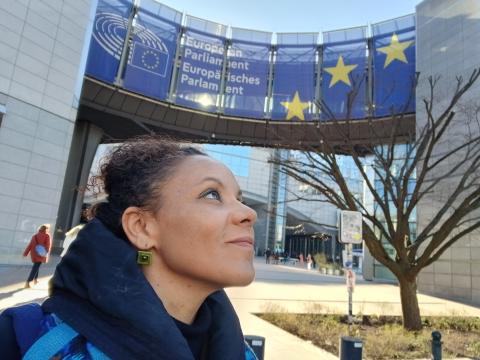
Home to over 3 million EU citizens and accounting for 97% of France’s maritime space, the French Overseas Territories (FOTs) make France the world’s second-largest maritime power and the EU the first. Yet, despite advanced EU legislation, these regions face water conditions that would be unacceptable elsewhere in Europe. EESC Info spoke to Sabrina Cajoly, an international human rights lawyer and NGO founder from the French Antilles. A member of the team behind the European Citizens’ Initiative (ECI) for a Water-Smart and Resilient Europe, Ms Cajoly highlighted the severe impact of water scarcity and pollution on the EU’s outermost regions — and outlined what the new EU Water Strategy would need to include in order to make a real difference in these territories.
Home to over 3 million EU citizens and accounting for 97% of France’s maritime space, the French Overseas Territories (FOTs) make France the world’s second-largest maritime power and the EU the first. Yet, despite advanced EU legislation, these regions face water conditions that would be unacceptable elsewhere in Europe. EESC Info spoke to Sabrina Cajoly, an international human rights lawyer and NGO founder from the French Antilles. A member of the team behind the European Citizens’ Initiative (ECI) for a Water-Smart and Resilient Europe, Ms Cajoly highlighted the severe impact of water scarcity and pollution on the EU’s outermost regions — and outlined what the new EU Water Strategy would need to include in order to make a real difference in these territories.
From your perspective, how do water scarcity and pollution affect the daily lives and rights of people living in overseas territories?
Water scarcity and pollution disproportionately affect people in the French Overseas Territories (FOTs), often invisibly. These are not isolated issues, but structural problems driven by poor governance, chronic underinvestment and environmental degradation, and are increasingly worsened by climate change. Aside from daily inconveniences, these issues threaten fundamental rights like health, education and human dignity.
In Guadeloupe, water insecurity is a daily reality. Despite abundant water sources, residents can go for over a month without running water. When available, the water is often unsafe to drink. Schools and hospitals suffer repeated service interruptions. Children miss an average of 1.5 months of school each year due to water shortages, infringing on their right to education.
These shortages stem not just from infrastructure failures, but also from multiple forms of pollution. In Guadeloupe and Martinique, over 90% of the population has been exposed to chlordecone, a toxic pesticide used for decades in banana farming, long after it was banned in the USA and mainland France. For instance, between December 2024 and January 2025, a Guadeloupean municipality experienced five consecutive weeks without safe drinking water due to chlordecone contamination.
In French Guiana, mercury pollution from gold mining disproportionately harms indigenous communities, threatening their health, environment and way of life. In La Réunion and Mayotte, severe droughts and natural disasters have deepened inequalities. Hurricane Chido, which struck Mayotte in December 2024, devastated half the island – and many survivors still lack access to clean water today.
Residents bear the brunt of these crises. In these regions, where poverty is 5 to 15 times higher than in mainland France, families are forced to buy expensive bottled water and filtration systems – at costs far exceeding those on the continent.
This is not just a legacy of the past; it is ongoing. In June 2025, a court in La Réunion awarded compensation to 89 000 people for having endured years of undrinkable tap water. This landmark ruling highlights the scale and systemic nature of this issue.
Where do you see gaps in the EU’s water governance when it comes to addressing the specific needs of the outermost regions, and what could be done to improve this?
The EU’s water governance still shows significant gaps when it comes to addressing the specific needs of its outermost regions, including the FOTs.
FOTs are home to over 3 million EU citizens, span four oceans and represent 97% of France’s maritime space, making France the second-largest maritime power globally, and the EU the first. French Guiana alone is the size of Portugal; French Polynesia, the size of Western Europe. These regions house 80% of France’s biodiversity and play a key role in the EU’s economy, geopolitics and environmental footprint.
However, this strategic importance is not reflected in water policy outcomes. Despite advanced EU legislation, FOTs face chronic water insecurity, unaffordable services and deteriorating infrastructure – conditions that would be unacceptable elsewhere in the EU. For example, while water loss due to leaking systems averages 20% in continental Europe, it exceeds 50% in most FOTs. In Guadeloupe, it averages 60% and can reach 80%.
Key structural causes include:
• underinvestment in infrastructure and maintenance;
• delayed and uneven implementation of EU water directives;
• lack of disaggregated data reflecting local realities;
• limited inclusion of local stakeholders in EU policymaking; and
• insufficient political prioritisation.
Addressing these issues requires systemic, urgent and tailored action. This is not just about infrastructure; it’s about equality, dignity, human rights and climate resilience across the EU.
This is why, as founder of Kimbé Rèd – French West Indies (F.W.I.), I joined the European Citizens’ Initiative (ECI) for a Water-Smart and Resilient Europe, launched in October 2024. Coordinated by Volonteurope and backed by organisations in 11 countries, the ECI calls on the European Commission to implement resilient water policies that inclusive of the outermost regions.
With the EU Water Strategy newly published, what do you hope it will achieve for the French Overseas Territories in practice?
The recently published EU Water Strategy is a positive step:
• It acknowledges the infrastructure gaps and climate challenges faced by the outermost regions and highlights the need to reduce inequalities in water access.
• It reflects several priorities raised in the ECI, in particular guaranteeing universal access to safe, affordable drinking water as a human right for all, including for those living in the outermost regions.
• It also makes provisions for investing in climate-adapted infrastructure and providing technical support to less-developed regions with limited administrative capacity.
However, the strategy lacks specificity when it comes to the outermost regions. To ensure the strategy has real impact for FOTs, the following are essential:
• Disaggregated data and specific targets: The strategy should include data reflecting local realities. Measurable, location-specific targets are crucial for progress and accountability.
• Climate-adapted solutions: The outermost regions face outsized climate impacts. Solutions should prioritise contextualised interventions (e.g. mangrove restoration), advanced water filtration and targeted infrastructure investments.
• Inclusive governance: The outermost regions must be actively involved in shaping EU water policy. Their representation in decision-making platforms like the biennial Water Resilience Forum (launching in 2025) is vital to ensure their effective and meaningful participation in the implementation and monitoring of the strategy.
• Timelines and emergency measures: Concrete short- and medium-term timelines for action are critical. Emergency measures must be deployed to address urgent water access needs while broader plans are still being developed.
In conclusion, while the EU Water Strategy marks a positive development, for it to bridge the existing governance and infrastructure gaps it must go beyond symbolic commitments and adopt concrete, inclusive and tailored measures that address the deep-rooted water crises in the outermost regions. Their true integration – what Kimbé Rèd FWI calls ‘overseas mainstreaming’ – is essential to ensure they are not ‘left behind’ in the implementation of the EU's Water Strategy. It means embedding their needs and potential in every policy objective, action and outcome. These regions must not be treated solely as beneficiaries of EU aid, but acknowledged as essential contributors to Europe’s economic, environmental and geopolitical strength.
Sabrina Cajoly is an international human rights lawyer from the French Antilles. In 2023, she founded Kimbé Rèd – French West Indies (FWI), a civil society organisation advocating for human rights in the French Overseas Territories, through actions based on international human rights law. Key priorities include the human rights to safe drinking water and to a clean, healthy and sustainable environment. Previously, Ms Cajoly has served as an expert on human rights, child protection and gender on three continents with the Organisation of Eastern Caribbean States (OECS), the United Nations Children’s Fund (UNICEF), the Office of the United Nations High Commissioner for Human Rights (OHCHR) and the Council of Europe.