Public hearing
Event type
Public hearing

The EESC will hold an online event on Tuesday 20 May 2025 to discuss the EU wine policy package in which the Commission proposed to amend the relevant wine regulations to introduce targeted measures to help the sector manage production potential, adapt to changing consumer preferences and exploit new market opportunities.

Public debate

In a context such as the one that Europe is experiencing, characterised by multiple crises, it is appropriate to promote a reflection on European public goods and on fundamental political priorities capable of ensuring the sustainable growth of the EU and the well-being of its citizens. This reflection gets ever more important in view of the upcoming negotiations on the next European Multiannual Financial Framework for the period post 2027.

The European citizen initiative My Voice, My Choice is advocating safe and accessible abortions for all women across the EU. Launched in April 2024 and coordinated by the Slovenian 8th of March Institute, it managed to rake in over one million signatures well ahead of its deadline. EESC Info spoke with the organisers about the urgency of their campaign in the current political climate, where women are increasingly losing control over their reproductive rights.

The European citizen initiative My Voice, My Choice is advocating safe and accessible abortions for all women across the EU. Launched in April 2024 and coordinated by the Slovenian 8th of March Institute, it managed to rake in over one million signatures well ahead of its deadline. EESC Info spoke with the organisers about the urgency of their campaign in the current political climate, where women are increasingly losing control over their reproductive rights.

What prompted you to start the initiative My Voice, My Choice, and what is your ultimate goal?

We started thinking about a campaign that would protect abortion rights in Europe almost three years ago, when Roe vs Wade was overturned in the US. Women from the States lost their constitutional right overnight, and we knew right away that we needed to protect abortion in Europe as well. Women in Poland are dying in hospitals because of an almost complete ban on abortions. They have held the biggest protests for abortion rights over the last few years. Women in Malta can still go to prison if they have an abortion. This year Giorgia Meloni has given anti-abortion groups permission to protest inside abortion clinics and harass women trying to get an abortion. More than 20 million women in Europe don’t have access to abortion.

That’s why we started the My Voice, My Choice campaign. We worked on our proposal with a team of international lawyers and formed a strong network with organisations from across Europe.

Our goal is to protect abortion rights at EU level and to improve access to abortion for women who now have to travel to other countries due to abortion bans (such as women in Malta and Poland) or because of a high rate of conscientious objection (as seen in Italy and Croatia), or just for anyone who currently can’t afford to have an abortion (in countries such as Germany or Austria).

The current political climate is exactly why our campaign is urgent. We need to unite and show that the majority of people stand for abortion rights and oppose restrictions on reproductive freedom. The majority of Europeans support abortion rights, and we must stand united to protect them.

What concrete steps are you asking the European Commission to take? How can this be achieved, given that health is a competence of the Member States?

We’re proposing that the European Commission establish a financial mechanism that would work as an opt-in mechanism for Member States, covering the cost of abortion procedures. It would operate in a similar way to programmes for cancer prevention and treatment.

The idea is that anyone who has to travel to another country for an abortion – due to heavy restrictions in their own country or a high rate of conscientious objection – will not have to pay for the procedure out of their own pocket. Right now, thousands of women are travelling to other countries where they sometimes pay thousands of euros for the procedure. Not everyone can afford that.

Abortion may not fall under the competences of the European Commission, but financial programmes related to healthcare do, which is how we were able to register our ECI. 

Why did you choose to pursue this through an ECI? How hopeful are you that the Commission will respond favourably?

Our Slovenian organisation, the 8th of March Institute, which is coordinating the My Voice, My Choice campaign, has extensive experience with national civil initiatives, signature collection and referendums. Through the national civil initiative mechanism we have already successfully changed 15 laws in Slovenia and won two national referendums. That’s why we wanted to find a similar direct democracy tool at EU level. That’s how we became familiar with the ECI. We wanted to achieve direct change that would have a lasting impact on reproductive rights for everyone in Europe, and that’s why we decided to start collecting signatures.

Throughout the campaign we have secured political support from all centre-left political groups in the European Parliament, received support from notable national-level politicians in many EU Member States, and have good connections and established relationships with European Commissionaires. We’re hopeful that they will listen to more than 1.2 million people who stand behind our initiative. 

How did you manage to mobilise people across different EU countries to support your initiative and help with the collection of signatures? What channels are you using to spread the word?

Throughout the campaign we built a strong network of over 300 organisations and created a beautiful community of over 2 000 volunteers from all over Europe. We wanted to be present on the streets of European cities, towns and villages, with our volunteers ready to collect signatures. We have managed to create a strong online presence on our Instagram, but we also use different channels such as Facebook, TikTok, YouTube, BlueSky, X and other social media platforms.

You surpassed the one million mark required for a successful ECI one month before the signature collection deadline. What kind of feedback and support, including financial support, have you received so far?

We managed to reach one million signatures in December, after collecting them for nine months, and closed the signature collection with 1.2 million signatures before the deadline.

We managed to collect the signatures with the help of our network and community, but we also applied for different funding opportunities throughout our campaign in order to sustain it. My Voice, My Choice has also won the Slovenian Sociology Society Award and is shortlisted for the SozialMarie Award. We have also gained the support of all centre-left political groups in the European Parliament, and individual support from various MEPs, Vice President of the European Parliament Nicolae Ștefănuță, French Senator Melanie Vogel, Slovenian President Nataša Pirc Musar, and Prime Minister Robert Golob. A lot of activists and individuals from different EU countries also support the campaign, such as Luisa Neubauer from Germany and Alice Coffin from France.

My Voice, My Choice is an initiative that is evolving into one of Europe’s largest feminist movements. It includes more than 300 organisations, countless supporters and dedicated volunteers from across the EU who work together to ensure safe and accessible abortion in the European Union

The EESC:

  • finds it regrettable that the cost of living in Europe is being fuelled by persisting dysfunctionalities in the European Single Market, and believes that more decisive action by the European Commission is needed to protect it;
  • calls on the European Union to urgently tackle persistent barriers that decrease competition and affect the cost of living, such as territorial supply constraints; 
  • encourages Member States to avoid unnecessary regulatory complexities, that could weaken essential social and labour protections;
  • urges the Commission to ensure that Member States respect their notification obligations (e.g. under TRIS), speed up proceedings against national rules which infringe EU law and consider temporary measures against clear violations of EU rules to prevent harm while checking if national rules comply with EU law.

Our societies are being eaten away by the invisible disease of ubiquitous precarity, where people feel deeply disempowered and at the mercy of forces beyond their control, says university professor and award-winning author Albena Azmanova, who delivered a powerful keynote speech during EESC Civil Society Week. In this interview for EESC Info, she unpacks the main causes of this epidemic, including the tendency to prioritise equality over economic stability.

Our societies are being eaten away by the invisible disease of ubiquitous precarity, where people feel deeply disempowered and at the mercy of forces beyond their control, says university professor and award-winning author Albena Azmanova, who delivered a powerful keynote speech during EESC Civil Society Week. In this interview for EESC Info, she unpacks the main causes of this epidemic, including the tendency to prioritise equality over economic stability.

In your keynote speech during Civil Society Week, you spoke about an epidemic of precarity, which was at the root of declining political liberties. You described it as an invisible disease that was driving us crazy. Can you tell us more about what you mean by 'epidemic of precarity'? How is it generated?

People are increasingly exasperated, and deaths triggered by despair - especially suicides in the workplace - are on the rise in affluent societies. This is the most painful, and hence the most visible, tip of a vast but invisible iceberg of precarity, driven by the insecurity of our livelihoods. It's not only that people are outraged and trust in political institutions is waning, although we often hear about that. Mistrust can be healthy: it drives demands for accountability. Anger can be productive: it can spark struggles for justice and lead to meaningful transformation.

The current disease of our societies – what in my work I discuss as 'ubiquitous precarity', is different. It is a special kind of insecurity, an acute disempowerment because people feel they are at the mercy of forces they cannot control.

As individuals, we experience precarity as incapacity to cope with the basic tasks of our lives. The sense of incapacity to cope creates a fear of falling, of losing what you have — your job, your savings, your capacity to perform, your sanity. So the trouble is not so much with poverty or inequality, but with experienced or anticipated loss, fear of falling. This is how individuals experience precarity.

Societies experience precarity as incapacity to govern themselves and manage adversity. Take COVID-19. How was it possible that our rich, scientifically brilliant and institutionally sophisticated societies allowed a public health problem, caused by a virus that was neither completely unknown nor too deadly, to become a severe health crisis, and then an economic and social crisis? The answer is because our governments had slashed public investment, including in healthcare.

There is another feature of precarity. It is triggered by specific policies, by the neoliberal combination of free markets and open economies where decisions are based on profitability. In order to ensure national or EU competitiveness in the global market, within a planetary competition for profit, center-left and center-right elites rushed to reduce both job security (to allow businesses the flexibility that made them competitive) and spending on public services. This meant that everyone had more responsibilities but fewer resources with which to carry them out. We are asked to do more with less.

Here is an example: the European Commission is asking states to do more for social justice, but it is also asking them to reduce spending. This mismatch between ever growing responsibilities and ever shrinking resources results in a sense of uncertainty and doubts that we have the capacity to cope. It is not the healthy kind of uncertainty that makes us eager to venture out into the world, to consider our options, take risks or prove ourselves. Instead, this is a toxic fear, the fear of losing your livelihood and the anticipation of a darker future.

In your opinion, what is the cause of the rise of authoritarian leaders and right-wing parties? How do you assess democratic freedoms and respect for core EU values in Europe today?

The rise in support for right-wing authoritarian leaders and parties is due to politically generated precarity.  People feel insecure, so they crave security and stability; they feel disempowered, so they put their hopes in strong leaders who will provide immediate stability with an iron fist. For example, they increase military spending and boost the power of the police - as the EU is about to do now.

The grounds for all this was laid earlier by centrist parties as they made our societies more precarious for neoliberal reasons. In my view, the center-left bears particular responsibility for this sorry state of affairs. While social democracy's self-proclaimed calling is to fight for justice, it has focused on fighting one form of injustice: inequality. Meanwhile, what people long for is economic stability: the ability to manage their lives and plan their futures.

Think about it: we could have perfectly equal, yet deeply precarious societies - and that is hardly what I would call a thriving society. Moreover, people aren’t necessarily eager to eradicate inequality if it means being treated like losers who are compensated (and humiliated) through a bit of redistribution: they don’t want to be losers in the first place.

In your speech, you also spoke about 'the victimhood Olympics'. Could you describe what this is and why we should move away from it?

Over the past five decades or so, the fight against discrimination has taken the form of identity politics. Groups that have historically suffered discrimination were treated as 'protected minorities', with their status elevated through affirmative action measures such as targeted promotions and quota systems. When this occurs in a context of ubiquitous precarity, where good jobs and other resources are scarce, these protected groups start competing for these limited resources. In such a climate, victimhood becomes a kind of trump card: the greater the perceived victimhood, the stronger the claim to protection.

On the one hand, this creates animosity between the competing groups, eroding solidarity. On the other hand, none of them truly wins, because they remain victims. After all, being a victim and suffering discrimination is precisely what grants them the grounds to claim protection. The only winners in this nasty game of competition for access to resources and special protection are the elites who magnanimously dispense patronage. The end result is that disempowered groups fight each other as enemies, while their patrons, the political elites, draw more power from those fights. 

Given all of this, why is civil society so important for the preservation of democracy and the civil liberties many of us take for granted? Why is civil society, and not democratic elections, the antidote to abuses of power?

When we vote, we are alone. We feel our disempowerment and the frustrations of insecurity acutely, and we give this anxiety a voice through our vote. Hence the rise of reactionary parties in free and fair elections. Civil society is moved by a different logic and has a special source of power: togetherness. When we are with others, united by the bonds of a common cause, we are not alone, we feel less precarious, less disempowered, because we can rely on the support of our comrades. Once precarity is reduced, fear subsides and we can think ahead, we can think big.

Albena Azmanova is Professor of Political and Social Science at City St George's, University of London and co-editor of the journal Emancipations. Her last book, Capitalism on Edge (2020) won many awards, including the Michael Harrington Book Prize, which the American Political Science Association gives to 'an outstanding work that shows how scholarship can be used in the struggle for a better world'. 

Multiannual Financial Framework post-2027

Document Type
AS

Cohesion policy mid-term review (2025)

Download — EESC-2025-01236-00-01-PAC-TRA — (ECO/0676)

Minutes of the 231st TEN Section meeting of 7.4.25

Download — EESC-2025-01242-00-00-PV-TRA — (Minutes)

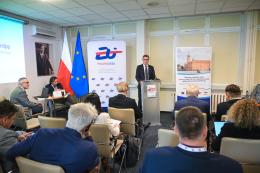
On 16 April 2025, the European Economic and Social Committee (EESC) took part in the Informal EPSCO Equality Ministerial Meeting, held under the Polish Presidency at the Warsaw Citadel. EESC President Röpke used the occasion to reinforce the Committee’s commitment to Roma inclusion and gender equality, while calling for stronger EU action against disinformation and systemic discrimination.