calls for a new EU maritime strategy that aims to create a European maritime space for more competitive and economically, environmentally and socially sustainable EU shipping with clear and transparent rules, including the employment dimension;
As the EU accelerates its drive toward climate neutrality, the European Economic and Social Committee (EESC) has issued a clarion call for a coordinated, fair and inclusive transition. In an opinion adopted during its December plenary, the EESC underscores the urgent need to ensure that no one is left behind as Europe reshapes its economy to meet ambitious climate goals. The recommendations align with the European Commission’s 2024–2029 priorities and address the critical challenges to jobs, skills, social welfare and regional disparities.
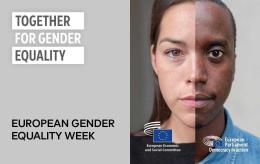
In support of the European Gender Equality Week, an initiative of the European Parliament taking place from 9 to 15 December, the European Economic and Social Committee (EESC) has actively joined this effort by dedicating the month of November to thematic debates across its sections. These discussions highlight gender equality as a cornerstone of social justice, economic progress, and the well-being of society, aligning with the shared goals of this important initiative.
A delegation from the EESC's Permanent Group on Disability Rights carried out a fact-finding mission to Greece, on 18-19 April 2024 .The aim of the mission was to gather information about the progress done in the implementation of the UN Convention on the Rights of Persons with Disabilities (UN CRPD) in Greece, as well as about existing best practices. The delegation met with representatives from organisations representing persons with disabilities and national authorities.
Disability rights - Mission report from Country Visit to Greece