This output advocates that impact assessments in EU law and policy should be systematic and designed to ensure not only respect for fundamental rights and freedoms, but also values on which the Union is founded. This publication is an attempt of application of EU better regulation and better rights protection tools with a focus on European values and their conditionality in the process, beyond EU funding conditionality.
considers road safety a top priority, with the overarching goal of achieving zero road casualties by 2050. Protecting life, reducing the number of injuries and preventing damage to people, goods and infrastructure are essential components of this effort. Road safety is not only a matter of technical standards but also of social responsibility and good governance, and it must lie at the core of sustainable mobility strategies.
In today’s digital era, AI algorithms are the unseen gatekeepers of information, wielding immense power over what we see and what we don't see. Designed to maximise engagement, these algorithms often amplify sensational and divisive content, a trend that disproportionately affects Eastern European voices. The European Economic and Social Committee (EESC), in its report, has starkly revealed how this digital ecosystem suppresses independent journalism while enabling foreign disinformation to flourish.
In today’s digital era, AI algorithms are the unseen gatekeepers of information, wielding immense power over what we see and what we don't see. Designed to maximise engagement, these algorithms often amplify sensational and divisive content, a trend that disproportionately affects Eastern European voices. The European Economic and Social Committee (EESC), in its report, has starkly revealed how this digital ecosystem suppresses independent journalism while enabling foreign disinformation to flourish.
This algorithmic bias creates a damaging feedback loop. Platforms, driven by their relentless pursuit of likes and shares, drown out nuanced, fact-based reporting. The result is a distorted reality in which stereotypes are reinforced and 'filter bubbles' hinder public discourse. This is acutely felt in Central and Eastern Europe (CEE), where foreign influence operations - notably from Russia and China - cleverly exploit local languages and cultural contexts to sow discord.
The case of Belarus is a powerful example of this dynamic. The oppressive regime has used digital suppression and algorithmic bias to systematically marginalise independent media. Social media platforms often default to Russian-language content, silencing independent Belarusian voices and reinforcing state propaganda. This problem is further compounded by platforms like Telegram and VKontakte, which operate outside EU regulatory frameworks, creating dangerous blind spots in content moderation.
To reclaim the digital narrative, a multi-pronged strategy is essential. It must begin with algorithmic transparency from platforms, with public disclosure of how content is prioritised to ensure accountability for diverse voices. This is a key principle of the Digital Services Act (DSA). Furthermore, a standardised framework for algorithmic audits is crucial. The EESC is pushing for a dedicated European Oversight Authority for Digital Information - an autonomous body that would enforce the DSA and the AI Act, specifically targeting systemic biases that threaten media pluralism and fundamental rights.
The EU must also financially support independent CEE media. A dedicated fund could provide journalists with the resources needed for investigative reporting and media literacy programmes, empowering them to effectively counter disinformation. Combating foreign information manipulation is another vital front. The EU must impose stricter penalties on platforms that fail to address manipulative content, and require the platforms to proactively develop measures to detect foreign interference, supported by partnerships with cybersecurity firms and data access for researchers.
Finally, language sensitivity is paramount. Platforms must employ moderators with deep regional and socio-political knowledge to ensure fair treatment of local languages and dialects. The EESC emphasises that it is time to move beyond reductive labels like 'post-Soviet' and embrace narrative frameworks that honour the unique histories and identities of the Eastern European nations.
In conclusion, the dual nature of AI algorithms presents both a challenge and an opportunity. By prioritising transparency and accountability, platforms can become allies in the fight for a balanced digital space. At the same time, the EU must actively champion independent media and the rich narratives of Eastern European nations. Only through these concerted efforts can we build a resilient and inclusive digital landscape that reflects the complexities and realities of the region.
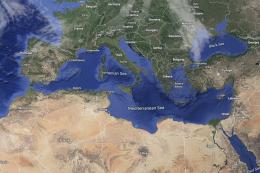
stresses that the Pact should integrate recent ministerial declarations, the Mediterranean Strategy for Sustainable Development 2016–2025, and the Renewed Partnership with the Southern Neighbourhood including its Economic and Investment Plan;
calls for the Pact to actively promote peace, democracy, good governance, the fight against corruption, the rule of law, inclusive prosperity, civic spaces, and respect for international humanitarian law, as foundations for cooperation in the Mediterranean region;
recommends that young people from diverse backgrounds must be involved at all policy stages, with robust monitoring and accountability mechanisms to ensure their voices influence the Pact's development;
proposes thatEU programs like Erasmus+ and Interreg should include dedicated civil society funding with simplified applications and long-term financing;
emphasises that thePact must incorporate marginalized groups, support social dialogue mechanisms like Economic and Social Councils, and include participatory monitoring and evaluation involving civil society.
On Tuesday 16 September, the EESC hosts the world premiere of the documentary 7 Days That Changed the Century, directed by Serbian filmmaker and public figure Boško Savković.
On Tuesday 16 September, the EESC hosts the world premiere of the documentary 7 Days That Changed the Century, directed by Serbian filmmaker and public figure Boško Savković.
This powerful and thought-provoking film explores the beginning and the end of the First World War, tracing how decisions made in 1918 continue to shape the world today. Drawing on both historical and newly uncovered documents, Savković presents a compelling narrative that challenges viewers to reflect on the long-lasting legacy of the Great War.
Hosting this world premiere reflects the EESC’s continued commitment to promoting dialogue and democratic values, and highlighting European unity. It also aligns with the Committee’s efforts to support initiatives that encourage critical engagement with Europe’s history and its lessons for future generations. (ck)
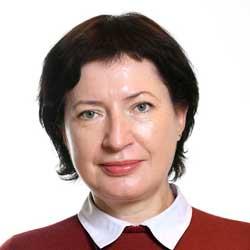
Diana Magling is the face of the photo exhibition To Belong by Danish photographer Andreas Haubjerg, recently shown at the EESC and powerfully capturing the realities of people living with disabilities. Diana is a passionate media contributor at TV Glad, Denmark’s first television station run by and for people with disabilities, where she interviews Danish celebrities for the popular programme En Særlig Samtale (‘A Special Conversation’). Speaking to EESC Info, Diana shared what makes her feel like she ‘belongs’ and what it takes to make people with disabilities feel heard and understood.
Diana Magling is the face of the photo exhibition To Belong by Danish photographer Andreas Haubjerg, recently shown at the EESC and powerfully capturing the realities of people living with disabilities. Diana is a passionate media contributor at TV Glad, Denmark’s first television station run by and for people with disabilities, where she interviews Danish celebrities for the popular programme En Særlig Samtale (‘A Special Conversation’). Speaking to EESC Info, Diana shared what makes her feel like she ‘belongs’ and what it takes to make people with disabilities feel heard and understood.
How did you end up working for TV Glad?
At my old school, I wasn’t treated well – it wasn’t a good place. But then my father found TV Glad, and I’ve been very happy there ever since.
How did the idea for En Særlig Samtale [a series of interviews conducted by Diana – ed.] come about?
There’s a media company called Strong Productions that collaborates with the Danish national broadcasting corporation, DR. TV Glad partnered with them and they prepare thoroughly by learning about the person being interviewed. It’s a thoughtful and respectful process.
Were there any interviews during En Særlig Samtale that stood out to you?
Yes, several. One that really moved me was with the famous Danish singer Thomas Helmig. He had lost his son six months earlier and opened up about it for the first time during our interview.
Do you think your personality and journey give your interviews a special quality? Do people open up more to you?
Yes, they really do. It makes a difference. I get responses that you don’t find elsewhere.
You said TV Glad made you feel like you ‘belong’. Should there be more projects like this across Europe?
Yes, a thousand times yes! It would be amazing and so important. Projects like TV Glad help people with special needs be heard and understood.
Would it help bridge the gap between people with special needs and the general public?
Yes, definitely.
Should projects like TV Glad receive more direct support from the EU?
Yes, definitely. I’ve never seen any clear involvement from the EU in my career. If there was, it wasn’t visible.
If you could speak directly to EU leaders, what would you say?
I would tell them to listen to and respect people with special needs. Understanding us better is the most important thing.
You mentioned that people didn’t understand your situation at school. Should educational institutions do more to support students with special needs?
Absolutely. I had a lot of anxiety, had two panic attacks and even started losing hair because I wasn’t being listened to. Teachers need to understand that some needs aren’t visible and they must really listen to their students.
The photo of you in the exhibition is very striking. How does it feel to know so many people will see it?
It’s amazing. People come up to me and talk about the picture. It’s very emotional, and I’m so happy it will be seen at the EESC.
In the photo, you’re hugging someone. What’s the story behind it?
That moment was very special. The person I’m hugging has Tourette’s syndrome and didn’t want to be touched by anyone. But he let me hug him – it meant a lot.
You’re a big fan of the Melodi Grand Prix, the Danish competition determining the country’s entry for the Eurovision Song Contest. What do you love about it?
It means so much to me! I’m a huge fan of Roberto Bellarosa. I love the music, the costumes – it’s a big party, and the party never stops.
Do you think culture plays a role in inclusion for people with special needs?
Yes, it’s really important.
Do you feel like you serve as an example now?
Yes, I do [smiles]. But I hope I can be an example for everyone.
What message would you give to someone who feels excluded or has had similar experiences?
Be the person you are. That’s it: just be the person you are.
Diana Magling is a 24-year-old TV host from Denmark whose work spans journalism, cultural advocacy and inclusive storytelling. Diana has Williams syndrome, a rare genetic disorder. The photo exhibition by Danish photographer Andreas Haubjerg, in which Diana is also featured, will run at the EESC until 19 September. The exhibition was launched to mark the beginning of the Danish Presidency of the Council of the EU.
By Stefano Mallia, president of the EESC Employers’ Group
When Mario Draghi delivered his report on European competitiveness last year, he warned: either Europe reforms radically or it drifts into decline. A year on, the question remains: have we changed course?
By Stefano Mallia, President of the EESC Employers’ Group
When Mario Draghi delivered his report on European competitiveness last year, he warned: either Europe reforms radically or it drifts into decline. A year on, the question remains: have we changed course?
The Commission has rightly put prosperity and competitiveness at the top of its agenda for 2025. Initiatives such as the Clean Industrial Deal, a European Competitiveness Fund and InvestAI show the Union is responding. Regulation is also being streamlined through six ‘omnibus packages’, tackling areas from sustainability reporting to defence.
Yet these steps are incremental when compared to Draghi’s call for a transformation. The Capital Markets Union has still not been implemented, savings flow abroad and start-ups struggle to scale up. No ARPA-style innovation engine exists and governance reform – essential for faster decision-making – has been ignored.
Meanwhile, global dynamics are harsher. The USA is turning protectionist, China is intensifying its state-led industrial strategy and wars are fracturing supply chains. Europe risks remaining large but powerless, unable to convert aggregate wealth into influence. Businesses already feel the cost: start-ups depart in search of deeper US financing, SMEs remain fragmented and major firms hesitate to invest. Decline happens not through collapse, but via a steady leakage of capital, talent and opportunity.
The way forward requires acceleration, not hesitation. Four priorities stand out: making competitiveness the guiding principle of policy-making; channelling savings into productive equity; completing the single market; and launching a genuine skills revolution.
President von der Leyen’s State of the Union address is the chance to highlight the urgency. Entrepreneurs and investors will look for tangible outcomes: lower administrative costs, easier up-scaling for SMEs and stronger flows of capital into productive investment. Without this shift, strategies alone will not restore confidence.