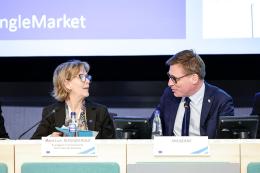
Despite progress in gender equality, millions of women across Europe still face violence, discrimination and barriers to equal opportunities. From under-representation in leadership to the alarming rise in gender-based violence, urgent action is needed. The European Economic and Social Committee (EESC) High-Level Forum on Women’s Rights brought together leading voices to address these pressing issues and outline key priorities ahead of the upcoming UN Commission on the Status of Women session.
Expanding across borders in the EU means navigating a maze of conflicting VAT rules and paperwork, driving up costs. Small and medium-sized enterprises (SMEs), in particular, face disproportionate compliance burdens, making it harder to scale up and compete. To cut red tape and boost competitiveness, the EESC calls for urgent reforms in two opinions adopted during its February plenary, building on the Letta and Draghi reports. Proposals include harmonised financial regulations, AI-driven reporting and a coordinated industrial policy.
considers that EU cohesion policy should be modernised and adjusted to reflect development trends and needs, ensuring a balance between sustainable competitiveness and inclusivity;
emphasises the necessity of maintaining and increasing the share of the EU budget allocated to cohesion policy in the post-2027 Multiannual Financial Framework (MFF) to address regional disparities;
calls for a results-based approach that strengthens efficiency and effectiveness in allocating cohesion policy resources, ensuring visible socio-economic benefits;
Innovation is the real driver of growth and the key to creating employment, developing novel technologies and finding new solutions to tackle the challenges we face today and thus to increase competitiveness
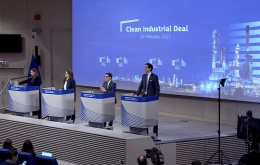
26 February 2025 – The Employers’ Group strongly endorses the Commission’s decisive push for industrial and economic competitiveness through today’s publication of the Clean Industrial Deal and the Omnibus packages on sustainability and investment simplification. These measures signal a necessary shift towards cutting through regulatory deadweight and creating a business environment where European companies can scale, innovate, and compete globally, while staying aligned with our climate and social goals.
Agenda of the NAT Section meeting of 12 March 2025