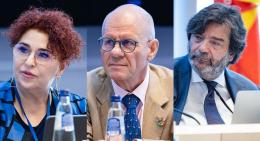
The 17th meeting of the EU Domestic Advisory Group under the EU-Ukraine DCFTA took place on 12 September 2025. Click on the programme tab to consult the topics on the agenda.
The 11th EU-Korea Civil Society Forum (CSF) and Workshop took place on 8–9 September 2025 in Brussels. The event opened with a discussion on the benefits of social dialogue in the context of amplified trade diversification.
At its July plenary session, the European Economic and Social Committee (EESC) backed new EU proposals to strengthen Europe’s defence readiness, while underlining the need to preserve democratic values and promote a long-term strategy for peace.
Cultured meat (CM) is raising interest globally, including from multinational food companies, as an innovative technology to produce meat without farming animals. This completely different way of obtaining animal proteins is perceived as disruptive to the existing system. This study reviews the state of the art of research related to the potential impact of CM development on environmental, social and economic aspects of sustainability, highlighting important knowledge gaps. These gaps fuel polarised positions.
At a time when the EU is grappling with slow productivity growth and rising global competition, the European Economic and Social Committee (EESC) has adopted a set of recommendations highlighting the important role trade unions can play in helping Europe close the productivity gap, especially with the United States. The opinion argues that boosting productivity is not just about investing in technology and capital, but also about empowering workers, strengthening social dialogue and supporting workplace innovation.
At its July 2025 plenary session, the European Economic and Social Committee (EESC) adopted a landmark opinion calling for a comprehensive EU strategy to support, protect and empower civil society. The opinion, requested by the European Commission, outlines a blueprint for a more structured, inclusive and resilient civil dialogue framework across the EU.