Although AI could make European agriculture more competitive and sustainable, most farmers are being left out: under the current CAP, only around 3-4% of EU farms are expected to receive funding for digital tools, writes Stoyan Tchoukanov, president of the EESC's Section for Agriculture, Rural Development and the Environment.

Although AI could make European agriculture more competitive and sustainable, most farmers are being left out: under the current CAP, only around 3-4% of EU farms are expected to receive funding for digital tools, writes Stoyan Tchoukanov, president of the EESC's section for Agriculture, Rural Development and the Environment.

At the EU AgriFoodDays in December 2025, an important reality became clear. Out of more than 400 participants discussing the future of digital farming, only six were farmers and only two were digitally connected to their farms. This underlines a critical gap: Europe cannot design a digital future for agriculture without farmers being actively involved.

Although digitalisation has been discussed for decades, real support on the ground remains limited. Under the current EU Common Agricultural Policy (CAP) for 2023-2027, only about 3-4% of EU farms are expected to receive funding specifically for digital farming technologies. Even when broader farm modernisation measures are included, the figure reaches only around 7.6%.

There is also a clear divide between basic digital use and real digital transformation. While more than 90% of farmers use at least one IT or software tool, far fewer can afford or access advanced technologies such as precision farming, sensors, or AI-based systems. Dedicated public support for these investments remains low.

This is reflected in the data. According to the EU Joint Research Centre, only about one in five farmers uses farm-management software or satellite-based tools, and drone use remains minimal across most Member States.

Digital tools and AI can make European agriculture more competitive, sustainable, and resilient, but only if farmers are connected, supported, and involved in shaping these solutions. Without them, digital innovation risks remaining a policy ambition rather than a reality in the field.

Stoyan Tchoukanov has been president of the EESC's NAT section since October 2025 and an EESC member since 2020. Within the EESC, he represents the Beef Breeders Association of Bulgaria, where he also runs his own cattle farm.

In this issue, our surprise guests are Georgian journalist Irma Dimitradze and Serbian student Stefan Tomić

At the award ceremony for the Sakharov Prize for Freedom of Thought organised by the European Parliament in Strasbourg, Irma Dimitradze stood in for 2025 laureate Mzia Amaglobeli, Georgia’s first female journalist to become a political prisoner, now jailed for more than a year. 

Stefan Tomić spoke to us in Strasbourg about the massive student-led protests that have been shaking Serbia since late 2024.  Serbian students protesting against government corruption and impunity at home were finalists for the Sakharov prize, together with journalists and humanitarian workers in Palestine and all conflict zones.

In this issue, our surprise guests are Georgian journalist Irma Dimitradze and Serbian student Stefan Tomić.

At the award ceremony for the Sakharov Prize for Freedom of Thought organised by the European Parliament in Strasbourg, Irma Dimitradze stood in for 2025 laureate Mzia Amaglobeli, Georgia’s first female journalist to become a political prisoner, now jailed for more than a year.                  

For EESC Info, Irma writes about the collapse of Georgia’s democracy and the rise of a pro-Kremlin authoritarian regime that imprisons protesters, targets journalists and crushes the country’s European hopes. However, Georgia’s democratic decline is no isolated event; it is part of a wider push by authoritarian forces that edge closer to Europe each day.

Also nominated for the Sakharov prize were journalists and humanitarian workers in Palestine and all conflict zones, along with Serbian students who have been protesting against government corruption and impunity at home. Student Stefan Tomić spoke to us in Strasbourg about the massive student-led protests that have been shaking Serbia since November 2024.

Dear readers,

The opening days and weeks of 2026 have certainly further demonstrated that we are living in very challenging and unnerving times. Many of the things that we took for granted are no longer guaranteed. Geopolitical fundamentals including territorial integrity and respect for international organisations are being questioned. 

WE MUST STAND UP FOR THE VALUES THAT UNITE US

Dear readers,

The opening days and weeks of 2026 have certainly further demonstrated that we are living in very challenging and unnerving times.

Many of the things that we took for granted are no longer guaranteed. Geopolitical fundamentals including territorial integrity and respect for international organisations are being questioned. And we are rapidly approaching the fourth year of war on the European continent.

But my strong message to you for the year ahead is this: Do not abandon positive thinking and hope. We must stand up for what we believe in, for the values that define and unite us, and which provide the foundations for the European project. For freedom and peace. For democracy, which we know is not possible without a strong and active civil society. For human rights and dignity. 

These are topics I had the great honour to discuss with His Holiness Pope Leo XIV during a private audience on 10 January.

It was a true privilege to hear first-hand the insights that underpin Pope Leo's moral leadership and to have the opportunity to convey the EESC's vital role in European democracy, and our priorities: the need for poverty eradication, safeguarding democracy and protecting the most vulnerable.

In a European Union of immense wealth, the fact that 21% of people remain at risk of poverty or social exclusion is simply not acceptable. Tackling poverty and related challenges such as the affordable housing emergency will be key priorities in 2026.

My exchange with Pope Leo XIV also addressed the profound challenges facing the younger generations, shaped by the isolation of the COVID-19 pandemic and mental health pressures amplified by social media.

This is linked to the advance of artificial intelligence. Ensuring that AI does not become a runaway train when it comes to workers' rights is a priority in 2026. It must serve as a tool for empowerment rather than displacement. On this topic, I share a commitment with Pope Leo to ensuring that humans – not machines – remain in control of decisions that affect people's lives.

My strongest reflection from my meeting with Pope Leo is the absolutely vital role of civil society in not only strengthening democracies but building and nurturing communities. Civil society organisations, including the social partners, are the fabric of our societies, knitting together individuals and building bridges across groups.

Civil society therefore remains essential to renewing hope and building a Union of opportunities, security, and resilience. 

This is a message that I have also been sharing in meetings with countless EU high-level figures since becoming president. These include European Council President António Costa, European Parliament President Roberta Metsola, several key Commissioners, and numerous vice-presidents and committee chairs in the European Parliament.  

I am grateful to Pope Leo for using his powerful voice to spread a message of inclusion globally and of the need to protect the most marginalised. Irrespective of religious views, what great moral and political leaders have in common is their fervent belief in hope and human dignity and their respect for others.

Together, let us carry this outlook with us in the year ahead. In our efforts to put civil society at the heart of Europe, let us choose hope over fear.

Séamus Boland

President of the European Economic and Social Committee

The EU must shift from reactive ‘firefighting’ to long-term disaster foresight if it wants to protect its citizens effectively, the European Economic and Social Committee (EESC) warned in a new opinion adopted in December. The call comes as Europe faces more frequent climate extremes, growing cyber-physical risks and geopolitical instability.

The EU must shift from reactive ‘firefighting’ to long-term disaster foresight if it wants to protect its citizens effectively, the European Economic and Social Committee (EESC) warned in a new opinion adopted in December. The call comes as Europe faces more frequent climate extremes, growing cyber-physical risks and geopolitical instability.

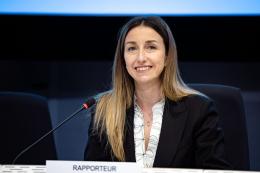
According to rapporteur Florian Marin, the EU still treats disasters as isolated shocks rather than predictable, interconnected threats. ‘Prevention is no longer optional’, he said, arguing it is Europe’s most cost-effective and humane form of defence.

While the Union Civil Protection Mechanism (UCPM) has been strengthened in recent years, most notably with the rescEU reserve after devastating wildfires, the EESC says the system remains overly focused on emergency response rather than risk reduction. Fragmentation between civil protection, climate adaptation and security policies continues to limit coordination.

The Committee calls for less red tape, modernised data and early-warning systems, more trained staff, streamlined procurement and stable funding for professionals and volunteers. Disaster-risk reduction should also become a core pillar of the EU’s 2028-2034 regional planning.

Recent cross-border flood responses show what is possible. ‘A prepared Union is a stronger Union’, Mr Marin concluded. Europe cannot afford to wait for the next crisis. (ks) 

by the EESC Civil Society Organisations' Group and the EESC External Relations Section

Following Brexit and the United Kingdom's withdrawal from Erasmus+ projects, the European Economic and Social Committee (EESC) joined forces with young people and civil society organisations in the UK who believed that the programme was not merely a cost for the UK but a vital investment in the future of its young people.

by the EESC Civil Society Organisations' Group and the EESC External Relations' Section

Following Brexit and the United Kingdom's withdrawal from Erasmus+ projects, the European Economic and Social Committee (EESC) joined forces with young people and civil society organisations in the UK who believed that the programme was not merely a cost for the UK but a vital investment in the future of its young people.

In April 2024, the EESC adopted an own-initiative opinion on EU-UK Youth Engagement, drafted by Cillian Lohan (EESC Civil Society Organisations' Group), urging the European Commission to step up negotiations for the UK’s full reintegration into Erasmus+. This stance had the firm support of the European Youth Forum, the British Youth Council and numerous youth organisations across both the UK and the EU.

The EESC also partnered with the Scottish Advisory Forum on Europe (SAFE) to launch a joint leaflet — 'Youth Participation: Connecting Youth, Creating Change in Europe and the UK'. Business groups, trade unions and civil society organisations, members of the EESC's Domestic advisory group under the EU-UK Trade and Cooperation Agreement, echoed this call in a statement issued on the 2025 EU-UK Summit, advocating for forward-looking initiatives to promote youth exchanges and opportunities for young workers, including renewed engagement with Erasmus+ and Creative Europe.

In a landmark development, December 2025 saw the EU and UK agree that the UK would re-join Erasmus+ from 2027. This breakthrough promises to reinvigorate international mobility and cooperation, especially for young people. The achievement stands as a testament to the EESC’s influence, its ability to involve and engage with civil society and the far-reaching impact of its advocacy at international level. It also proves that civil society can make a difference.


Background information:

Erasmus+ is the European Union’s flagship initiative for education, training, youth and sport, fostering opportunities for study, training, volunteering and cross-border partnerships. Before Brexit, the United Kingdom played a full and active role in the programme, with thousands of students from both the UK and the rest of the EU benefitting from exchanges and collaboration.

However, following Brexit, the UK opted not to participate as an associated third country in Erasmus+. This decision drastically reduced the UK’s access to Erasmus+ projects, leaving only a handful of opportunities open to British institutions and individuals: those available to participants worldwide. Simultaneously, EU students found their prospects for studying in the UK significantly reduced. By 2019, the number of EU students in the UK had already decreased by more than half, with a similar decline observed among British students heading to the EU.

Amendment to market stability reserve for the buildings, road transport and additional sectors

Document Type
PAC

Extension of Interim Rules / Online Child Sexual Abuse

Document Type
PAC
Reference number
1/2026

The European Economic and Social Committee (EESC) hosted a debate today to explore how Europe can maintain its industrial edge. Policymakers, industry leaders and civil society discussed the challenges facing industries, workers and communities. Planning for resilient industries, critical technologies, and skilled workers is now central to EU economic strategy. 

Europe stands at a decisive crossroads: reclaim its position as a prime destination for investment and a credible geopolitical actor, or watch capital, talent, and innovation migrate to leaner, more predictable markets, leaving its strategic influence diminished alongside its economic weight.