Europe is neglecting this tough battle and lagging behind in it. Reversing the progress of the far right is currently proving to be a difficult task. When Nazi-fascism was defeated in 1945, it was believed that extremist movements would lose their influence and space to operate. This was not the case. The democratic model has allowed the far right to survive and gain strength through people’s resentment and frustration.
Europe is neglecting this tough battle and lagging behind in it. Reversing the progress of the far right is currently proving to be a difficult task. When Nazi-fascism was defeated in 1945, it was believed that extremist movements would lose their influence and space to operate. This was not the case. The democratic model has allowed the far right to survive and gain strength through people’s resentment and frustration. The far right has benefited from eighty years of European liberal democracies’ tolerance and complacency. It pretended to play the democratic game, but it never gave up its ambition to destroy democracy from the inside, once it obtains the power to do so.
And it is close to succeeding: as part of a framework it calls ‘national sovereignty’, the far right has already gained power in government in various countries such as Orban's Hungary and Fico's Slovakia. In Poland it was in power for eight years with the PiS government (Prawo i Sprawiedliwosc/Law and Justice) until the recent elections in October.
In the European Union, the far right is also attempting to corrode democracy and bring about its implosion. Developments in information and communication technologies over the last thirty years, via digital platforms and social media, have dramatically increased the capacity of neo-Nazi and neo-fascist groups to interact, and gain visibility and power on a global scale. They use the freedom of expression of democracies to amplify and reiterate their xenophobic and racist ideologies. They coordinate strategies and mobilise challenges, in real time, to the civic order which they are a part of. The fact is that democracy provides the movements that are trying to destroy it with objective conditions that are conducive to their development and social penetration – including state financing.
The far right has found fertile ground for growth in Europe, given that the neoliberal policies and financial capitalism taken from Reaganomics caused the interruption to the progress and social well-being of the middle classes – the signpost for the building of Europe and its success. Neoliberalism has deregulated and hampered economic and social development; it has reduced real labour income in favour of capital; cut down on social support and public services; and left the housing sector in the hands of property speculation. European governments are ominously competing with each other in the sale of golden visas to kleptocrats and oligarchs from all over the place. The market crisis and fiscal dumping, which renders competition in the internal market unfair, weak support from Brussels and Frankfurt to SMEs, as well as weak employment protection and purchasing power, have increased leagues of discontent in Europe over the past fifteen years.
It is a tragic political error that is responsible for consecutive drops in people participating in European elections and the growth of the far right in the European Parliament. The resurgence of Nazi-fascist ideology is the result of the austerity model used in Europe. It has protected the financial system but has failed economic and fiscal justice and has failed to respond to the problems, wishes and expectations of citizens. It has given rise to old propaganda of supremacist and identitarian ideologies, which is always lurking in the background waiting for an opportunity for humanity to regress on the level of civilisation. This stirring up of cultural and religious hatred is present in our lives today, on our screens, on our social media, in the disinformation that is promoted every minute. Instilling fear and insecurity in citizens, evoking Islamisation, the end of white supremacy or of the Judeo-Christian identity and demonising the Roma community as being dependent on benefits, are strategies that have been used historically in the rise of authoritarian dictators or leaders.
Today, European governments are allowing them to point to the ‘danger of immigration’ in an ageing Europe that absolutely needs to import part of its workforce in order to sustain itself and grow economically. This is despite the fact that the number of refugees and migrants entering the EU today is low – in fact, it is lower than what the European population and workforce needs. Nevertheless, the xenophobic and racist rhetoric persists, in a Europe that continues to lack a safe and efficient legal framework to welcome and integrate migrants, instead of continuing to feed the trafficking mafia. Migrant workers were essential in the reconstruction of post-war Europe and in the construction of the EU. The contribution of migrants will remain crucial for Europe’s progress in the coming decades. The far right is aware of this – many of its financial backers use migrants in their industries and businesses.
But it will continue to play its games, creating fears, and manipulating consciences, as well as the complacency of weak and unstable national and European leaders when it comes to a strategic vision, our values and our principles. There can only be one response from democrats and Europeanists – fighting for our values. For democracy, for freedom, for dignity and for peace in Europe.
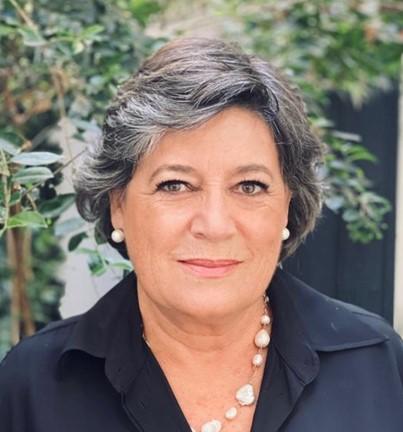
Our surprise guest is Ana Gomes, Portuguese diplomat and politician, member of the Portuguese Socialist Party. She writes about the danger of populism, the rise of far-right parties and the need to fight this.
Our surprise guest is Ana Gomes, Portuguese diplomat and politician, member of the Portuguese Socialist Party. She writes about the danger of populism, the rise of far-right parties and the need to fight this.
A career diplomat since 1980, Ana Gomes has held numerous positions, including at the United Nations in Geneva and New York. In 1999 she was Head of the Portuguese Interests Section and then, until 2003, Ambassador in Jakarta, where she played a role in the process leading up to the independence of Timor-Leste and in the reestablishment of diplomatic relations between Portugal and Indonesia.
A Member of the European Parliament from 2004 to 2019, she was particularly active in the European Parliament on foreign relations, human rights, security and defence, international development, gender equality and the fight against tax evasion, money laundering and the financing of terrorism.
In 2021, on behalf of the Socialists, she ran in the presidential election against the outgoing president, Marcelo Rebelo de Sousa. She managed to come second, ahead of the candidate from the extreme-right party, Chega.
Today she continues her political activism as a campaigner for human rights, integrity and transparency in public life, against corruption and organised crime. She has a weekly commentary programme on the Portuguese TV channel SIC Notícias (The opinion of Ana Gomes).
The adoption of an opinion on civil dialogue cannot be the end of the process. It's certainly a fundamental step towards progress, given that it was drafted at the request of the Belgian presidency and it might therefore be added to the European Union's agenda.
The adoption of an opinion on civil dialogue cannot be the end of the process. It's certainly a fundamental step towards progress, given that it was drafted at the request of the Belgian presidency and it might therefore be added to the European Union's agenda.
Rather than describing the opinion, it would be more useful to understand the process. Civil dialogue is first and foremost a place where people can discuss their agendas and objectives, where institutional and non-institutional stakeholders meet on an equal footing.
However, representative democracy must be safeguarded from illiberal attempts to undermine it. Various forms of populism are deep cause for concern as they are eroding the space for civic participation. This is why it is both vital and urgent to implement Article 11 of the TEU. When this article was first written, it was clear that liberal democracy requires the participation of intermediary bodies, such as the social partners and civil society organisations. These bodies convey people's views - entrepreneurs running big companies or SMEs, workers, professionals, consumers, minorities such as migrants, people with disabilities and Roma, and everyone involved in European and international human rights associations. "Freedom, democracy, human rights and the rule of law are among the fundamental values upon which the European Union is founded. They are enshrined in the EU Treaties and lie at the heart of the EU's identity. Yet these values have come under great pressure in recent years. Europe has faced unprecedented crises, which amplified social and economic inequalities and called into question EU citizens' trust in democratic institutions," said EESC President Oliver Röpke in his inauguration speech. Civil dialogue is key to responding to these challenges and as the new president pointed out when speaking about the EESC as an EU institution, the doors of EU institutions must always be open to hear what people want to say.
The debate in the study group which prepared this opinion was a good example of civil dialogue, where the participants listen to each other and negotiate on the wording, contents and objectives.
We agreed on some demands which would be presented to the European institutions with a view to strengthening civil dialogue. The goal was to reach an interinstitutional agreement, a basis for a strategy and an action plan.
This is progress, a step forward like the many others the EESC has accomplished since 1999 by means of internal discussions between the entities it represents. However, this step must now be implemented and supported and inch its way along the road to adoption by the European Union.
Our guest writer is EESC member Pietro Vittorio Barbieri who shared his views on the importance of civil dialogue and ensuring that it has a proper place on the European agenda.
Our guest writer is EESC member Pietro Vittorio Barbieri who shared his views on the importance of civil dialogue and ensuring that it has a proper place on the European agenda.