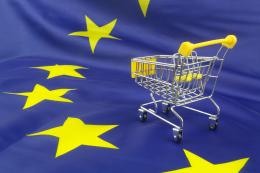
The EESC has adopted an own-initiative opinion providing recommendations on how to strengthen enforcement policy as a central tool to reduce fragmentation within the Single Market. The opinion builds on some of the key recommendations of the Letta and Draghi reports and provides elements to ensure the rapid implementation of the Single Market Strategy, in which the Commission admits a need to step up enforcement efforts.
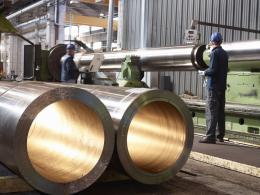
The European steel and metal industries face an unprecedented, existential crisis that threatens not only industrial capacity, but also Europe's strategic autonomy, green transition, and economic security.
In a general context of skills shortages, new digital and green skills include technological innovations stemming from corporate research and development activities and from university and institutional research. Combining in-company training with training provided by training providers is a particularly effective way of ensuring that these new skills are acquired.
In the face of unprecedented geopolitical and economic challenges, Europe requires unprecedented investment flows to secure its strategic autonomy--whether advancing the green transition, ramping up digital infrastructure, or reinforcing defence capabilities. The funding demands far exceed the capacity of public budgets. European banks, already finance 70% of the continent's needs, and must remain central actors. But to unlock greater lending capacity without compromising stability, they need effective tools. Securitisation is one of such tools.
Russia’s war against Ukraine has not only redrawn Europe’s security map—it has forced the European Union to rethink its own foundations. What began in 2014 with the illegal annexation of Crimea, escalated into the Donbas war, and exploded into full-scale invasion in February 2022, has shattered whatever residual trust lingered toward Moscow. Today, Russia is seen less as a strategic partner, and more as an existential threat on Europe’s doorstep.
Brussels has rolled out a new label for businesses: SMCs, or “small mid-caps.” The idea is simple: make life easier for companies that are too big to count as SMEs but too small to handle the full weight of EU rules. At first glance, this looks like a step in the right direction towards simplification. But is it real relief --- or just another layer in an already crowded regulatory landscape?
Europe has long been a hub of brilliant ideas. From AI breakthroughs in Paris to green tech innovations in Stockholm, European start-ups regularly make global headlines. Yet too often, these promising ventures hit a wall. Instead of growing into global champions, they stumble into the “valley of death”—that treacherous gap between early innovation and commercial success. Lacking capital, talent, or market access, too many relocate or sell out to foreign competitors. In short, European innovation too frequently blooms only after crossing the Atlantic or Pacific.
Europe’s retail sector is grappling with a silent but serious crisis. Every day, hundreds of thousands of parcels from third country platforms are flooding the EU Single Market, bypassing customs checks, dodging taxes, flouting EU product safety rules and undermining the regulations that European businesses rigorously follow. Competition is welcome—but it must be fair and rule-based. What we face today is outright unfairness on a massive scale, putting an entire sector at risk and exposing consumers to unsafe products without accountability. It is high time for EU-policymakers to act decisively.
The European automotive industry is entering one of the most profound transformations in its history. The shift towards cleaner, digital and more sustainable mobility is no longer optional—it is both inevitable and complex. The European Economic and Social Committee (EESC), in its recent opinion (CCMI 249), argues that this transition must not only be a technological, but also industrial, economic, social and above all human.
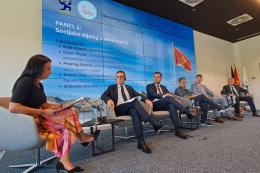
EESC President Röpke carried out a high-level mission to Montenegro on 1 September 2025, where he took part in the national conference “The State of Social Dialogue in Montenegro in the Context of European Union Accession”, organised by the Union of Free Trade Unions of Montenegro (UFTUM) with the support of the Solidarity Center.