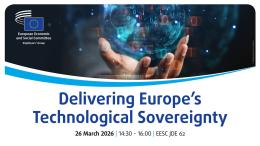
Europe stands at a critical moment for its technological sovereignty. The coming policy choices will reveal whether the European Union can turn political ambition into tangible technological and industrial capacity, or whether sovereignty risks remaining largely aspirational. In view of the upcoming EU Tech Sovereignty Package, this debate provides a timely opportunity to assess the direction now being set and its potential to deliver concrete results in the real economy. This debate will feature Commissioner Henna Virkkunen, Executive Vice-President for Tech Sovereignty, Security and Democracy.
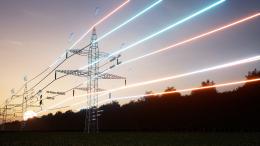
For the energy transition to succeed, Europe must build a truly integrated energy system at the continental level. This means removing infrastructure barriers, strengthening interconnections, enhancing European coordination, and developing effective financing mechanisms.
The outbreak of another war in the Middle East, in what was already a very unnerving year in geopolitics, is deeply concerning. The impact of this ongoing conflict will be strongly felt in the EU, and increasingly so if it drags on. Let's please not forget the ordinary citizens whose lives are being upended. Homes destroyed, forced to flee, living in constant fear.
The outbreak of another war in the Middle East, in what was already a very unnerving year in geopolitics, is deeply concerning. The impact of this ongoing conflict will be strongly felt in the EU, and increasingly so if it drags on. Let's please not forget the ordinary citizens whose lives are being upended. Homes destroyed, forced to flee, living in constant fear.
It's absolutely unacceptable that civilians and children are being killed, especially in such numbers. We call for the full respect of international law. Civilian infrastructure, including schools and sites of energy production, must not be targets.
I vehemently repeat my call for a ceasefire, for talks and an end to this war. I share my solidarity with the people of Iran in their struggle for democracy. I reiterate that dialogue and civil society participation are essential for a positive outcome for the region.
Events in the Middle East were very much on our minds during Civil Society Week, 2-5 March. This was the third edition of our annual flagship event and the biggest and best yet. With civil society representatives from across Europe, we examined and debated topics including the European Citizens' Initiative, the European Democracy Shield, the importance of media and digital resilience for democracies, as well as tackling inequality and housing. We created a living forum – a powerful demonstration of collaboration, commitment and shared responsibility. I look forward to debating the outcomes at this week's plenary.
A key highlight was the participation of the Commissioner for Democracy, Justice, the Rule of Law and Consumer Protection, Michael McGrath, who fittingly described the EESC as the 'watchdog of our democracy', and the announcement that the Committee would be hosting the annual summit of the Civil Society Platform in addition to joining its Steering Group. Europe's successful democratic future depends on this work.
Civil Society Week ended with an event to mark International Women's Day, Making the Invisible Visible, which focused on the hidden work that sustains our society. It's vital we keep drawing attention to this absence of respect and dignity afforded to women, whose work is taken for granted or ignored.
Women are also undervalued economically. This was a message I shared recently with President of the European Council, Antonio Costa, who invited me to exchange views in advance of the informal leaders' retreat on competitiveness. I stressed to him that greater gender equality would make a direct positive contribution to European competitiveness, job creation and growth.
In this context, the adoption of the new Gender Equality Strategy 2026-2030 by the European Commission, as I noted in my recent statement, is a timely and very welcome step forward.
This week, I am especially looking forward to our annual youth event Your Europe, Your Say! on 19-20 March, and hearing from young people from across the EU on their thoughts and ideas for the future of Europe. The EESC has led the way when it comes to involving and including young people in EU policy and decision making, and it's encouraging to see EU institutions keep the momentum going in this space. This includes the Commission's recent Intergenerational Fairness Strategy, which I have welcomed.
In the coming months, I'm looking forward to visiting Moldova to meet political leadership and civil society there to learn how we can best support them on their European integration path. I'm also preparing for a visit to New York and Washington D.C. to meet high-level leaders from the United Nations and the World Bank. In this increasingly turbulent and transactional world, the EU must keep flying the flag for the rules-based order, cooperation, and a strong and active civil society. These are a necessity for a more equal, sustainable and peaceful world.
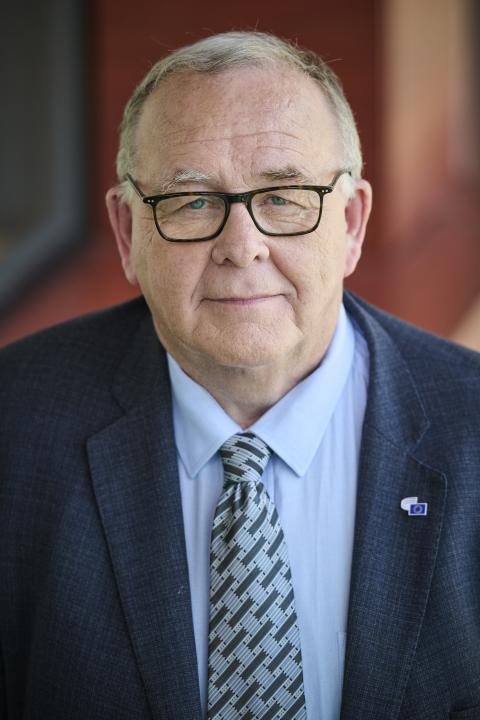
Séamus Boland
President of the European Economic and Social Committee