With more than 1.6 billion users globally, including over 200 million across Europe, TikTok has become a major space for political expression and information-sharing and a main source of news for a significant share of young people. As a result, it has come under growing scrutiny from regulators and civil society. The European Commission opened formal proceedings in 2024 to examine whether TikTok is adequately assessing and mitigating systemic risks related to election integrity and civic discourse. We asked Francesca Scapolo, TikTok's Election Integrity Expert for Public Policy in Europe, how TikTok understands its responsibility for these risks in practice, how it cooperates with authorities, and what safeguards it has in place to protect democratic processes.
With more than 1.6 billion users globally, including over 200 million across Europe, TikTok has become a major space for political expression and information-sharing and a primary source of news for a significant share of young people. As a result, it has come under growing scrutiny from regulators and civil society. The European Commission opened formal proceedings in 2024 to examine whether TikTok is adequately assessing and mitigating systemic risks related to election integrity and civic discourse. We asked Francesca Scapolo, TikTok's Election Integrity Expert for Public Policy in Europe, how TikTok understands its responsibility for these risks in practice, how it cooperates with authorities, and what safeguards it has in place to protect democratic processes.
Given TikTok’s scale and its growing role as a source of political information for millions of users across the EU, how does the company approach accountability for systemic risks on the platform more broadly, such as the spread of disinformation, coordinated behaviour, or fake and inauthentic accounts? How do these efforts translate into cooperation with national authorities and EU institutions, particularly during sensitive moments like elections?
TikTok is adiscovery platform where more than 200 million Europeans come to connect, share their passions, and find inspiration. We recognise that with scale comes responsibility, and we work continually to protect our platform and maintain a civil place for people to express themselves and build community, including during elections. We’ve invested significantly in systems, specialised teams and partnerships to address systemic risks such as harmful misinformation, fake and inauthentic accounts, coordinated inauthentic behaviour, and deceptive behaviours.
Across the EU, our work includes proactive enforcement of our Community Guidelines, investment in features, tools and resources to empower our community, including media literacy initiatives, and partnerships with external experts. In fact, through TikTok's global fact-checking programme, we work closely with more than 20 IFCN-accredited fact-checking organisations, including AFP in France, DPA in Germany and Newtral in Spain.
Our technical and enforcement work is complemented by ongoing cooperation with national authorities and EU regulators. Under the Digital Services Act (DSA) and the Code of Conduct on Disinformation, we engage with Digital Service Coordinators and the European Commission. We also provide regular updates on our content moderation efforts through our transparency reports.
During high‑stakes periods, such as elections, we also collaborate with national authorities and electoral commissions, and participate in the Code’s rapid response system, which enables swift, coordinated information-sharing between civil society organisations, fact‑checkers and platforms to address urgent or emerging threats, a critical capability during elections.
Taken together, these efforts demonstrate how we blend proactive risk mitigation, user‑empowering tools, and regulatory cooperation to help safeguard democratic discourse across the EU, especially during sensitive electoral moments.
From your perspective, are the measures TikTok currently has in place sufficient to address systemic risks to democratic processes during elections, particularly those linked to recommendation algorithms, visibility dynamics, and coordinated campaigns? Or do you see a need for stronger or more proactive safeguards?
During elections, we work continually to protect our platform and maintain a civil place for people to express themselves and build community. Thousands of trust and safety and security professionals have safeguarded TikTok through over 200 elections around the world over the last five years. Our comprehensive strategy is based on three key pillars:
Protecting election integrity: Removing harmful misinformation, disrupting attempts to influence our community, including covert influence operations, collaborating with fact-checkers to assess content accuracy, and labelling unverifiable claims.
Empowering users: Providing access to reliable information through Election Centres, enabling users to separate fact from fiction.
Collaborating with experts: Partnering with electoral commissions and fact-checking organisations to counter emerging threats.
Through these efforts, in 2025, we disrupted more than 75 covert influence networks, and removed tens of thousands of accounts for violating our covert influence policies. We stay accountable to our community with regular updates on how we protect election integrity and frequent reports on the covert influence operations we have disrupted.
Looking ahead, we remain committed to strengthening these pillars and to evolving our safeguards as risks change.
Project Clover has been presented as a key pillar of TikTok’s European data-governance strategy, including a long-term investment of around EUR 12 billion, yet it remains relatively unknown to the public. How does this initiative concretely change how TikTok handles European user data, and what relevance does it have for election integrity and democratic safeguards in the EU?
Project Clover is one of the most advanced and comprehensive data protection programmes to be found anywhere. Its core tenets include storing European user data in a dedicated European enclave by default and putting additional safeguards and restrictions around that data, building on our existing controls on who can access data.
We've also engaged a respected European cybersecurity firm, NCC Group, to independently monitor and verify these safeguards. NCC Group's oversight provides third-party accountability over our work to protect European user data. We've also deployed tools to further protect European user privacy called 'privacy enhancing technologies'.
These measures go further than regulatory requirements, while being aligned with principles in the GDPR, and our general efforts towards safeguarding our platform and users through robust processes, policies, and procedures.
Francesca Scapolo oversees TikTok’s Europe-wide election integrity public policy efforts, coordinating among product, trust and safety, and policy teams. Collaborating with internal and external stakeholders, she implements regional public policy strategies that reinforce civic trust and safeguard electoral integrity. Before joining TikTok, she worked at the Meta Oversight Board and the European Commission.
The EESC is calling for a larger EU budget than proposed in the Commission’s draft 2028-2034 multiannual financial framework (MFF), which totals EUR 1.816 trillion. The EESC discussed the draft during its plenary session in December as part of the preparations for an opinion that is due in January 2026 and builds on the EESC’s April 2025 mid-term revision assessment.
The EESC is calling for a larger EU budget than proposed in the Commission’s draft 2028-2034 multiannual financial framework (MFF), which totals EUR 1.816 trillion.
The EESC discussed the draft during its plenary session in December as part of the preparations for an opinion that is due in January 2026 and builds on the EESC’s April 2025 mid-term revision assessment. The debate saw the participation of Commissioner for Budget, Anti-Fraud and Public Administration Piotr Serafin, MEP Carla Tavares and former Italian minister in the Draghi government and Scientific Director of the Italian Alliance for Sustainable Development (ASviS) Enrico Giovannini.
‘Our Union can only remain resilient if those closest to the grassroots level – regional and local actors, social partners and organised civil society – remain fully involved in shaping where and how funds are spent,’ EESC President Séamus Boland said.
During the debate, EESC members warned that merging cohesion, agricultural and fisheries funding into new national and regional partnership plans (NRPPs) could risk centralising fund management. They also highlighted the need to avoid repeating the consultation shortcomings seen with the recovery and resilience plans. Concerns were raised about linking NRPPs to European Semester priorities, which could impose undue macroeconomic conditionality.
The Committee supported using revenue from the emissions trading system and the carbon border adjustment mechanism, but opposed a new corporate levy, recommending a digital services tax instead. It called for increased funding for the European Social Fund Plus, the Just Transition Fund, Horizon Europe and the Connecting Europe Facility. The new AgoraEU programme was welcomed as a boost for culture, media pluralism, democratic participation and civil society.
Clearer targets, transparency and greater local involvement would bolster democratic governance and improve the MFF proposal.
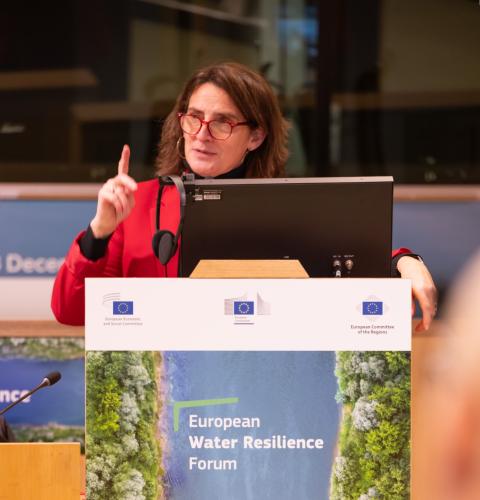
The first EU Water Resilience Forum, co‑organised by the EESC, the Committee of the Regions and the European Commission, gathered policymakers and stakeholders to chart solutions for Europe’s growing water challenges.
The first EU Water Resilience Forum, co‑organised by the EESC, the Committee of the Regions and the European Commission, gathered policymakers and stakeholders to chart solutions for Europe’s growing water challenges.
Commissioner Jessika Roswall warned that ‘water is no longer an infinite resource’ and called for urgent collective action, while Executive Vice‑President Teresa Ribera underlined that ‘water connects everything we care about… water is life, a shared responsibility.’ The Forum also launched the new Water Resilience Stakeholder Platform, designed to turn shared ideas into coordinated implementation.
Water resilience at the heart of EU priorities
For the EESC, the Forum reinforced momentum behind its EU Blue Deal, which has helped push water security up the EU’s political agenda and inspired the creation of a dedicated Commissioner portfolio. The updated Blue Deal Declaration now includes 31 specific actions, including an EU Water Test to assess the impact of new legislation on water resources and pollution. EESC President Séamus Boland stressed the social dimension of water: ‘Fair access to water is a matter of justice… Europe’s water future is ultimately about protecting people, livelihoods and future generations.’
Local action, shared responsibility
Cities and regions play a pivotal role. The President of the European Committee of the Regions, Kata Tüttő, reminded participants that ‘water is everywhere in our lives… and we feel the anxiety of water every day.’ She stressed that cross‑border collaboration is essential, noting how pollution in one city affects communities far downstream. Forum participants exchanged concrete solutions on restoring the water cycle, improving water efficiency, deploying digital tools and ensuring equitable access, especially for vulnerable groups.
From commitment to action
The Forum concluded with a shared determination to translate political ambition into practical measures and investments in order to achieve water resilience by 2050. With the launch of the Water Resilience Stakeholder Platform, the EESC reaffirmed its readiness to help connect policymakers with workers, businesses, farmers and communities. ‘This platform is a chance to turn ideas into practical, people‑centred solutions and ensure that no one is left behind’,the EESC Presidentconcluded. (gb)
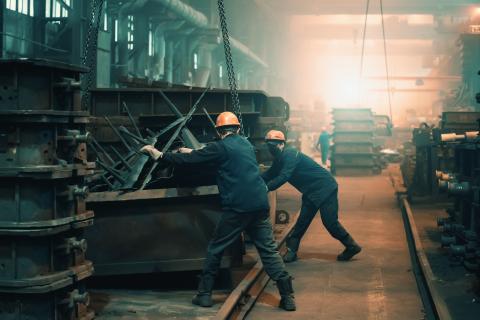
At its December 2025 plenary, the EESC adopted an own‑initiative opinion urging the EU to formally recognise permanent materials – steel, aluminium and glass – as key to a truly circular economy.
At its December 2025 plenary, the EESC adopted an own‑initiative opinion urging the EU to formally recognise permanent materials – steel, aluminium and glass – as key to a truly circular economy.
These materials retain their properties through endless recycling, delivering major climate and resource savings: recycling aluminium cuts energy use by 95% and reduces emissions from 15.1 tonnes of CO₂ per tonne of primary aluminium to just 0.52 tonnes. Rapporteur Andrea Mone highlighted the social dimension of the transition, stating ‘We need access to up‑skilling and re‑skilling to facilitate smooth job transitions and enable workers to benefit from the circular economy.’ Co‑rapporteur Michal Pintér called for stronger policy action, saying ‘We need concrete legislation to move from slogans to practical and viable models.’
Why permanent materials matter
Permanent materials allow circular, closed‑loop recycling without quality loss, unlike materials that degrade with each cycle. High recycling rates already show their potential: tinplate packaging exceeds 80% recycling in several Member States, and every 10% rise in recycled glass content cuts energy use by 3% and CO₂ emissions by 5%. These gains make permanent materials key to meeting EU climate‑neutrality goals while reducing dependence on virgin raw materials.
What must change
The EESC stresses that the EU needs clearer legislation to distinguish permanent from non‑permanent materials and set ambitious recycling and collection targets. Achieving 90% separate collection of packaging waste by 2030, harmonising extended producer responsibility systems, investing in modern recycling infrastructure and improving consumer participation are key priorities. The Committee also emphasises that the circular transition must be socially fair, ensuring access to training, job‑to‑job support and strong social dialogue as new circular business models emerge. (gb)
Anastasia Karagianni from VUB (Vrije Universiteit Brussel) explores how digital technologies increasingly influence how people are judged and treated, from online images to access to jobs and public services. Although these systems are often presented as neutral, they can reinforce existing inequalities and cause real harm to marginalised communities, showing why EU digital regulation must move beyond technical compliance and take people’s lived experiences seriously when addressing algorithmic discrimination.
Anastasia Karagianni from VUB (Vrije Universiteit Brussel) explores how digital technologies increasingly influence how people are judged and treated, from online images to access to jobs and public services. Although these systems are often presented as neutral, they can reinforce existing inequalities and cause real harm to marginalised communities, showing why EU digital regulation must move beyond technical compliance and take people’s lived experiences seriously when addressing algorithmic discrimination.
Algorithmic discrimination refers to automated systems producing outcomes that systematically disadvantage particular groups, not due to technical 'errors' alone but because of how data, design choices, and historical patterns of inequality shape machine decision‑making. These effects are especially pressing where gender, race, class, disability, or other identity axes intersect, undermining equality, privacy, and non‑discrimination.
For example, beauty filters encode normative, often Eurocentric and gendered ideals of attractiveness by algorithmically 'correcting' faces toward lighter skin tones or feminised features, disproportionately affecting women and people of colour and reinforcing existing hierarchies of social value. Similarly, smart wearable technologies, such as Ray-Ban Meta AI glasses, raise concerns about surveillance, privacy, and image-based sexual abuse, as biased vision and speech systems can misidentify marginalised groups and expose bystanders to recording without their consent, reinforcing existing power imbalances in public spaces.
In the EU, where digital systems increasingly determine access to public services, employment opportunities, and social support, addressing these harms is central to protecting fundamental rights and democratic accountability.
EU frameworks, such as the General Data Protection Regulation (GDPR) and the EU Artificial Intelligence Act (AI Act) represent important steps towards a rights‑based approach to data and automated systems. The GDPR’s emphasis on transparency, human oversight, and mechanisms for individuals to contest automated decisions gives civil society tools to challenge discriminatory practices and to demand accountability from both private and public actors. The AI Act adopts a risk-based approach to regulating AI, with explicit obligations for high-risk systems ─ AI applications considered likely to significantly affect people’s rights, safety, or access to essential services, such as healthcare or employment. This creates avenues for oversight and structured scrutiny of technologies that could produce harmful outcomes.
Civil society organisations have played a key role in bringing these frameworks to life. Forums such as the CPDP (Computers, Privacy and Data Protection Conference), Privacy Camp, and FARI engage activists, researchers, and policy-makers in evaluating algorithmic systems and shaping best practices. Successes achieved by European Digital Rights (EDRi) and the Digital Freedom Fund (DFF) demonstrate how sustained civil engagement can improve transparency obligations, strengthen enforcement, and widen public understanding of digital harms. These initiatives show that EU regulation can empower civil society, fostering participatory approaches to regulation rather than leaving oversight solely to state or corporate actors.
Despite these positive developments, significant gaps remain that limit the capacity of EU regulation to address structural discrimination and algorithmic harm in a comprehensive way. At the heart of this critique is the nature of the AI Act’s risk classification system. The Act’s reliance on a top‑down model, where regulators pre‑define categories of high‑risk systems, leaves little space for bottom‑up identification of emerging harms discovered through lived experience or civil society monitoring. Once systems are deployed, there are limited mechanisms for affected communities to trigger risk reassessments or demand remediation outside predefined categories.
The Digital Omnibus Proposal illustrates another worrying trend. By allowing providers of AI systems to self‑register and determine whether their technology qualifies as high‑risk, the proposal risks delegating critical regulatory judgments to the very actors whose commercial interests may conflict with public safety and rights protection.
Even where bias-mitigation obligations (efforts designed to reduce discrimination in AI systems) exist, they often require the processing of sensitive data. Yet gender and LGBTQIA+ characteristics, such as non-binary, transgender, or intersex identities, are frequently not recognised as protected categories and therefore remain insufficiently safeguarded. This creates blind spots in understanding how AI systems can reinforce overlapping forms of discrimination.
These gaps become most apparent with emerging harms, such as sexualised deepfakes. While it is likely that such technologies could fall under Article 5’s prohibited practices, the regulatory text leaves ambiguity around classification and enforcement. In the absence of clear obligations on platforms to prevent or remediate image‑based abuse and deepfake dissemination, victims may find limited legal recourse, despite substantive harms to privacy, dignity, and safety.
Another limitation lies in standardisation obligations, which apply only to high‑risk AI systems. This leaves vast swathes of widely deployed technologies, including generative AI and content moderation applications, without systematic safety, fairness, and discrimination safeguards. For civil society, this means that many discriminatory or harmful systems may never be subject to robust conformity assessments or accountability pathways.
Finally, the way EU law handles intersectionality ─ the idea that people can face overlapping forms of discrimination ─ shows that current regulations don’t always reflect people's lived realities. While the Directive on Combating Violence Against Women and Domestic Violence (GBV Directive) introduces the concept of 'intersectional discrimination', its practical scope remains limited in the text of the (GBV) Directive. It also does not fully account for the concerns of LGBTQIA+ communities across EU equality policy. Academic analysis of the AI Act shows that references to 'gender equality' are sparse, and inclusive terminology for diverse gender identities is largely missing. As a result, the regulatory framework still remains rooted in binary understandings of gender.
These critiques point to a broader issue: simply following procedural safeguards is not enough to tackle algorithmic discrimination in society. What is needed are approaches that start from people's experiences and identify harms early, assessments that consider how different forms of discrimination overlap, and participatory oversight that meaningfully includes civil society in decision-making. Tools such as gender‑responsive impact assessments and community‑driven evaluation frameworks ─ which involve testing systems for bias and listening to affected users ─ can help make sure that regulation actually protects those most vulnerable to algorithmic harms. Without such mechanisms, EU digital regulation risks enshrining a 'neutral' approach that obscures the inequalities people face in everyday life, instead of confronting them.
Anastasia Karagianni is a doctoral researcher at the Law, Science, Technology and Society (LSTS) research group of the Law and Criminology Faculty at Vrije Universiteit Brussel (VUB) and former FARI scholar. Her thesis focuses on the 'Divergencies of Gender Discrimination in the EU AI Act Through Feminist Epistemologies and Epistemic Controversies'. She has been a visiting researcher at the iCourts research team of the University of Copenhagen and the Joint Research Centre of the European Commission in Seville as well as a visiting lecturer at the ITACA Institute of the UPV Universitat Politèchnica de València.
With the AI Act, Europe has established an important framework. Now it needs to put it into practice: are we going to be able to deploy AI across the board – in businesses, in public administrations and in strategic sectors – and still remain human-centric, trustworthy and competitive? That’s what the European Commission’s Apply AI Strategy is all about.
With the AI Act, Europe has established an important framework. Now it needs to put it into practice: are we going to be able to deploy AI across the board – in businesses, in public administrations and in strategic sectors – and still remain human-centric, trustworthy and competitive? That’s what the European Commission’s Apply AI Strategy is all about: it shifts the focus from regulation to application, so as to increase productivity, improve public services and make us more resilient.
There are three central elements to this.
Firstly, the sectoral flagships: targeted measures for healthcare, industry and construction, robotics, energy, mobility, security, agri-food, culture and the public sector could create real demand for European solutions.
In the health sector, AI-powered screening centres and competence networks can enable earlier diagnoses and reduce paperwork – but only if data protection, transparency and clinical validation are taken into account from the outset. In industry and construction, digital twins and AI-enabled automation can improve quality, safety and efficiency, while at the same time addressing skills shortages. Across all sectors, fairness, non-discrimination and fundamental rights must remain guiding principles.
Secondly, cross-cutting measures for SMEs and for people working with AI.
AI use in Europe is still too low, especially among small businesses. It is therefore a good idea to strengthen the European Digital Innovation Hubs and turn them into ‘Experience Centres for AI’. However, SMEs need actual tangible support: easier access to finance, less red tape, workable rules for data use and intellectual property, and hands-on support to commercialise solutions and scale them in the single market. This includes building regional clusters of skills, based on existing strengths, so that every region can benefit – not just those that are already the strongest innovation hubs.
The world of work is just as crucial. AI literacy needs to be clearly defined and taught in practice in a sector-specific way for workers, managers and the public service. The aim of upskilling and reskilling is not just to reduce risks, but also to enable job transformation, improve job quality and increase productivity gains. Where algorithmic management and automated decision-making affect human beings, transparency, explainability and effective complaint and redress mechanisms are non-negotiable if we are to build trust.
Thirdly, governance that is inclusive and implementation-oriented.
A coordinated mechanism – with an AI observatory that develops KPIs, monitors impacts and reports publicly – can keep the strategy on track if stakeholder engagement is balanced and time-efficient. Social partners, SMEs and civil society must be part of the solution from the outset. Additionally, Europe should use strategic public procurement to bring innovative, safe and sustainable AI solutions to the market – solutions that are transparent, competitive and technology-neutral.
Finally, ambition requires reliable investment. ‘Apply AI’ needs predictable, long-term resources for research, computing and data infrastructure, and upskilling and reskilling – particularly for SMEs and regional innovation clusters – in the 2028–2034 multiannual financial framework. Following the withdrawal of the AI Liability Directive, future measures also need to create legal certainty for innovators while at the same time protecting consumers and workers in the single market.
‘Apply AI’ could become Europe’s implementation strategy, translating our values and rules into measurable impact – but only if we pick up the pace, simplify access and make trust our central concern.
On 1 November 2024, a newly renovated concrete roof collapsed on the railway station in Novi Sad in Serbia, killing 16 people and seriously injuring another one. The tragedy, widely blamed on construction negligence and government corruption, sparked what would become one of the largest civic movements in Serbia’s recent history. Students were the first to respond, taking to the streets and organising vigils, protests and blockades of roads and universities as they called for change. We spoke with student protester Stefan Tomić during the Sakharov Prize award ceremony.
On 1 November 2024, a newly renovated concrete roof collapsed on the railway station in Novi Sad in Serbia, killing 16 people and seriously injuring another one. The tragedy, widely blamed on construction negligence and government corruption, sparked what would become one of the largest civic movements in Serbia’s recent history. Students were the first to respond, taking to the streets and organising vigils, protests and blockades of roads and universities as they called for change. Many were beaten or arrested by the police. In 2025, Serbian students were nominated for the European Parliament's Sakharov Prize for Freedom of Thought. During the award ceremony in Strasbourg, we spoke with student protester Stefan Tomić, who was among those detained by Serbian police.
During the panel organised with civil society organisations when the Sakharov Prize was awarded in Strasbourg, you mentioned that the student protests in Serbia were in fact initiated by just one young woman after the terrible tragedy in Novi Sad. In your opinion, how and why did the protest grow to such massive proportions?
Until now, protests in Serbia have been organised by opposition parties or other interest groups. This time it’s different: the tragedy stirred emotions that were strong enough for us to take action on our own, without any other interests. That’s why the young woman started the first blockade, that’s why, after seeing her, we jumped in, and that’s why Serbia trusts us. That’s why the protests are massive.
Your fellow student Dimitrije Dimić said in Strasbourg that your student movement has in fact no leader. How do you gather and organise? What would have to happen for you to decide to end the protests?
We hold assemblies at the faculties, then there is a kind of coordinating structure above that and decisions are made democratically. We trust those decisions the way someone would trust a leader, and that is why we don’t even need a leader. In answer to your question about ending the protests, it’s simple: our demands must be met.
How have the authorities and police of the Republic of Serbia responded to the student protests? You yourself were arrested and placed under house arrest. How did your arrest happen, and what exactly were you charged with?
They arrested me out of the blue. They didn’t give me a summons or a lawyer. After five hours, I assume the outside pressure became strong enough that they had to grant me my basic rights. I then found out that I was being charged with inciting a violent change of the constitutional order, and I was detained for two days. After that, my house arrest began. The police have not been gentle at all; they have beaten us many, many times over the past year.
Some of your lawyers were with you in Strasbourg. What kind of legal help are the students receiving from the lawyers? Who else has supported you? How are you portrayed in the Serbian media?
The lawyers were among the first to go on strike, and now, when we are arrested, it means a lot to have a good lawyer. We have received support from practically every group in Serbia, although the most visible have been teachers and professors, the IT sector, taxi drivers and bikers. But this is not thanks to the media. All TV stations holding nationwide broadcast licences claim that we are paid mercenaries and terrorists. Nova S and N1 are the only TV stations that report objectively, and the government is doing everything it can to shut them down. Social media saved us.
Some critics still claim that no one actually knows what the student protesters’ programme is or what you stand for. How would you respond to that?
More than a year has passed. Earlier, I could attribute such statements to ignorance; now I am sure they are malicious. We are fighting against theft, murder, corruption… We are fighting for democracy, equal rights for all. We are fighting for the fulfillment of our demands. We have been fighting for the same things since the beginning. There wouldn’t be so many of us if we didn’t have a clear goal, and people wouldn’t support us if we didn’t.
Serbian students have been nominated for the 2025 Sakharov Prize. What does this nomination mean to you personally and to the other students?
It’s an incredible feeling. We are still young, and it is terrifying to do something on the scale of an entire nation without any confirmation that we are doing things the right way. Such recognition is necessary ─ for us and for everyone in the world who finds themselves in a similar situation. Thank you. From me and from all the students.
Stefan Tomić is a 20-year-old student in the Faculty of Physics, University of Belgrade.
2026 did not arrive quietly. In Georgia, it arrived with a growing number of political prisoners, a frozen European future, and a country sliding toward authoritarian rule. For me, that reality has a name: Mzia Amaglobeli. One year ago, my mentor and close friend became Georgia’s first female journalist political prisoner.
2026 did not arrive quietly. In Georgia, it arrived with a growing number of political prisoners, a frozen European future, and a country sliding toward authoritarian rule.
For me, that reality has a name: Mzia Amaglobeli. One year ago, my mentor and close friend became Georgia’s first female journalist political prisoner. She was abused, assaulted, denied justice and held through a 38-day hunger strike that cost her most of her eyesight. From that moment on, my life and my country changed forever.
The collapse of Georgia’s democracy did not happen overnight. Nor was it an isolated assault. It is part of a larger war, visible when Russia launched Europe’s largest war since WWII in Ukraine, and even before that, through disinformation, propaganda and hybrid warfare.
This is a war against the rule-of-law world order itself – one that seeks to re-draw borders, crush democratic institutions and reshape our lives.
Western democracies, like Georgians, underestimated its power. They believed they were too strong, too democratic; we believed we were too resilient. We were wrong.
In Georgia, propaganda tells people that the European Union is weak in this global struggle, and that pursuing EU integration will bring Russian tanks and rockets, as in 2008. Fear has been weaponised.
However, the result is over 410 days of continuous protest. People are demanding their stolen country back after rigged elections, captured courts, mass surveillance and repressive laws. The regime grows more inventive in crushing dissent, but resistance continues.
Georgia was never perfect, but it built a vibrant civil society, a growing free media and liberal laws. After receiving EU candidate status, it was suddenly thrown off a cliff, transforming into a repressive state where people are jailed for protesting, journalists are criminalised, civil servants are fired for dissent, and protesters are allegedly poisoned with chemicals.
Since 28 November 2024, when the ruling party ‘Georgian Dream’ froze Georgia’s EU path, the country has been rapidly refashioned into a laboratory of authoritarian rule. Destruction is always faster than building.
Europe may feel sympathy, but this is not just Georgia’s loss. It is yours too. This is how authoritarianism spreads, country by country, until it reshapes the world order itself.
As 2026 begins, one thing is clear. The old rules no longer protect us. While Europe hesitated, authoritarianism advanced. Now the question is no longer whether the world will change, but whether it will be shaped by those who defend democracy or by those who destroy it.
Tonight, in the last hours of 11 January, together with my colleagues, I stood in the freezing air outside Rustavi women’s prison, where Mzia Amaglobeli, now a Sakharov Prize laureate, remains unjustly imprisoned. Exactly one year ago, at this same hour, she was first unlawfully detained for putting up a poster in protest against arbitrary arrests for the same form of expression.
Less than one month ago, I was in Strasbourg, attending meetings and giving interviews on Mzia’s behalf. Her message to the EU was urgent and simple: act now and act effectively. Use all tools at your disposal. We live in a new reality that allows no luxury to delay.
Mzia ended her letter with the words, ‘I believe in a democratic, strong Europe’. For Georgians, this belief is not symbolic. It costs freedom, safety and lives. Europe must now decide: honor it, or abandon those who hold it.
Irma Dimitradze is a journalist and Communications Manager at Gazeti Batumelebi, a Georgian media organisation co-founded in 2001 by Sakharov Prize 2025 laureate Mzia Amaglobeli. She led an investigative report exposing the ruling party’s access to tens of thousands of voters’ sensitive personal data, which should only be collected by state institutions. Ms Dimitradze advocates internationally for Georgian press freedom and for Mzia Amaglobeli, the country’s first female journalist political prisoner since 1991.
Although AI could make European agriculture more competitive and sustainable, most farmers are being left out: under the current CAP, only around 3-4% of EU farms are expected to receive funding for digital tools, writes Stoyan Tchoukanov, president of the EESC's Section for Agriculture, Rural Development and the Environment.
Although AI could make European agriculture more competitive and sustainable, most farmers are being left out: under the current CAP, only around 3-4% of EU farms are expected to receive funding for digital tools, writes Stoyan Tchoukanov, president of the EESC's section for Agriculture, Rural Development and the Environment.
At the EU AgriFoodDays in December 2025, an important reality became clear. Out of more than 400 participants discussing the future of digital farming, only six were farmers and only two were digitally connected to their farms. This underlines a critical gap: Europe cannot design a digital future for agriculture without farmers being actively involved.
Although digitalisation has been discussed for decades, real support on the ground remains limited. Under the current EU Common Agricultural Policy (CAP) for 2023-2027, only about 3-4% of EU farms are expected to receive funding specifically for digital farming technologies. Even when broader farm modernisation measures are included, the figure reaches only around 7.6%.
There is also a clear divide between basic digital use and real digital transformation. While more than 90% of farmers use at least one IT or software tool, far fewer can afford or access advanced technologies such as precision farming, sensors, or AI-based systems. Dedicated public support for these investments remains low.
This is reflected in the data. According to the EU Joint Research Centre, only about one in five farmers uses farm-management software or satellite-based tools, and drone use remains minimal across most Member States.
Digital tools and AI can make European agriculture more competitive, sustainable, and resilient, but only if farmers are connected, supported, and involved in shaping these solutions. Without them, digital innovation risks remaining a policy ambition rather than a reality in the field.
Stoyan Tchoukanov has been president of the EESC's NAT section since October 2025 and an EESC member since 2020. Within the EESC, he represents the Beef Breeders Association of Bulgaria, where he also runs his own cattle farm.