The adoption of an opinion on civil dialogue cannot be the end of the process. It's certainly a fundamental step towards progress, given that it was drafted at the request of the Belgian presidency and it might therefore be added to the European Union's agenda.
The adoption of an opinion on civil dialogue cannot be the end of the process. It's certainly a fundamental step towards progress, given that it was drafted at the request of the Belgian presidency and it might therefore be added to the European Union's agenda.
Rather than describing the opinion, it would be more useful to understand the process. Civil dialogue is first and foremost a place where people can discuss their agendas and objectives, where institutional and non-institutional stakeholders meet on an equal footing.
However, representative democracy must be safeguarded from illiberal attempts to undermine it. Various forms of populism are deep cause for concern as they are eroding the space for civic participation. This is why it is both vital and urgent to implement Article 11 of the TEU. When this article was first written, it was clear that liberal democracy requires the participation of intermediary bodies, such as the social partners and civil society organisations. These bodies convey people's views - entrepreneurs running big companies or SMEs, workers, professionals, consumers, minorities such as migrants, people with disabilities and Roma, and everyone involved in European and international human rights associations. "Freedom, democracy, human rights and the rule of law are among the fundamental values upon which the European Union is founded. They are enshrined in the EU Treaties and lie at the heart of the EU's identity. Yet these values have come under great pressure in recent years. Europe has faced unprecedented crises, which amplified social and economic inequalities and called into question EU citizens' trust in democratic institutions," said EESC President Oliver Röpke in his inauguration speech. Civil dialogue is key to responding to these challenges and as the new president pointed out when speaking about the EESC as an EU institution, the doors of EU institutions must always be open to hear what people want to say.
The debate in the study group which prepared this opinion was a good example of civil dialogue, where the participants listen to each other and negotiate on the wording, contents and objectives.
We agreed on some demands which would be presented to the European institutions with a view to strengthening civil dialogue. The goal was to reach an interinstitutional agreement, a basis for a strategy and an action plan.
This is progress, a step forward like the many others the EESC has accomplished since 1999 by means of internal discussions between the entities it represents. However, this step must now be implemented and supported and inch its way along the road to adoption by the European Union.
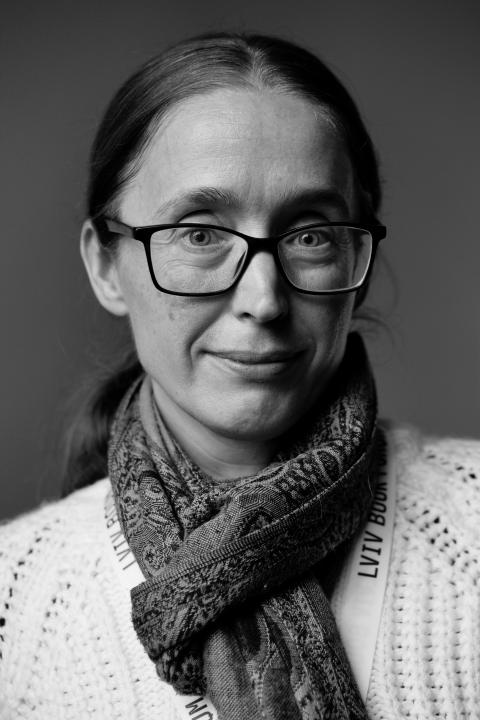
Our guest writer is EESC member Pietro Vittorio Barbieri who shared his views on the importance of civil dialogue and ensuring that it has a proper place on the European agenda.
Our guest writer is EESC member Pietro Vittorio Barbieri who shared his views on the importance of civil dialogue and ensuring that it has a proper place on the European agenda.
More flexible and even tailored pathways to upskilling and lifelong learning can be one way of reaching people with low skills levels, from poorer backgrounds or at risk of social exclusion. Attention still needs to be paid to gender imbalances in labour markets.
A ruined house in the village of Vremivka, near Nova Novosilka, the epicentre of the Ukrainian counter-offensive in the summer of 2023.
These villages in the Ukrainian steppe, at the intersection of three regions (Donetsk, Dnipro and Zaporizhzhia) and a long way from the big cities, have been populated by Greeks displaced from Crimea since the 18th century. They resisted the Russian offensive in 2022 at the cost of being completely destroyed by enemy artillery. Here, in this strategic location that might be the key to liberating the shores of the Sea of Azov, Ukraine is standing its ground today, two years after Russia’s invasion.
We asked Tetyana Ogarkova - a Ukrainian journalist living in Kyiv - to capture an image for us that symbolises Ukraine today, two years after Russia’s invasion on 24 February 2022. She sent us a photo that she took while travelling through the country supporting the Ukrainian troops. Here is the photo that Ms Ogarkova wants to share with our readers, and the story behind it.
We asked Tetyana Ogarkova - a Ukrainian journalist living in Kyiv - to capture an image for us that symbolises Ukraine today, two years after Russia’s invasion on 24 February 2022.She sent us a photo that she took while travelling through the country supporting the Ukrainian troops. Here is the photo that Ms Ogarkova wants to share with our readers, and the story behind it.
Tetyana Ogarkova has a PhD in literature from Paris XII Val-De-Marne University; she is a lecturer at Mohyla University in Kyiv, a journalist and Head of International Outreach at the Ukraine Crisis Media Center. She lives in Kyiv.
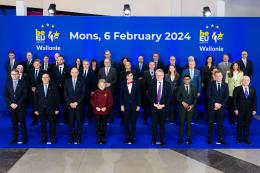
On 6 February, President Röpke participated in an informal meeting of EU ministers responsible for cohesion policy, who agreed on an ambitious set of guidelines for the future of cohesion policy in Europe post-2027.