Lessons learned and a new Inflation Governance Framework
Event type
Conference
Location
room VMA 22, Van Maerlant 2
Brussels
Belgium
On Wednesday, 3 September 2025, from 14:00 – 17:30 (CET), the European Economic and Social Committee (EESC) will host an event organised by the Foundation for European Progressive Studies, in cooperation with Fondazione Pietro Nenni and tasc, discussing lessons learned from the recent inflation episode and the new inflation governance framework that needs to be developed to prevent or mitigate the supply side inflation shocks in the future.
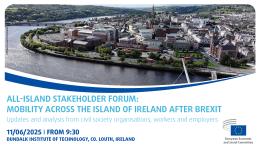
An All-Island Stakeholder Forum is being organised by the European Economic and Social Committee together with an All-Island Advisory Group of nine representative workers, employers and civic organisations from both Ireland and Northern Ireland.
The focus will be on the theme of ‘Mobility across the island of Ireland after Brexit’. The Forum will be in two parts: (i) plenary sessions in the morning in hybrid format, and (ii) in-person breakout sessions in the afternoon at which stakeholders will discuss specified topics in more detail.
This 2025 All-Island Stakeholder Forum is an ambitious EESC initiative feeding into the development of the EU-UK relationship and complements the European Commission and the UK government commitments to stakeholder engagement in the Windsor Framework. It will gather the widest possible range of business, worker and civil society stakeholders on the island together to share insights and expertise.
The topic of the conference was the mental and physical condition of young Europeans and the role of civil society organisations in supporting it. The event was organised as part of the Polish presidency of the EU Council on the initiative of the Minister for Civil Society, Adriana Porowska, and the Civil Society Organisations' Group of the EESC.