From 26 to 29 March, the EESC took part in the World Trade Organisation’s 14th Ministerial Conference in Yaoundé, Cameroon. Mira‑Maria Danisman, Chair of the EESC International Trade Follow‑up Committee, reports on a conference that delivered few concrete results.
From 26 to 29 March, the EESC took part in the World Trade Organisation’s 14th Ministerial Conference in Yaoundé, Cameroon. Mira‑Maria Danisman, Chair of the EESC International Trade Follow‑up Committee, reports on a conference that delivered few concrete results.
By Mira‑Maria Danisman
The 14th WTO Ministerial Conference in Yaoundé, Cameroon, brought together WTO members and stakeholders at a time of rising geopolitical tensions and increasing fragmentation in global trade. The objective was clear: to take stock of the multilateral trading system and push forward long-overdue reforms. Yet despite modest expectations, the meeting delivered few concrete outcomes ─ highlighting once again how difficult it has become to move the WTO forward.
At the centre of the discussions was the WTO reform process, which many had hoped would be politically endorsed and launched at ministerial level. The reform agenda aims to tackle fundamental challenges ─ from decision-making and dispute settlement to the scope of WTO rules. While there was broad agreement on the importance of a predictable, rules-based system, members failed to converge on the way forward. As a result, the file returns to Geneva, with no clear timeline for progress. Disagreements on the e-commerce moratorium ─ particularly on the length of its extension ─ further complicated the negotiations and contributed to the stalemate.
Where multilateral efforts stalled, plurilateral initiatives continued to move ahead. Progress was made on e-commerce, investment facilitation, and domestic regulation in services, reflecting a growing shift towards 'coalitions of the willing.' At the same time, the interim dispute settlement mechanism (MPIA) expanded its membership, now covering around 60% of global trade and helping to keep dispute resolution functioning despite the paralysis of the Appellate Body.
Discussions also touched on topics such as agriculture and systemic imbalances, but ─ as in previous ministerials ─ these issues remain politically sensitive and largely unresolved.
The European Economic and Social Committee (EESC) delegation was actively engaged in Yaoundé, exchanging with a broad range of stakeholders. It stressed the need to preserve a strong multilateral trading system while ensuring that trade policy supports sustainability, social standards, and economic resilience. The delegation also highlighted the key role of civil society in fostering transparency and trust, both of which are currently in short supply.
Looking ahead, the path to the next ministerial remains uncertain. Advancing WTO reform will be critical, but equally challenging. In the meantime, plurilateral initiatives are likely to continue shaping the agenda. Rebuilding trust among members will be essential if the WTO is to regain momentum.
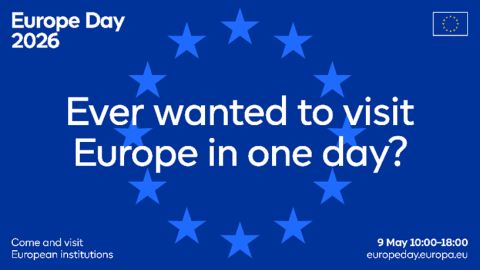
On 9 May, the Committee will once again mark Europe Day alongside other institutions across the European Union, celebrating the anniversary of the Schuman Declaration, a historic milestone that laid the foundations of European integration.
On 9 May, the Committee will once again mark Europe Day alongside other institutions across the European Union, celebrating the anniversary of the Schuman Declaration, a historic milestone that laid the foundations of European integration.
On this occasion, the EESC is opening its doors to the public! We invite you to visit the EESC's Jacques Delors building in Brussels on 9 May from 10 a.m. to 6 p.m., and discover the Committee’s work and its unique role in representing organised civil society within the European Union.
We have prepared a rich programme. Across the building, thematic stands will present the EESC’s priorities and its 2026 opinions. A puzzle-based discovery activity will allow you to explore them by collecting stickers and completing a visual puzzle, giving you a chance to get to know the EESC's work first-hand! Our members will be there to share their expertise on a wide range of EU-related topics.
Your presence will help bring Europe closer to its citizens and make this day a truly engaging and memorable experience for all!
By Jean-Michel Pottier, EESC Employers' Group member
Almost 40% of young Europeans dream of becoming entrepreneurs. This ambition represents a major opportunity for Europe’s competitiveness, innovation and social cohesion.
By Jean-Michel Pottier, EESC Employers' Group member
Almost 40% of young Europeans dream of becoming entrepreneurs. This ambition represents a major opportunity for Europe’s competitiveness, innovation and social cohesion.
At EU level, financial support, mentoring, high‑quality incubation and training programmes can provide a solid foundation for young entrepreneurs, but these efforts must be supported by a stable and predictable regulatory framework.
Entrepreneurship must also be nurtured through education and vocational training. Entrepreneurial thinking should be embedded across learning pathways, from schools to lifelong learning, and applied not only to business creation but also to social, cultural and sports initiatives. In this context, dual education and apprenticeships play a key role by combining theory with practical experience. Many successful craftspeople and SME owners in Europe started their careers this way.
Access to finance remains one of the main barriers for young entrepreneurs. Tailored grants, micro‑finance and capitalisation instruments are crucial, but funding alone is not enough. Strategic guidance and sound project evaluation are essential to strengthen business viability and reduce risk. While most Member States already offer personalised support schemes, these measures should be scaled up and more widely adopted at EU level.
Targeted strategies to promote self‑employment and female entrepreneurship show strong potential for job creation. Inclusive support must reach all young people who wish to start or take over a business, helping to reinforce equal opportunities and social cohesion.
In addition, closing the digital divide, improving access to technology and developing AI‑related skills are vital for innovation and competitiveness. Supporting SME internationalisation through mobility, networking and expanded programmes such as Erasmus for Young Entrepreneurs, will also help young business leaders access new markets.
By creating the right conditions today, Europe can empower young people to turn entrepreneurial ambition into sustainable business and therefore a prosperous economy.
Youth has always been a complicated period to navigate, including studying, entering the workforce, and becoming independent. These challenges, shared across generations, have long made young people more vulnerable in the face of economic and societal instability.
Youth has always been a complicated period to navigate, including studying, entering the workforce, and becoming independent. These challenges, shared across generations, have long made young people more vulnerable in the face of economic and societal instability.
However, the accumulation of unresolved crises has created a perfect storm. The financial crash, the climate emergency, the pandemic, the development of AI and ongoing geopolitical tensions have not come in isolation, they have overlapped and reinforced one another. For many young people, crisis is no longer an exception but just their normal daily life.
As a result, the traditional milestones of adulthood, including stable employment, affordable housing, and financial security, are increasingly out of reach. Precarious work replaces long-term careers, rent consumes most of the income, and the promise that each generation will live better than the last feels broken.
This situation has profound societal consequences. This is why we need to support young people and create a youth friendly society where they can thrive. Delivering quality jobs, and affordable housing and cost of living is the only way we can give our youth their future back. A society where our bodies age, but our lives are stuck in temporary contracts, where life milestones remain unachievable, and where young people get old without being allowed to transition to adulthood, is not viable.
The European Economic and Social Committee (EESC) has warned that persons with disabilities across Europe continue to face segregation, inadequate services and barriers to legal capacity. It has called for binding EU legislation, stronger monitoring and better use of EU funds to make community‑based living a guaranteed right rather than an aspiration.
The European Economic and Social Committee (EESC) has warned that persons with disabilities across Europe continue to face segregation, inadequate services and barriers to legal capacity. It has called for binding EU legislation, stronger monitoring and better use of EU funds to make community‑based living a guaranteed right rather than an aspiration.
At its March 2026 plenary session, the EESC adopted an exploratory opinion on how to ensure social inclusion and independent living for persons with disabilities through high‑quality, specialised social services. In the opinion, the Committee sets out a clear roadmap to close the gap between commitments and reality, building on the UN Convention on the Rights of Persons with Disabilities (UNCRPD), the Strategy for the Rights of Persons with Disabilities 2021–2030, and years of civil‑society advocacy.
Grounded in Articles 12 and 19 of the UNCRPD, the Committee stresses that equal recognition before the law and the right to independent living are inseparable. Without full legal capacity, people cannot genuinely choose where and with whom they live. Despite ratification of the Convention by all Member States, many continue to rely on institutional models that limit autonomy and participation.
During the plenary debate, rapporteur Pietro Barbieri thanked the Cypriot presidency for requesting the EESC to draft the opinion, which had allowed the Committee to shed more light on this issue.
'Unfortunately, there is still a long way to go: data indicates growing segregation. To break this vicious cycle, we need binding measures, starting with the European Union funds, and the adoption of Article 12 of the CRPD, from safeguards to decision-making support, Mr Barbieri added.
Although independent living is a key priority of the EU Disability Strategy, the Committee highlights a persistent implementation gap. Institutionalisation remains widespread, while political inertia, limited accessible housing and inconsistent reforms slow progress. The opinion also warns against 'trans‑institutionalisation', where smaller settings reproduce institutional practices without restoring control or decision‑making.
A lack of reliable, harmonised data across the EU further hampers monitoring and accountability, allowing setbacks to remain hidden. The EESC calls for improved data collection with the involvement of disabled people's organisations (DPOs).
To address these shortcomings, the Committee urges EU funds to stop financing segregation, calls for mandatory national de‑institutionalisation strategies and stresses the need for a binding EU directive to give effect to Article 19 of the UNCRPD. Genuine inclusion, it concludes, requires accountability, partnership and a firm shift towards person‑centred, community‑based support that enables persons with disabilities to live with dignity, autonomy and full participation. (lm)
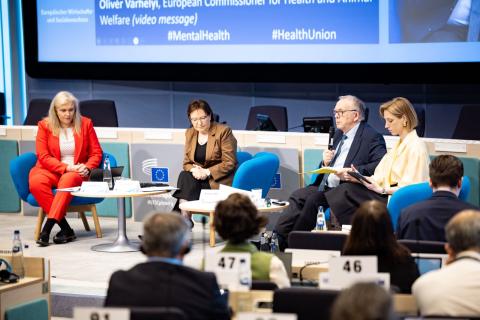
Emotional health is becoming one of the defining challenges for Europe’s next generation. Rising levels of anxiety, depression and suicide among young people reflect mounting pressures linked to social media, cyberbullying, loneliness, economic insecurity and the lasting effects of recent crises, it was highlighted at a high-level debate held by the European Economic and Social Committee (EESC) at its March plenary session.
Emotional health is becoming one of the defining challenges for Europe’s next generation. Rising levels of anxiety, depression and suicide among young people reflect mounting pressures linked to social media, cyberbullying, loneliness, economic insecurity and the lasting effects of recent crises, it was highlighted at a high-level debate held by the European Economic and Social Committee (EESC) at its March plenary session.
The emotional well-being of children and young people was in the focus of the three-part flagship debate that brought together EU institutions, international organisations, civil society and youth representatives. The discussions underlined the growing urgency of protecting emotional health through prevention, safer digital environments and stronger community-based support. While health policy remains a national competence, the EU plays an increasingly important role through prevention, digital regulation and cross-sector cooperation.
Opening the debate, EESC President Séamus Boland stressed the need to confront stigma and silence surrounding mental health: ‘For me, what is crucial is that this debate helps to bring the topic of emotional health and suicide out of the shadows; it is imperative that we destigmatise and demystify issues surrounding mental health. Communities, families and civil society organisations play a key role in those efforts.’
Discussions highlighted the scale of emotional distress across Europe, alongside significant inequalities in access to support. Long waiting times, limited child‑specific services and weak early‑intervention systems disproportionately affect vulnerable groups, including LGBTQI+ young people, migrant children and those in rural or low‑income communities. The World Health Organization and UNICEF have repeatedly warned that mental‑health conditions are rising fastest among young people.
Institutional speakers acknowledged growing awareness but uneven implementation across Member States. Calls focused on stronger prevention, improved digital literacy and child‑centred services, while recognising the links between emotional health, education, inclusion and culture. Cultural initiatives were highlighted as effective tools to strengthen resilience, alongside EU‑level actions such as the comprehensive mental‑health approach and new measures against cyberbullying.
Participants also addressed emerging digital risks, warning of escalating online harms, including deepfake abuse that overwhelmingly targets young women and girls. Several speakers cautioned against re‑institutionalisation, calling instead for community‑based, person‑centred care, early identification and school‑based support. Investment in psycho‑education, safer online environments and better regulation featured prominently.
In closing, the EESC called for closer cooperation between EU institutions, Member States and civil society. Emotional health spans education, social policy, labour markets and digital regulation, requiring coordinated and sustained action. Members reaffirmed that safeguarding the emotional well-being of Europe’s young people must remain a political priority. (lm)
This hearing will bring together representatives from EU institutions, organised civil society and voices from candidate countries to gather input for the EESC’s opinion on enlargement and climate.
Display date
2 months ago
The Role of the Private Sector and Civil Society in Strengthening Economic Cooperation within the Pact for the Mediterranean