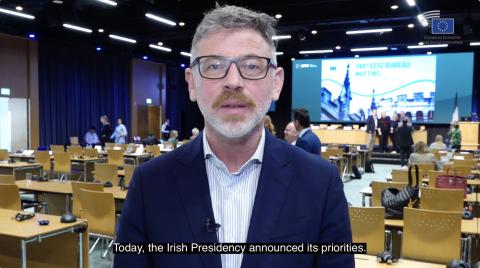
Erasmus+ may be one of the EU’s most loved programmes, but its success is starting to stretch its budget. As more students want to take part and living costs rise, universities warn that the Erasmus+ funding proposed for the next EU long-term budget may not go far enough. Joachim Wyssling of the European University Foundation told EESCInfo what this could mean in practice: smaller grants, heavier paperwork and fewer opportunities for those who need support most.
Erasmus+ may be one of the EU’s most loved programmes, but its success is starting to stretch its budget. As more students want to take part and living costs rise, universities warn that the Erasmus+ funding proposed for the next EU long-term budget may not go far enough. Joachim Wyssling of the European University Foundation told EESC Info what this could mean in practice: smaller grants, heavier paperwork and fewer opportunities for those who need support most.
Erasmus+ is often described as the most tangible way young people experience Europe, yet recent discussions highlight a disconnect between its popularity and its current funding reality. With the next MFF negotiations underway, how would you characterise the current state of the higher education sector in the EU?
Higher education in the EU is in a paradoxical position: it is central, socially popular and strategically important, but still under-resourced relative to both its mission and the expectations placed on it. Erasmus+ remains one of Europe’s most visible and valued programmes, with more than half a million students participating each year, yet the current funding debate shows that demand is growing faster than the financial envelope.
That gap matters because, when engaging in Erasmus+, universities are being asked to deliver on multiple fronts at once: mobility, inclusion, skills, digital transition, green transition, international cooperation and support for democratic resilience. The Commission’s current proposal is important because it preserves the programme’s scale in nominal terms. Yet the real concern is whether it can sustain the sector’s ambitions once inflation, new actions, rising participation, the Commission’s own mobility target of 23% by 2030 and the further development of the European University Alliances are taken into account.
In that sense, the sector is not in crisis, but it is under pressure. The real risk is gradual erosion: more objectives, more complexity and more expectations, without a corresponding increase in the resources needed to deliver them well.
The EUF has released a set of recommendations for the 2028-2034 period, including major structural changes like extending interinstitutional agreements to cut administrative red tape and introducing city-level cost-of-living adjustments for grants. Beyond just increasing the budget, how do these specific reforms change the experience of Erasmus+ for students and universities?
The EUF’s recommendations are not just technical fixes; they are changes that would make Erasmus+ fairer, less bureaucratic and more accessible in everyday practice. Extending interinstitutional agreements would reduce recurring administrative work to avoid repeatedly restarting the same paperwork. We argue that this could save hundreds of thousands of hours and let institutions focus more on quality and less on bureaucracy.
City-level cost-of-living adjustments would have an equally practical impact on students. Today, a grant based solely on broad country categories can leave students under-supported in expensive cities; a city-based model would better align grants with actual living costs. This would be a giant step towards improving inclusion in a targeted and effective way.
Taken together, these reforms would change Erasmus+ from a programme that is merely available into one that is genuinely workable for a wider range of students and universities. In other words, they not only improve administration; they improve access, predictability and trust in the programme.
The European Commission has proposed a EUR 41 billion budget for Erasmus+, which represents a 50% nominal increase. However, your analysis suggests that, once you account for inflation, the addition of new actions and rising participation, the real purchasing power might not increase at all. If the current proposal is effectively a ‘status quo’ budget in real terms, what are the immediate risks for the sector?
If the proposed budget ends up being ‘status quo’ in real terms, the first risk is that Erasmus+ will quietly stop matching its own political ambition. The Commission’s proposal is around EUR 40.8 billion, a nominal rise of about 50%, but we, together with stakeholders from the higher education sector, argue that inflation, expanded programme scope and rising participation will absorb much of that increase.
The immediate consequence would be pressure on mobility volumes and on inclusion measures. If more actions are added without a genuine increase in budget, something has to give: grant levels, the number of participants, institutional support, bottom-up cooperation or excellence initiatives like the European University Alliances. In practice, that means fewer students benefiting, tighter competition and a higher chance that participation remains easier for those already well-resourced – a reality both at the individual level for students from lower socioeconomic backgrounds and at the institutional level for smaller higher education institutions.
For universities, a status quo real budget also means instability. They are expected to deliver more transnational cooperation, more integrated digital systems and stronger inclusion support, but with resources that do not keep pace with the cost of delivery. That creates administrative strain and limits the programme’s ability to meaningfully expand access.
If you could make one definitive recommendation to the negotiators in the European Parliament and the Council to ensure the next MFF truly secures the future of European higher education, what would it be?
Our single recommendation would be this: lock in a budget and allocation model that protects the real value of Erasmus+ and the higher education share, rather than relying on a nominal increase that looks larger on paper than it is in practice. That means negotiators should restore the sector’s budget share to a level that reflects the programme’s central role in European higher education and mobility, and index the envelope to actual needs rather than to political symbolism.
If I had to make it even more concrete, I would say: preserve ambition by matching funding to participation, inflation and programme scope, and by ring-fencing the higher education pillar so that mobility and cooperation are not crowded out by new priorities. Without that, the EU risks keeping Erasmus+ popular but less effective, which would be a strategic loss for the European Education Area and for Europe’s social cohesion.
Joachim Wyssling serves as Deputy Executive Manager of the European University Foundation (EUF) and has expertise in the internationalisation of higher education, international student mobility, the digital transformation of higher education and the management of large-scale, multicultural EU-funded projects. He has coordinated numerous initiatives funded under the Erasmus+, Horizon Europe and Connecting Europe Facility EU funding programmes. Historically, Joachim has co-founded the French branch of the Erasmus Student Network (ESN) and served as the Vice-President of ESN International.
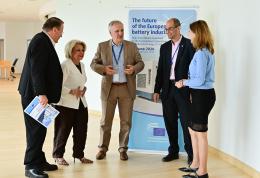
The European Economic and Social Committee (EESC) held a high-level experts’ debate on the European battery industry which called for urgent and coordinated action to strengthen Europe's battery ecosystem and secure its industrial future. By combining strategic investment, innovation, industrial capacity and social responsibility, the battery transition can become a genuine European success story.
The EU’s pandemic recovery fund was meant to be a one-off. Yet as the next long-term EU budget takes shape, joint borrowing appears set to become a more permanent feature of the Union’s finances. Lukas Spielberger and David Howarth of the University of Luxembourg, authors of the paper The future of joint borrowing under the next Multiannual Financial Framework, look at what the Commission’s latest MFF proposal reveals about the future of EU debt, and the political choices still ahead.
The EU’s pandemic recovery fund was meant to be a one-off. Yet as the next long-term EU budget takes shape, joint borrowing appears set to become a more permanent feature of the Union’s finances. Lukas Spielberger and David Howarth of the University of Luxembourg, authors of the paper The future of joint borrowing under the next Multiannual Financial Framework, look at what the Commission’s latest MFF proposal reveals about the future of EU debt, and the political choices still ahead.
By Lukas Spielberger and David Horwath
When the European Commission was empowered to borrow up to EUR 750 billion to fund the EU’s response to the COVID-19 pandemic, Member States made it clear that this authorisation was supposed to be temporary. By the end of 2026, the final loans and grants of the Recovery and Resilience Facility (RRF) are set to be disbursed.
Still, NextGenerationEU (NGEU) has opened the door to further debt-funded facilities. Since 2022, the EU has borrowed over EUR 50 billion to provide financial assistance to Ukraine; and in May 2025, EU Member States agreed on the EUR 150 billion SAFE instrument, which will finance the joint procurement of military equipment. Both the Draghi and Letta Reports have called for additional EU borrowing to finance ‘European Public Goods’.
Against this backdrop, the Commission unveiled its proposal for the forthcoming 2028–2034 Multiannual Financial Framework (MFF) last summer. The proposal shows that the Commission is indeed planning further debt-funded facilities. It also reveals how the Commission is seeking to align the role of borrowing operations in the EU’s budgetary architecture, based on the experience of borrowing under the current MFF.
Specifically, the proposal includes four borrowing-related items. First, a new facility called ‘Catalyst Europe’ will offer loans to support strategic investments. Second, an as-yet unnamed crisis mechanism will be able to provide up to EUR 400 billion in emergency loans to EU Member States. Third, the Commission proposed to set aside EUR 100 billion for further loans to Ukraine until 2034. And finally, the EU will have to start repaying the debt-funded grants extended under NextGenerationEU in 2028, at a rate of EUR 24 billion each year.
The two new instruments indicate that the Commission is seeking to leverage its strengthened borrowing powers and embed them more firmly in the EU budget. 'Catalyst Europe' resembles some aspects of the RRF. The instrument will provide up to EUR 150 billion in debt-funded loans to Member States to fund strategic investments, based on National Partnership Plans — modelled on the Recovery and Resilience Plans.
The major innovation of the RRF — debt-funded grants — will, however, not be repeated. Instead, the EU will offer loans to Member States with attractive terms. Since 2023, the Commission has managed its debt under a new ‘unified funding approach’, which allows it to issue loans at highly concessional conditions. For its latest loans to Ukraine and under SAFE, the Commission has extended loan repayment periods to 45 years.
The proposed crisis mechanism, likewise, seeks to refashion existing EU practice into a new institutional guise. To date, the EU has relied on temporary instruments under Article 122 TFEU to provide financial assistance to Member States, not just for SAFE, but previously also for SURE and during the euro area crisis. The proposed crisis mechanism, by contrast, would create a structural borrowing facility that could be activated during future crises. Unlike Article 122 TFEU, which allows for instruments to be adopted by a qualified majority in the Council, the crisis mechanism is designed to give the European Parliament a say in approving assistance.
The Commission itself has admitted that one advantage of additional debt-funded instruments is to ‘increase the impact of the EU budget, by providing further financial resources to support EU policy goals via borrowing for lending (COM(2025) 570 final)’.
Most loan-based support is ultimately guaranteed by the EU’s budgetary headroom — that is, the gap between the spending ceilings under the MFF and the Own Resources ceiling. Compared to the current MFF, the Commission’s proposal increases the headroom significantly, from 0.25% of EU gross national income to over 0.5% of EU GNI. The proposed crisis mechanism is to be guaranteed by another increment of 0.25% of EU GNI. As a result, while expenditure under the proposed MFF remains broadly comparable to the current framework as a share of EU GNI, the proposal would create significantly greater budgetary space for future debt-funded instruments.
Joint borrowing is thus set to remain a part of the EU’s public finances over the next long-term budget. The Commission’s proposal shows that it is seeking to focus on long-term loans, involve the European Parliament more directly, and increase its overall borrowing capacity. Whether a sufficient number of Member States agree with these ideas will remain another matter.
Lukas Spielberger is a research scientist in political science at the University of Luxembourg and a senior associate at CSDS, Vrije Universiteit Brussel. Since 2025, he has led the research project ‘Greening Europe’s Public Finances’, funded by the Luxembourg National Research Fund.
David Howarth has been Professor of Political Science, specialising in European Union studies, at the University of Luxembourg since 2012. From 2018 to 2025, he headed the University’s Jean Monnet Centre of Excellence, the interdisciplinary Robert Schuman Initiative.
The European Parliament is inviting journalists to apply for the 2026 edition of the Daphne Caruana Galizia Prize for Journalism, which is awarded annually to outstanding journalistic work promoting EU values and principles.
The European Parliament is inviting journalists to apply for the 2026 edition of the Daphne Caruana Galizia Prize for Journalism, which is awarded annually to outstanding journalistic work promoting EU values and principles.
The 6th edition of the Daphne Caruana Galizia Prize for Journalism, with support of the European Parliament, was launched on 4 May 2026, the year that marks the 9th anniversary of the Maltese journalist’s assassination.
Endorsed by the Parliament in October 2020, the annual Prize recognises outstanding journalism promoting EU values and principles, including democracy, rule of law, human rights, and freedom.
Journalists (individually or in teams) of any nationality, who have published in-depth reports in EU-based media, may submit their work at https://daphnejournalismprize.eu/ by 31 July 2026, midnight (CET).
Laureates will be announced at an Award Ceremony – preceded by a Seminar on Press Freedom – during Parliament’s plenary session of October II, as a symbolic reminder of the date when Daphne Caruana Galizia was assassinated.
Past winners of the Prize include “The Pegasus Project” (coordinated by the Forbidden Stories); a documentary on “The Central African Republic under Russian Influence” by Clément Di Roma and Carol Valade (ARTE/France24/Le Monde); a joint investigation on the Pylos migrant boat shipwreck (Solomon, in collaboration with Forensis, StrgF/ARD, and The Guardian); an investigation on missing unaccompanied child migrants (Lost in Europe); and a joint investigation on the Russian shadow fleet, coordinated by Follow the Money.
You can find additional information on Parliament’s website, where you may also check the highlights of the 2025 Daphne Caruana Galizia Press Seminar.
Daphne Caruana Galizia exposed corruption, money laundering, organised crime, the sale of citizenship, and the Maltese government’s connections to the Panama Papers, amongst other topics. She was killed in a car bomb attack on 16 October 2017, an event that led to mass protests, and paved the way for a resurgence of investigative journalism inspired by her work.
In its opinion on the new MFF 2028-2034, adopted in January 2026, the EESC warned that the Commission’s proposed increase falls short of what is needed, calling instead for a substantial boost in real resources. EESC Info spoke to the three rapporteurs for the MFF opinion ─ Konstantinos Diamantouros, Dominika Biegon and Luca Jahier ─ about the key political priorities for ensuring a sound EU budget that will secure Europe’s strategic autonomy, while remaining decentralised and strongly anchored at regional level.
In its opinion on the new MFF 2028-2034, adopted in January 2026, the EESC warned that the Commission’s proposed increase falls short of what is needed, calling instead for a substantial boost in real resources. EESC Info spoke to the three rapporteurs for the MFF opinion ─ Konstantinos Diamantouros, Dominika Biegon and Luca Jahier ─ about the key political priorities for ensuring a sound EU budget that will secure Europe’s strategic autonomy, while remaining decentralised and strongly anchored at regional level.
The Committee’s message is clear: the EU’s ambitions cannot be delivered on the cheap, and the MFF is ultimately a political choice about Europe’s future. What should be the guiding political priorities to ensure that the next EU budget strengthens cohesion, competitiveness and citizens’ trust in the European project?
Konstantinos Diamantouros (EESC Employers' Group): According to the Draghi report, achieving the goals of the digital and green transitions requires an additional EUR 750-800 billion of investments per year. While most of this will come from the private sector alongside improvements to the framework conditions for businesses operating in Europe, public investment will nevertheless play an important role.
At a time when Europe is facing growing geopolitical and economic headwinds — and when new priorities such as defence have emerged alongside traditional ones — the EESC is convinced that the next MFF must be significantly strengthened for the 2028–2034 period.
This means, amongst other things, preserving the central role of cohesion policy in the next MFF, with a dedicated budget, and ensuring that the conditionalities linked to the disbursement of funds under the National and Regional Partnership Plans are strictly aligned with the objectives of regional policy, rather than being macroeconomic in nature.
It is also paramount to maintain the focus on competitiveness by safeguarding the proposed budget increases for industrial development (European Competitiveness Fund), research and innovation (Horizon Europe) and cross-border energy and transport interconnections (TEN-T and TEN-E).
And finally, new own resources must strike the right balance: increasing revenues without undermining the EU’s competitiveness.
The EESC stresses that cohesion, good governance, and strong social rules are essential to making EU funding effective and future-proof. How can the next MFF be designed to strengthen these principles, while avoiding the risk that simplification leads to centralisation and weaker regional involvement?
Dominika Biegon (EESC Workers' Group): We must ensure that public funding serves public purposes. Social conditionality is a key tool in achieving this. The EESC suggests introducing provisions to ensure that only companies meeting social criteria are eligible for EU funding. These could include site retention and employment guarantees, education and training measures, and respect for collective agreements. Good examples already exist in some Member States. The EU should lead by example. The future EU budget should uphold social dialogue and create quality jobs. This is how we can increase acceptance of the green and digital transitions.
Another key aspect of making EU funding more effective is the partnership principle. The European Commission is proposing a more centralised structure for cohesion funds, giving Member State governments greater control over cohesion policy. This represents a fundamental departure from the previous bottom-up approach, under which regions and the social partners played a leading role in designing and implementing cohesion funds.
Together with the Committee of the Regions, the EESC strongly criticises this shift in power from the regional to the national level. To ensure that the EU budget delivers on the ground and remains visible in the regions, the partnership principle must be strengthened. The EESC calls for its genuine application at all stages — from drafting NRPP chapters to project selection, management and monitoring — as well as increased resources for social partner capacity-building and binding co-determination rights, including veto rights on key decisions in monitoring committees.
The EESC warns that the EU cannot respond to global competition, climate change and security challenges with a budget designed for the past. In your view, what specific steps are needed to ensure that the next MFF provides sufficient real investment capacity to turn the EU’s strategic autonomy from a slogan into reality?
Luca Jahier (EESC Civil Society Organisations' Group): The proposed next MFF is clearly not fit for the many and growing challenges Europe is facing. The EESC was the first to say this — a position now echoed by the European Parliament.
The Draghi report, published one year before the MFF proposal, called for an additional EUR 800 billion in investment per year over ten years, with 60% coming from private capital. One and a half years later, Draghi revised this figure to EUR 1.2 trillion per year over the next decade, with at least 60% now expected to come from public funding and investment instruments. This is mainly due to rising crisis-related costs, the acceleration of the energy and technological transitions, and increased defence spending.
We consider it unacceptable that, once inflation and NGEU repayments are taken into account, the marginal increase in the Commission’s proposal amounts to only around +0.1–0.2%, while significant cuts are made to traditional policies (CAP, cohesion, social funds and others) to free up resources for competitiveness and global Europe priorities. Pending the Council's 'negotiating box', a group of so-called ‘frugal’ capitals is even pushing for further reductions, while still failing to agree on crucial own resources. That we welcome, but resources need to be increased.
The first priority must be to transform what is currently a survival budget into a genuinely political one. This could be achieved through several concrete measures:
Exclude the EUR 149 billion allocated to NGEU repayments (0.11% of EU GNI) from heading 1, placing it above the budget ceiling and financing it through dedicated new own resources, as originally foreseen under the RRF regulation.
Adopt a comprehensive and ambitious set of new own resources, replacing the most contested ones (such as the CORE proposal) with alternatives, including a digital services tax.
Use part of the budget to leverage private capital, building on the success of the Juncker Plan (EFSI I and II).
Resort to specific new EU borrowing to finance EU common goods, mainly linked to competitiveness and security priorities, thus significantly increasing the final budget.
Accelerate the Capital Markets Union to increase the volume of EU private capital invested in the EU and attract new placements and investments from abroad, as a secure option in times of high turbulence. The creation of a solid EU fiscal space, through a stable market for EU bonds, could accelerate this process.