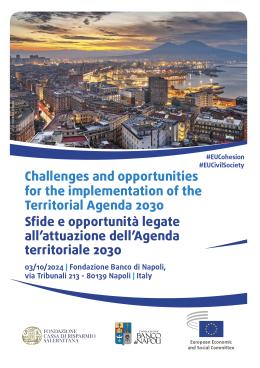
The Territorial Agenda (TA) 2030 is an inter-governmental declaration with no direct legal, financial or institutional implementation instrument. The application of the Territorial Agenda 2030 relies on informal multilevel cooperation between Member States, sub-national authorities, the European Commission, the European Parliament, the European Committee of the Regions, the European Economic and Social Committee, the European Investment Bank and other relevant players.
The TA 2030 envisages a stocktaking in 2024 including a review of the governance system and implementation progress. This review has slowly started during the Spanish EU Presidency in 2023 and continues with the Belgian Presidency. As the focus is expected to be on governance and implementation, civil society organisations and the EESC have to play a more active role in the governance of the TA 2030 and contribute to the priorities that have been set.
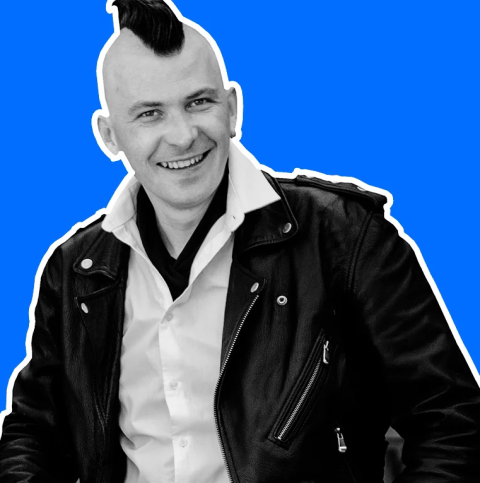
For nearly 500 Ukrainian athletes killed in the war that Russia is waging against their country, the dream of taking part in the Olympics or any future sports competition has been forever shattered. To keep their memory alive, the Ukrainian NGO BRAND UKRAINE is telling a tragic story of six deceased athletes by using artificial intelligence to bring them back to life, if only for a brief moment in time. We spoke to Tim Makarov, head of Digital & Content at BRAND UKRAINE, who told us that the ultimate idea of the project, presented at the Paris Games, was to make people stop and think about the value of human life.
For nearly 500 Ukrainian athletes killed in the war that Russia is waging against their country, the dream of taking part in the Olympics or any future sports competition has been forever shattered. To keep their memory alive, the Ukrainian NGO BRAND UKRAINE is telling a tragic story of six deceased athletes by using artificial intelligence to bring them back to life, if only for a brief moment in time. We spoke to Tim Makarov, head of Digital & Content at BRAND UKRAINE, who told us that the ultimate idea of the project, presented at the Paris Games, was to make people stop and think about the value of human life.
How did the idea for the project arise?
This idea was born in the Berlin agency BBDO. They proposed a framework concept, an idea, to show the tragic history of Ukrainian athletes who could not participate in the Olympics. They came to us with the concept, and we developed the idea and expanded the circle of partners, connecting the Ukrainian Ministries of Youth and Sports and of Foreign Affairs and the Office of the President of Ukraine. We worked together on the final design of the project, while the technical part stayed with BBDO. We built a communication strategy, and provided content distribution and legal support. The project was presented at the official Ukrainian site in Paris - Volia House - and influencers were involved.
How difficult was it to collect stories and to make the video? What techniques were used to ‘revive’ the protagonists?
The idea itself is very simple and clear - to tell the stories of Ukrainian athletes who died tragically and create their digital avatars. We have done a tremendous job. We used voice recordings, digitised them, used archival photos and video materials, and processed all this with the help of AI. The goal was for the digital copy of the person to be very humanlike, to evoke eeriness with reality and unreality at the same time. This was the meaning. Their stories are very powerful in themselves, and enhanced by AI technology they leave no one indifferent. I'll be honest - this project is very ‘on the edge‘. When we discussed it, we were afraid that we would not be understood, that people would not see the nakedness, defenselessness, pain and despair that we put into the words of the dead athletes behind the creepiness. The project presents a very simple idea - people who sincerely love their country, who want to live and achieve, become hostages of circumstances when their dreams, plans and lives are cut short. But they should be remembered. Every deed has a price, and it is often measured in human lives and destinies.
It must have been very painful for the families of the killed athletes to take part in the project and see the videos. What feedback did you receive from them at the end?
Of course, such a project could only be done with the consent of the closest relatives. This is an extremely important point: we showed, explained and demonstrated them what we were going to do. There were several dozen stories in the long list - but in the end, we agreed on six only. This took weeks of complicated negotiations. But when we showed the final result, the parents could not hold back their tears. They said: ‘Thank you, you are doing an extraordinary job. It will help preserve the memory of our child.’ As far as I know, none of them regret participating. We signed all the necessary legal documents, and only after that did the project get the green light. Everything was ready for the Olympics, and we went out for two weeks, showing and unfolding six extraordinary stories. Such a level of success was not expected - the reaction to the project exceeded all our expectations. And it is not surprising, as in the modern world of global communications true stories provoke complex and contradictory emotions.
What is the main message of the project - what do you hope the viewers will take home with them after watching the videos?
At BRAND UKRAINE we are engaged in spreading the truth about Ukraine and its realities in the conditions of Russian aggression. We use human stories for this. I am sure they best convey our pain, pride, zeal, gains and losses, what makes us humans, a strong and courageous nation. This is our mission - not just to talk about Ukraine, but also to make it a lovemark for the whole world. We are working on it so that there are more such powerful projects to come that touch people’s hearts and give an opportunity to stop and think about the value of human life.
You can see the videos and photos here and on Instagram:
Tim Makarov is Head of the Content & Digital Team at BRAND UKRAINE. He has spent 20 years in journalism, marketing and digital communications. His vocation is to tell stories and to create projects that change the world for the better.
The Eye Association Netherlands (Oogvereniging), with the help of the European Blind Union (EBU)'s network, has launched the Sport Accessibility initiative, which seeks to offer practical solutions on how to remove barriers deterring blind and partially sighted people from joining sports clubs and associations in the EU. Disability activist and volunteer for Oogvereniging and EBU, Peter van Bleijswijk, tells us all about this ground-breaking collaborative project, which paves the way for truly inclusive sport. You can also help by responding to the survey on the accessibility of sport and recreational activities for visually impaired people in your corner of Europe.
The Eye Association Netherlands (Oogvereniging), with the help of the European Blind Union (EBU)'s network, has launched the Sport Accessibility initiative, which seeks to offer practical solutions on how to remove barriers deterring blind and partially sighted people from joining sports clubs and associations in the EU. Disability activist and volunteer for Oogvereniging and EBU, Peter van Bleijswijk, tells us all about this ground-breaking collaborative project, which paves the way for truly inclusive sport. You can also help by responding to the survey on the accessibility of sport and recreational activities for visually impaired people in your corner of Europe.
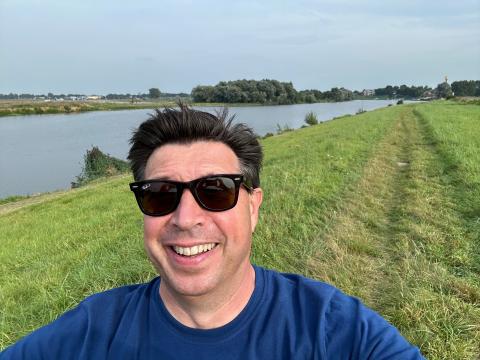
By Peter van Bleijswijk
In the pursuit of true inclusivity in sport, the Sport Accessibility initiative from the Netherlands is breaking new ground by focusing on the unique challenges faced by blind and partially sighted people. This forward-thinking project aims to address and eliminate the barriers that prevent visually impaired people from participating fully in sports and physical activities in sports clubs and associations.
The project is built on a deep understanding of the obstacles these individuals face. After extensive research and previous experiments, Sport Accessibility has identified 10 major barriers, which include the availability of specialised coaching, buddy programmes, the physical accessibility of sports facilities and transportation issues. These barriers are often overlooked but play a significant role in preventing visually impaired people from enjoying the benefits of sport.
To tackle these challenges head-on, the initiative has introduced the concept of ‘Sport Proeftuinen’, or ‘Sport Labs’. These labs are set up in existing sports clubs or by partnering with sports providers, creating a real-world environment to test potential solutions. For each identified barrier, three different solutions are proposed and tested. The most effective solution is then refined and tested multiple times to ensure its practicality and effectiveness.
The findings from these experiments are compiled into a ‘Digital Sport Blueprint’, a comprehensive guide that will be made available to sports clubs, providers and municipalities. The blueprint aims to serve as a resource for improving accessibility and inclusivity in sport, providing practical solutions that can be implemented across various settings.
The project’s ambition is not limited to the Netherlands. Recently, Sport Accessibility reached out to European partners, including EBU, to gather insights and best practices from different countries. The initiative has been met with enthusiasm, with numerous organisations and countries expressing a willingness to participate. This European collaboration seeks to enhance the accessibility and inclusivity of sport on a broader scale, ensuring that visually impaired individuals across the continent can benefit from the effort.
The strength of Sport Accessibility lies in its collaborative approach. The project is supported by a coalition of local governments, the Eye Association Netherlands, the Knowledge Centre for Sport and Physical Activity, the Athletics Union and other organisations dedicated to promoting inclusivity. By bringing together these diverse partners, the initiative leverages a wide range of expertise and resources to create sustainable, impactful solutions.
As the project continues to gain momentum, Sport Accessibility is calling for further participation from European educational institutions and eye health organisations. The team sees this as a crucial step towards fostering a truly inclusive sports culture across Europe, where everyone, regardless of their visual abilities, can participate in and enjoy sport.
Sport Accessibility is more than just a project; it’s a movement towards a future where no one is left on the sidelines. Through the combined efforts of dedicated partners across Europe, the initiative aims to make a lasting impact on the accessibility of sport, paving the way for a more inclusive and equitable environment for all.
A former director of innovation, facility management and ICT and manager in both profit and non-profit organisations, Peter van Bleijswijk has in recent years focused on advocating for client interests. He is actively committed to inclusion and improving sport accessibility for blind and partially sighted people. Additionally, he serves as a dedicated volunteer for the Eye Association Netherlands and EBU and is actively involved in the working groups collaborating with local and national governments. His work is deeply rooted in dedication to improving quality of life and creating equal opportunities for vulnerable groups in society.