
European Economic
and Social Committee
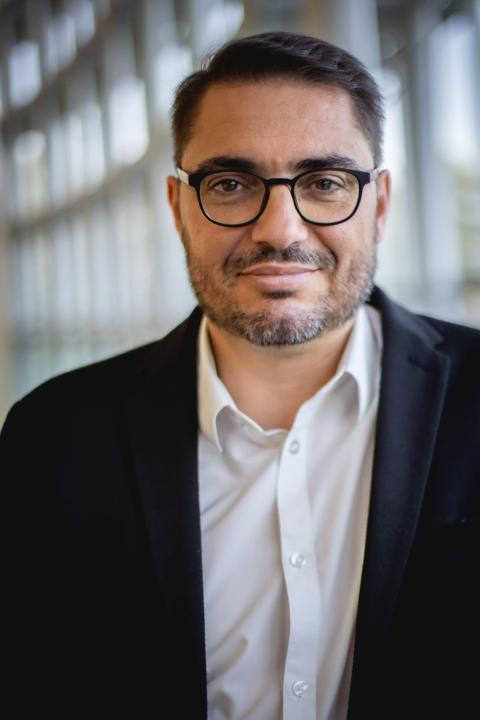
The European Commission launched the EU’s first ever Anti-Poverty Strategy in May 2026, promising to tackle poverty’s root causes with a view to eradicating it by 2050. But can the EU deliver on its promise without putting the necessary money on the table? In an interview with EESC Info, MEP João Oliveira, a rapporteur for the European Parliament’s report on the strategy, discusses what is missing from the EU Anti-Poverty Strategy, what the next long-term budget reveals about the EU’s commitment to tackling poverty, and why a fundamental change in approach is needed to make a difference in people’s lives.
In December 2025, you were the rapporteur for the European Parliament’s report on developing a new EU Anti-Poverty Strategy. Which of your report’s key recommendations made it into the Commission’s strategy, and where do you see the biggest gap?
Some of the elements set out in the European Parliament’s report were reflected in the European Commission’s strategy as guiding principles. These included the objective of eradicating poverty; the need for a comprehensive, integrated approach to tackling its various dimensions; greater consideration of the specific needs of different social groups; adequate funding; and the participation of people experiencing poverty in decision-making. However, the strategy’s main shortcoming is the lack of political commitment to implementing measures linked to its stated priorities.
Among other things, your report calls for a ‘paradigm shift’ in tackling poverty. What would that mean in practice, and does the adopted strategy deliver it?
The paradigm shift rests on three key considerations. First, poverty reflects the unequal distribution of wealth, making greater equality a fundamental requirement. Second, poverty is not merely a consequence of insufficient income or lack of employment, but also a denial of human rights, understood as political, economic, social and cultural rights. This calls for a rights-based approach. Finally, these considerations require a shift away from fragmented measures towards coordinated, holistic policies that address poverty’s multidimensional nature and its root causes at every stage of life.
Your report calls for people experiencing poverty to help shape and assess the policies that affect them. What would meaningful participation look like, and does the strategy give them a sufficient say?
Meaningful participation requires people with lived experience of poverty to be involved in defining, implementing and evaluating policies that affect them. It is not enough to simply listen to people living in poverty; their experiences and opinions must be taken into account, and the needs they identify must be addressed. The effectiveness of the political participation framework proposed in the Commission’s strategy will ultimately depend on its ability to address the concrete issues people face in their day-to-day lives.
Your report also stipulated ‘the allocation of adequate and sustained budgetary resources for anti-poverty measures through the MFF and national budgetary mechanisms’. The next MFF is still under negotiation, but from what you’ve seen of its proposed shape so far, is it on course to allocate enough funding to adequately address poverty, and is poverty high enough on the agenda of its negotiations?
The proposed MFF for 2028-2034, whether in its original form as presented by the European Commission or in the more recent iterations put forward by the Cyprus and Irish Presidencies, falls short of providing the substantial budgetary resources needed to eradicate poverty and, in some respects, moves in the opposite direction. The prioritisation of military spending at the expense of cohesion funds, the significant reduction in the amounts allocated to social policies, including the European Social Fund budget and the Fund’s non-autonomous status within the forthcoming NRPP framework are examples of this.
We have consistently called for specific budgetary allocations in the next MFF to address poverty, including an additional EUR 50 billion in dedicated funding for the strategy, on top of the EUR 20 billion allocated to the European Child Guarantee, as well as an additional EUR 35 billion specifically earmarked for expanding and upgrading the public housing stock.
Without the necessary financial commitments, no strategy can achieve its objectives. The European Commission’s current approach therefore leaves little room for success in the fight against poverty.
João Oliveira is a Member of the European Parliament for the Portuguese Communist Party. He acted as the rapporteur for the First EU Anti-Poverty Strategy, having previously served as Member of the Portuguese Parliament from the 10th to the 14th Legislature. Currently serving as a local councillor in the City Hall of Évora.