emphasises that satellite Position, Navigation and Timing services together with Earth Observation services, are vital assets for the EU single market;
recognises the value of a strategy for the development and deployment of Small Modular Reactors (SMRs) in Europe;
believes that the European strategy for SMRs should be based on standardisation requirements by product family, provided that the highest safety standards are upheld;
stresses that the European energy-intensive industry, and in particular the chemical sector, is facing a deep structural crisis, driven primarily by persistently high and volatile energy costs, low investments and global competition;
considers that a successful EU Ports Strategy will depend on integrated governance, long-term investment planning, coordination across multiple policy domains and a strong social foundation that guarantees decent work, fair competition and active social dialogue while taking passengers’ rights into consideration;
considers that the development of a genuine European High-Speed Railways Network by 2040 must become a strategic priority for the Union, as ambitious as the Single Market, the euro and the Green Deal;
welcomes the Strategy for Housing Construction under the Affordable Housing Plan, but urges the Commission to swiftly present the announced initiatives and adopt far more ambitious measures to address the structural housing crisis: the necessary framework conditions for the construction to serve as a catalyst for affordable, sustainable and high-quality housing, a right to adequate and affordable housing in EU primary law, sufficient funding and a stronger focus on vulnerable groups and on sustainability. Housing support must, depending on the case, prioritise conversions, renovations and new builds and promote climate-neutral and resource-efficient construction methods, collective housing and alternative mobility approaches that improve people’s quality of life;
supports the objective of strengthening preparedness, detection and response capacities and deterring malicious drone use, while stressing that all measures must remain proportionate and consistent with fundamental rights, privacy, data protection, legal certainty and democratic accountability;
considers energy storage necessary to ensure the energy transition is feasible, affordable, socially fair, and territorially balanced. Yet, the EU lacks a related comprehensive strategy. For this reason, the Committee calls for the Commission to present a number of common guidelines and plans to advance the development of the Union's storage capacity.
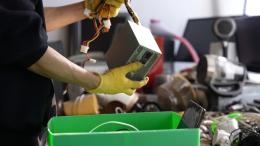
recommends adopting the Circular Economy Act (CEA) as a fully-fledged Act to signal the EU’s commitment to systemic change. It calls for a clear mapping of all related legislation, strategies and action plans to ensure a coherent framework for the circular transition.
considers incentives for well-functioning secondary raw material markets and circular business models, including reuse, repair and remanufacturing, to be at the heart of the Act. It also calls for stronger public procurement, reform of extended producer responsibility schemes, improved material traceability, wider use of eco-design and better working conditions. Traceability, certification, harmonised labelling and technical standards are seen as essential to building market confidence and scaling up circular solutions.
recommends establishing a regularly updated repository of circular economy good practices through the European Circular Economy Stakeholders Platform (ECESP), linked to indicators and monitoring frameworks. It stresses the importance of formally recognising transition brokers and ensuring that civil society, cooperatives and social enterprises are active partners in a fair and inclusive circular transition. The Committee also highlights the strategic role of the ECESP in identifying barriers and accelerating implementation.
Argues that economic security should be a core strategic objective of the EU and requires urgent, integrated and coordinated action across policy areas, supported by clearer responsibilities and stronger capacity to anticipate and manage risks;
Emphasises that the EU must strengthen its internal economic foundations, including competitiveness, innovation and production capacity, macroeconomic stability, secure access to key inputs, skills, and a well- functioning of the single market;
Highlights the need for stronger public and private investment and financing to support innovation, industrial development and secure, sustainable value chains.