
European Economic
and Social Committee
Meet our members | Cillian LOHAN: Bringing diverse views together, we can have a tangible impact
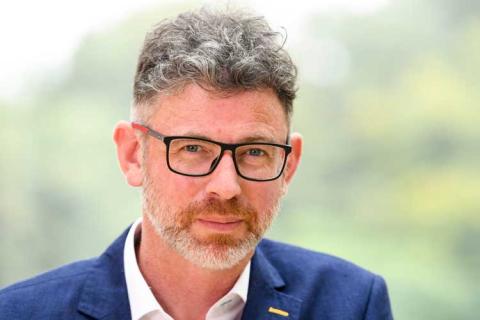
Cillian Lohan has been an active member of the EESC since 2015. He's currently one of the vice-presidents of the NAT section and has worked extensively in the corporate and environmental sectors. He is a leader in the field of the circular economy and was the inaugural chair of the European Circular Economy Stakeholder Platform, which he helped to establish.
You have joined the EESC and the NAT section almost 10 years ago. Did you imagine back then that you could actually achieve such an important and concrete impact through the EESC work and opinions?
When I became a member I was curious about how I could make an impact. I remember my first day in the canteen, sitting on my own, wondering how the whole Committee worked and how I could contribute. It seems strange now, but I recall being nervous pressing the button to speak at a NAT meeting and wondering if my contribution was relevant or valid.
That soon changed when I was given the chance to rapporteur an opinion. I quickly saw how, as members working with the staff, we can make tangible differences. The rooms became workplaces where I felt comfortable engaging on content and listening to different perspectives.
In my first Opinion, I proposed to establish a stakeholder platform for Circular Economy. The Commission liked the idea and we are currently finalizing the renewed ToR for the European Circular Economy Stakeholder Platform – our innovative joint project with the Commission that has been used all over the world as an example of best practice in engagement.
In your experience, what are the main success factors for this impact?
The main success factors are being able to point out practical successes. Having over 10,000 people participate in last years annual Circular Economy event is very satisfying. Seeing Diandra complete her term as our Youth Delegate to COP and knowing this was also a recommendation from an OIO I proposed and rapporteured. Being able to meet with the youth sector and realise we are now their more trusted institutional partner, and seeing more and more members realise the importance of this element.
The work on Opinions I did on Climate Finance for Non-State Actors, Wildlife Trafficking, Waste legislation and Fit for 55 all taught me that success comes from working closely with other members and the strong administrative team. Critically, being ready to take advantage of all opportunities to follow up on opinions is essential.
I would say the first step is to listen and understand the different views, and then to find concrete agreed content for our Opinions. Perhaps most importantly it is then using adoption at plenary as the starting point for the work on using our Opinions to actually make a difference.
The NAT section covers a very broad range of topics, from climate and sustainable development to circular economy to food systems and fisheries. How can we ensure less polarization and more coherence across these different but interconnected policies?
Our mantra should be compromise. However, I would qualify that by saying compromise that leads to strong content. This is our challenge but also this is our added value. The idea of bringing diverse views together to find a joint position is of huge value to the Council, Parliament and Commission. I know this because they have told us.
When I chaired the group looking at how we could reformat our Opinions I invited each of the legislative institutions to give us feedback on how they see our work. And each of them emphasized that it is the effort we put in to working together from different perspectives and still producing useable content is what sets us apart.
The SDGs are a great example of this – an internationally agreed framework on different topics that allow us to give added value input into implementation processes. The Voluntary Review that the EU presented in New York to the UN last year highlighted this, where we saw the EESC input attached as an appendix. Reading a reference to our Opinion in Council Conclusions after the NAT President and I went to present to the Council's Working Party on the Agenda 2030 also shows how we can find strong messages that ensure we make a difference.
There is always more to do, and we can always improve. I have seen enough successes here at EESC to know that having an impact is not only possible, it is essential.
Work organisation
Recommended for you
La UE necesita más inversión pública en infraestructuras energéticas para luchar contra el cambio climático
News
En un Dictamen aprobado en el pleno de septiembre, el Comité Económico y Social Europeo (CESE) afirma que se necesita una inversión pública masiva para lograr la transición energética y cumplir los…
Energía: el CESE advierte contra la creación de nuevas dependencias
News
El Comité Económico y Social Europeo (CESE) se pronuncia con firmeza sobre la energía en un Dictamen aprobado en su pleno de septiembre: la propuesta de la Comisión es un paso en la dirección…
La transición digital debe ser justa: los derechos humanos y el control humano deben seguir teniendo una importancia fundamental
News
El Comité Económico y Social Europeo (CESE) señala las oportunidades que presenta la revolución digital, pero también advierte de sus peligros: si se implantan con demasiada rapidez, las soluciones…
La UE necesita ya un plan de acción para ofrecer una vivienda asequible y digna
News
En la conferencia de alto nivel que el Comité Económico y Social Europeo (CESE) celebró en Riga los participantes dieron la voz de alarma por la crisis de la vivienda asequible y advirtieron que ya…
La Presidencia checa de la UE replanteará, reconstruirá y reactivará Europa
News
En el pleno de julio del Comité Económico y Social Europeo (CESE) se celebró un debate con el ministro checo de Asuntos Exteriores, Jan Lipavský, para debatir las prioridades de la Presidencia checa…