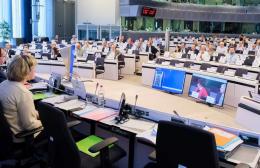
In this own-initiative opinion approved during its October plenary session, the European Economic and Social Committee (EESC) supports the European Central Bank (ECB) in its assessment of the risks and benefits of introducing a digital euro. The EESC believes the adoption of a digital euro will benefit everyone in the euro area by making payment transactions quicker and more efficient, but financial and digital inclusiveness will be crucial for its potential roll-out. The EESC will continue to follow the work of the ECB as it considers the design of a possible digital euro.
In an own-initiative opinion, the European Economic and Social Committee (EESC) highlighted the many benefits of a green EU strategy for expanding plant protein and plant oil production and proposed how that strategy should look. These benefits include reducing the EU’s dependence on imports and a contribution to the development of rural areas.
On eve of COP27, EESC plenary to urge joint action to avert existential threat.
26 October, 2.30 to 7.30 pm; 27 October, 9 am to 1 pm - Charlemagne building
Following the European Gender Equality Week organised by the European Parliament (24-30 October), chaired by the Vice-President Evelyn Regner, the European Economic and Social Committee (EESC) supporting this initiative, is planning a series of thematic debates organised by the various sections.
The European Economic and Social Committee (EESC) has given a favourable assessment of the European Commission's guidelines for Member States' employment policies, describing them as appropriate since they address the most urgent issues in the labour market.
At its September plenary, the European Economic and Social Committee (EESC) reiterates its strong support for the Green Deal commitments, even though the economic effects on the ongoing war in Ukraine cannot be disregarded. The EESC adopted an own-initiative opinion on the EU industry decarbonisation technologies. The EESC reiterates the need to maintain a solid industrial basis in the EU.
The appeal of living in the countryside may have grown over the past few years, but many rural areas in the EU still battle with a number of problems that prevent people from staying or moving there
As the number of EU households unable to warm their homes is likely to grow and with energy annual inflation hitting over 40%, the EU and the Member States should adopt and implement urgent measures to prevent and tackle energy poverty threatening Europeans
El Comité Económico y Social Europeo (CESE) se pronuncia con firmeza sobre la energía en un Dictamen aprobado en su pleno de septiembre: la propuesta de la Comisión es un paso en la dirección correcta para garantizar la autonomía energética de la UE con respecto a Rusia, pero estas medidas de emergencia no deben crear nuevas dependencias ni socavar los esfuerzos por lograr la neutralidad climática lo antes posible.
En un Dictamen aprobado en el pleno de septiembre, el Comité Económico y Social Europeo (CESE) afirma que se necesita una inversión pública masiva para lograr la transición energética y cumplir los objetivos climáticos. Propone reducir los beneficios extraordinarios y aplicar una «regla de oro» que permita financiar las inversiones en infraestructuras.