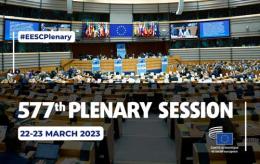
El Comité Económico y Social Europeo (CESE) da la voz de alarma y advierte que las ventajas de la digitalización del sistema energético solo se materializarán si se suprime la burocracia, se anima a los consumidores a participar activamente y se destinan fondos a mejorar las cualificaciones de los trabajadores.
In its March plenary, the European Economic and Social Committee (EESC) adopted an opinion urging the European Institutions to address the fragmented implementation of foreign policy sanctions across Member States. The EESC is concerned about the inconsistency in standards and in the application of sanctions in national legislation, and is calling for immediate action to protect humanitarian aid and journalists in sanctioned regimes.
Mario Monti, former EU commissioner for competition and Prime Minister of Italy, will be the keynote speaker at the EESC event "Towards a Net Zero Industrial Future: Harnessing the Power of the Single Market", which will be held on 4 April to mark the 30th anniversary of the single market.
Amid a projected rise in the number of people at risk of poverty, adequate minimum income is a necessary condition to ensure a dignified life for many Europeans. To make sure it is available to all those who need it, Member States should put in place transparent and non-discriminatory criteria for people to obtain it.
The global fertiliser crisis has reached a critical level in Europe, where farmers are facing unprecedented challenges due to record prices. The European Economic and Social Committee (EESC) adopted an opinion on its March plenary on the EU strategy on fertilisers calling for availability, affordability and sustainability.
Addressing the European Commission's report on trends and issues to watch, the EESC stressed that it could have helped much more if it had been involved in the foresight exercise from the start.
On 23 March, the European Economic and Social Committee adopted two opinions on the Commission's latest proposals to further develop the EU's Capital Markets Union. Regarding the Listing Act, the Committee recommends that the full listing documentation be published in the national languages to empower local retail investors and helpthe development of a national retail investment base.
El Protocolo de Progreso Social, propuesto durante la Conferencia sobre el Futuro de Europa, da prioridad a los derechos de los trabajadores y a los derechos sociales y sindicales cuando entran en conflicto con las libertades económicas. Sin embargo, aunque todo el mundo está de acuerdo en que los derechos sociales y las libertades económicas pueden coexistir, el apoyo a la incorporación del Protocolo al Derecho primario de la UE dista mucho de ser unánime y existen opiniones divergentes entre los interlocutores sociales y en la comunidad académica, tal y como se confirmó en una audiencia del CESE
President of the European Economic and Social Committee, Christa Schweng, highlights the requirements for Europe to become globally more competitive and sustainable.