
European Economic
and Social Committee
BETTER REGULATION DOES NOT MEAN DEREGULATION
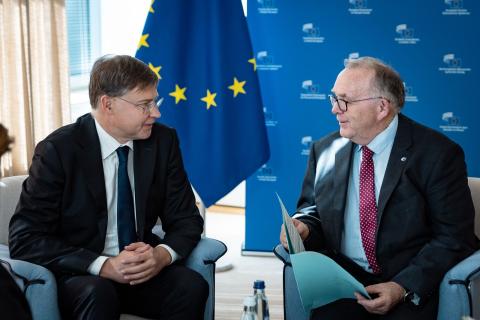
At a high-level debate with European Commissioner Valdis Dombrovskis on 23 September, the European Economic and Social Committee (EESC) backed simpler EU rules but called for stronger evidence, clearer safeguards and greater democratic scrutiny of the Commission’s better regulation plans.
The Commission has restated its goal to make EU laws ‘simple by design’ and set out its proposed changes to its systems for carrying out impact assessments and public consultations, while also putting forward its plans for reviewing existing legislation. While welcoming that ambition, the EESC says the proposals do not yet show clearly enough how simplification will affect businesses, workers, citizens and the environment.
‘Rules must work in the real world. For SMEs, workers, consumers and public authorities, clarity and consistent enforcement are essential to trust and to a well-functioning single market’, EESC president Séamus Boland said.
In its opinion on better regulation, adopted following the plenary debate, the EESC identified several weaknesses in the Commission’s revamped rulebook. The opinion states that the Commission still lacks a comprehensive picture of the cumulative costs and benefits of EU legislation, making it harder to spot burdens, overlaps and gaps, particularly for SMEs. It also warns that the new ‘matrix of key impacts’ is too vaguely defined and must not allow proposals labelled ‘targeted’ or ‘urgent’ to escape full impact assessment and independent scrutiny.
The EESC also asked the Commission to make a distinction between unnecessary national additions to EU rules, known as ‘gold-plating’, and legitimate decisions to maintain higher social or fundamental-rights protections.
Rapporteur for the opinion, Katrīna Zariņa, said: ‘Europe needs simpler rules to strengthen its competitiveness, but simplification must not become deregulation.’ The EESC is calling for verifiable metrics to assess the short- and long-term impact of regulation and simplification. The opinion also stresses the importance of ensuring that there is no impact on workers' rights and environmental protection when creating exemptions for SMEs, and rejects plans to cut public consultations from twelve to six weeks. (ma/ll)