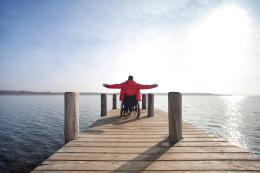
Ending the segregation of persons with disabilities (PWDs) and enabling them to live full, independent lives within the community requires political will and substantial investment in social and community-based services. Above all, huge support is needed for their families who – forgotten by public policies - carry too great a burden on their own
At a debate organised by the European Economic and Social Committee (EESC), experts and civil society representatives met to discuss pros and cons of the European Commission's recently presented package of climate, transport and energy proposals.
As renewed calls to set out EU-wide common standards for NGOs and associations gain momentum, civil society organisations have high hopes of the new European statute for associations, which will give NGOs and associations recognition at EU level and allow them to operate across borders, a right they do not currently enjoy – unlike their for-profit counterparts
As European trade unions battle with falling membership, the EU proposes to set a minimum threshold for the percentage of work contracts that have to be concluded by collective bargaining. Welcomed by the unions, the proposal has, however, been met with criticism by employers.
The hearing organised by theEuropean Economic and Social Committee (EESC) highlighted the need for a reform of the EU budgetary rules applicable in the Member States in order to ensure a sustainable post-COVID-19 recovery and to secure the public investments required for the green and digital transition.
En unaaudienciaorganizadapor el ComitéEconómico y Social Europeo (CESE) se debatieronlasoportunidades y losretosquepresenta la aplicación de los planes nacionales de recuperación y resiliencia en losdistintosEstadosmiembros, y se puso de manifiestoque la sociedad civil estáaún
The new EU Strategy on Adaptation to Climate Change is a crucial step towards achieving climate neutrality and resilience by 2050. European civil society strongly supports the Commission's commitment to strengthening efforts on climate proofing, resilience building, prevention and preparedness. The floods occurring in Western Europe, just weeks after a record-breaking heatwave in the US and Canada, are fresh reminders of the pace of change.
La creación de asociaciones en materia de talentos con los países de origen y tránsito es una política clave para abordar la migración. Europa ha de cambiar el enfoque de la dimensión exterior de la política migratoria e incluirla en una agenda geopolítica y geoeconómica más amplia que a su vez ocupe el lugar que le corresponde entre el resto de políticas. De lo contrario, el Nuevo Pacto será demasiado débil para hacer frente al creciente número de flujos migratorios.
The Commission's initiatives on a European child guarantee and an EU Strategy on the rights of the child call on European and national policy-makers to work toward the common good of all children growing up in the EU. Ambitious and bold in their approach to ensuring a life free from any discrimination for each and every child, both initiatives have won the EESC's approval.
Rapidly developed to cushion the severe effects the pandemic was expected to have on businesses and workers, SURE has helped Member States to protect employment and keep EU economies afloat. With an evaluation of the scheme underway, there is an ongoing debate as to whether SURE should be here to stay as an ad hoc system of protection to help prevent job losses and provide income support during future serious crises